
Category Archives: Customs

Customs, conventions, and traditions of a group

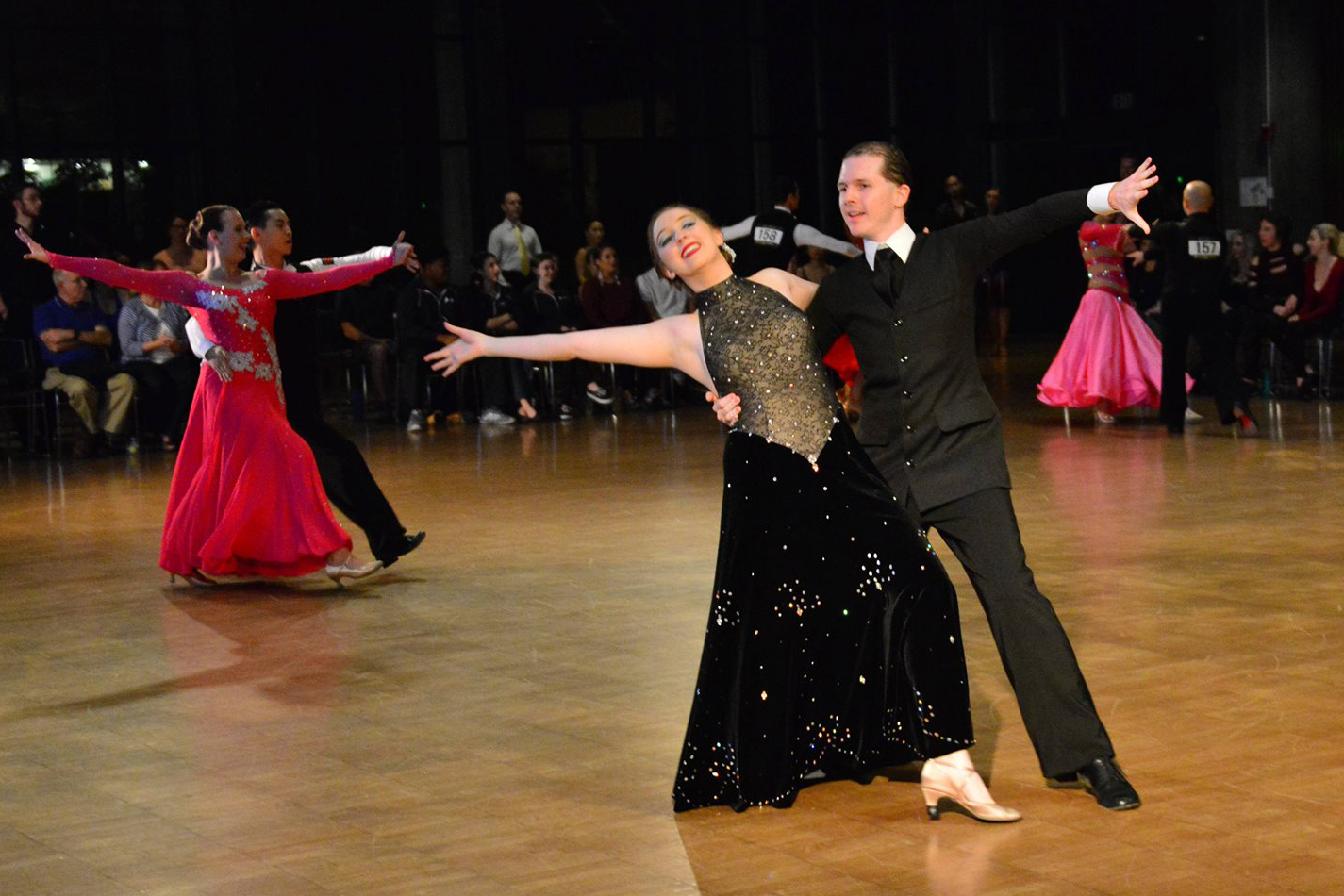
Appropriate Apparel for Ballroom Dance Competitions

Nationality: American
Age: 28
Occupation: Graduate Student, Linguist
Residence: Los Angeles, CA
Performance Date: April 9, 2018
Primary Language: English
Language: n/a

“When we go to competitions, everybody dresses different ways. There’s this expectation that all the girls are going to be in dresses, and boys are going to be in suit jackets and/or, like, pants and other things (He gestures toward his torso, then his legs, as he names the items of clothing). This is a trend that we’re not happy about because people should be able to wear what they want when doing things, but ballroom is such a stereotyped endeavor that you tend to conform to these norms, and it is expected that you conform to particular gender norms. One of the gender norms that we have to go for is that the men all have their hair slicked back (He makes a hand motion above his head, miming slicking back his hair). There is, like, one hairstyle for men. If you have very nice hair that you already know how to style, like a part, and it’s a little bit high on top anyway, then you can leave it exactly how it is. Otherwise, you gel your hair directly backwards. I have seen some people recently try to do a part, but I’m not wild about that. It should be as directly back as you go, and this is stuff that I got from the University of Minnesota ballroom dance team as well. Everybody’s got the same hair. Some teams take this a step further, and all the men are wearing the exact same outfit. The BYU team, the Bringham team, all of their leads look exactly the same. They are cookie cutter copies of each other. They are all wearing the same black tie, black best, white shirt, black pants, black shoes, same haircut, same everything. They’re very uniform, and it’s terrifying because when they dance the same, it looks very scary. While the boys are expected to be cookie-cutter versions of themselves, the girls, from my perspective, are expected to wear different things to be flashy and show off. The standard is for the boys to look as boring as possible and the girls to look as exciting as possible: a dress that flows (he stretched out the work, gets louder, and starts making big gestures with his hands), and does a thing (he flutters his hand, mimicking the way skirts twirl when dancers turn), that is colored. It’s nice when boys’ outfits can match their ladies’ dresses, but it is usually done by maybe a matching a shirt. It’s becoming more common these days, often by matching a tie or sometimes socks, but never the pants. Never does the whole outfit really compliment her. It goes with the idea in the ballroom world that it’s more about showing off your partner as a lead than about doing the things yourself. That isn’t always true when you become a professional dancer, but mostly it’s about ‘Look at my partner! Isn’t she great? Isn’t she sexy?’”

Background Information and Context:

The traditional dress and gender roles that the informant shares here are based on his attendance at collegiate dancesport competitions as well as some observations of professional dancesport, which collegiate dancesport mimics in many ways. What he described is how almost all members of the SC Ballroom and Latin Dance Team dress at competitions. The informant has been a competitive ballroom dancer in the collegiate circuit for about six years and has taken on a sort of mentor role on the SC Ballroom and Latin Dance Team, frequently giving new members advice on what judges expect of them at competitions. He began talking about the gendered differences in dancesport apparel when prompted to talk about competition costumes, which look unlike what most people would see in regular fashion.

Collector’s Notes:

Gender norms exist in every culture and aspect of society, but the strange world of dancesport (competitive ballroom dancing) often seems backwards, and not just because the dances in which we compete are very old. Even though it is appropriate for women to wear pants in everyday settings in America, even in more formal situations like business meetings or award shows, the sight of a woman in pants on a competitive dancefloor would be strange, even unwanted. The gendered nature of dancesport seems to be ingrained in the concept of a male lead and a female follow, mirroring (somewhat declining) societal expectations of male authority and female subservience. I found it interesting that this inequality is approached a slightly different way by informant, who seems to regret the absence of clothing choices for males and the nature of attention-grabbing turns and tricks, which mostly place the female at the center of attention. Still, the nature of this attention is questionable, as one could argue that it is not beneficial that the roles require the “sexy” partner to be shown off by her male partner.

Blessing the Grapes

Nationality: American
Age: 21
Occupation: College Student
Residence: Lompoc, CA
Performance Date: April 15, 2018
Primary Language: English
Language: Some Italian

“My mom says that they bless the grapes every harvest. They have a rabbi and a priest come out and bless the grapes.”

Background Information and Context:

“[They do it] to prevent curses (her voice raises like a question). I don’t know. They just do it, I guess.”

The informant is from Lompoc, CA, which she often facetiously refers to as “wine country ghetto.” Her mother works at a winery.

Collector’s Notes:

Despite wine production and wine tourism being an important part of her hometown, the informant is not necessarily knowledgeable of the traditions of the industry. This shows how one does not necessarily have to identify with local traditions. A cursory Google search revealed to me that blessing a harvest is common in vineyards across the world and that the purpose is to ensure a bountiful harvest. In many places, the blessing precedes a festival. I found it interesting that the tradition that the informant mentions involves both a rabbi and a priest, showing that it incorporated more than one religion.

For another example of a blessing of the grapes ceremony, see “Blessing of the grapes celebrates Livermore Valley’s 2017 harvest” on The Mercury News.

Weekly Horror Game Nights

Nationality: American
Age: 21
Occupation: April 15, 2018
Residence: Lompoc, CA
Performance Date: April 15, 2018
Primary Language: English
Language: Some Italian

“My roommates Lane and Brendan, and also our friend Andrew who doesn’t live with us but is around sometimes, we have a tradition of having horror game nights where we all get together late at night – recently, we’ve done it with cake that says like, ‘Happy Horror Game Night!’ – and we’ll sit around, and turn all of the lights off, and play a horror video game. It’s a terrible idea because all of us get scared very easily and none of us like horror games, so we just we don’t really enjoy it. It’s fun because it can sometimes be fun to get scared, but none of us like being scared. I especially don’t like being scared. We’ll sometimes switch off who plays but usually it’s Brendan or Andrew because I get too scared and Lane gets headaches and stuff, so they will play the game and we’ll all watch, and do the story and stuff, and freak out, and then take breaks, and turn the lights on, and eat cake, and turn them off again, and then I’ll say, ‘let’s stop.’ Everyone will say, ‘No, let’s keep going!’ and I’ll say, ‘Ok!’ and then we’ll all cuddle on the couch together in fear and horror.”

Background Information and Context:

“It’s a bonding experience being of afraid together, and it’s how we became friends in the first place, which is why we continue to do it. The very first time we all were in the same place at the same time, we were all at Brendan’s place and we had just gotten this game called PT, which we later found out stood for Playable Trailer because it’s a playable trailer for a game called, like, Silent Hill. The trailer was super scary, and it was basically like this hallway that you kept going round and round and round, and you kept circling back, and things kept happening, and it was super duper scary. He had gotten that, and we were playing it together even though we didn’t really know each other. It was in Webb Tower, and we sat this couch together and, like, all the lights are off, and we are playing it for some whatever ridiculous reason, and at one point there’s this ghost lady, and she looked popped out of nowhere, and literally all of us let out bloodcurdling screams. And no one came to check on us! We were in Webb Tower, there is an RA in that building,  I’m sorry it was very clearly not like we’re having a good time screams! It was screams of terror!”

Collector’s Notes:

This anecdote offers insight into the reasons people willingly engage in activities that are not enjoyable. I, personally, never watch horror movies or play horror movies, but many people, like the informant and her friends, engage in the genre frequently. For some, the adrenaline rush, itself, is an exciting and enjoyable experience. For the informant and her friends, being scared is a social experience. They are afraid, but they are doing it together in solidarity even though none of them enjoy the fear, itself. The tradition is also symbolic, reminding them of how they became friends as they experience this shared experience each week. I think stories of being scared also make great, exciting stories, and telling those stories can be a rewarding social experience.

Gnocchi on the 29th of Each Month

Nationality: Argentine-American
Age: 44
Occupation: Director of Residential Services at local health center
Residence: Claremont, CA
Performance Date: April 22, 2018
Primary Language: English
Language: Spanish

“As kids, my mom would make gnocchi once a month. It was always on the 29th of the month. They were always homemade and extremely labor intensive, so it would take her all day to make them. She had this custom that everyone would sit down that the table, and she would put a dollar under each plate. It was supposed to bring good luck with money, and it could only be done on the 29th of the month, but I have no idea why.”

Background Information and Context:

Unable to explain why the tradition exists, she called her mom to ask. While the phone was ringing, she theorized that it could be a family tradition from their Italian roots. The informant came to America when she was young, but generations of her originally Italian family lived in Argentina. When her mother picked up, she received the simple explanation that it was just something that her mom did, her grandmother did, and in Argentina they still do it. A cursory Google search revealed that the tradition of making Gnocchi on the 29th occurred because people were paid on the 1st of each month and potatoes and flour were all they had to cook with by the end of the month.

Collector’s Notes:

Some of our most valued traditions are ones whose origins are unknown to us. Especially when the tradition is introduced as a child, it can become ingrained into our lives for the simple fact that it is fun and brings fond memories. Food is especially good at doing this. As shown by the informant’s mother’s simple explanation, it is not necessary to have or to be able to share a full explanation of a tradition in order to engage in it and share it with others. This tradition is interesting because it shows the multiculturalism of Argentina by incorporating a traditionally Italian food into a monthly Argentine ritual.

For another example of Argentine gnocchi, see “The Story Behind Gnocchi Day in Argentina” on Food Republic.

Month-Long Vacations for Argentines

Nationality: Argentine-American
Age: 44
Occupation: Director of Residential Services at local health center
Residence: Claremont, CA
Performance Date: April 25, 2018
Primary Language: English
Language: Spanish

“In Argentina, when people go on vacation, they take a whole month of vacation. When people say they are going on vacation, they’re gone a whole month. A lot of people will come to the states to Miami. A lot of them will go to Brazil. That’s a popular place to vacation. Some will go to Europe, like Spain. They don’t joke around with vacation in Argentina. They have the right idea, and I think we need more of that here. Most people have their own businesses, so it’s not uncommon to pick a month, usually in the summer, and take a vacation. It’s impossible to get anything done in the summer in Argentine. It’s a completely different way of life in Argentina that you wouldn’t understand if you haven’t lived there.”

Background Information and Context:

This topic came up when the informant told me that the lifestyle in Argentina is completely different from life in America, and I asked her to explain. She knows this from experience because she was born in Argentina, and she still has family that lives there.

Collector’s Notes:

As the informant said, this different approach to vacations, and the fact that most Argentine’s own small businesses shows a marked difference between the way of life there and that at of Americans. A month-long vacation in America is often thought to be reserved for those who do not care about money, especially those who are already rich. Living in a deeply capitalist society, most Americans do not think to take so much time off work, nor would their places of employment allow it. America is a place where large companies flourish, and financial growth, security, and what it means to have a successful life are often the same.