Category Archives: Customs

Customs, conventions, and traditions of a group

“Raiders” Fraternal Song

Nationality: American
Age: 21
Occupation: College Student
Residence: Los Angeles, CA
Performance Date: 4/18/13
Primary Language: English

The informant speaks about a certain song his fraternity sings with everyone after brotherhood events such as bid night.  The informant learned this tradition a few weeks after joining his fraternity.  He explains that the fraternity uses this song as a means for celebrating as well and often uses the song after events that warrant a worthy celebration.  The fraternity brothers either run out to the middle of the street or to their backyard and circle up and perform the song.  The singing of the song is described as being very loud and rowdy, but in a good-spirited way.  Below are the lyrics of the song.  See below:

OOOOOOHHHHHHHH!

We’re (insert fraternity) raiders of the night,

A bunch of rowdy bastards that rather fuck than fight,

So fuck ‘em, fuck ‘em, fuck ‘em, who the fuck are we?

We’re (insert fraternity) the best fraternity.

(insert fraternity) once, (insert fraternity) twice, holy jumping Jesus Christ,

God damn, son of a bitch, rah rah fuck!

Yeah hell yeah!

The informant describes the purpose of this song as a chance for the brothers of the fraternity to all come together and feel the fraternal bond.  I find this song intriguing because it a classic example of how a certain group of people use traditions such as music to strengthen their connection with one another.  A commonly shared song can serve to build just a much stronger bond than does paying the dues for the house to be an active member.

“Klegoff” — Fraternity Drinking Game

Nationality: American
Age: 21
Occupation: College Student
Residence: Los Angeles, CA
Performance Date: 4/18/13
Primary Language: English

The informant describes a drinking game by the name of “Klegoff” that his fraternity plays once a semester.  The informant explains that he first learned this game and tradition once he had joined his fraternity his sophomore year of college.  This game has sentimental value for him because it represents a bonding brotherhood event and an integral part of what it means to be in his fraternity.

A “klegoff” is a keg race with typically one team versus another or three teams in a sort of free-for-all.  The game involves everyone dressing up in the most ridiculous, funny costumes and having a keg race.  Each team tries to finish their keg first, while also trying to steal the tap of the other teams’ keg in order to slow down the other teams ability to drink.  The informant considers it one of the most loved brotherhood events in the house because everyone has a chance to be aggressive, but in a non-malicious way.  The informant also explains that the game is a good pregame to a party.  After “klegoff” finishes with one team winning the entire fraternity goes outside the house and gathers in a circle and sings a traditional fraternity song called “Raiders.” Afterwards all members shake hands and hug it out to make sure there are no hard feelings.

This description of the drinking game “klegoff” makes evident how important drinking games, which involve the whole fraternity at once, are to the brotherhood and bonding the members have.  It is through these games that stories, great successes and triumphs are made.  It also displays the large role that drinking has in the relationships between fraternity brothers.  It is central to their bonding.

Giving Watches to Elders

Nationality: American
Age: 21
Occupation: Student
Residence: Los Angeles, California
Performance Date: 4/20/2013
Primary Language: English
Language: Chinese

“You can never give someone older than you a watch of some sort because it symbolizes that they should be watching out for time because it’s like telling them that they are going to die soon.”

My informant heard this from an ex-boyfriend, and she later confirmed it with her Chinese mother.  Since hearing it, she has tried to practice this because she sees it as a way to respect her elders by not giving them reminders of their imminent deaths.  She also is now wary of giving watches out as presents because she wants to respect people who also believe that they are being told to watch out for time.  I find it interesting that there is a pun in the English version of the belief: giving of a physical watch and to watch out for time.  However, I doubt that this exists in the Chinese version of the folk belief.  The fact that there is a precaution against giving an elder something as simple as a watch goes to show the focus on the older Chinese generations.  The focus is on respecting the elders—and the culture is so serious about the respect that even the gift of a watch could offend, so it is better to just avoid the situation entirely.

Rugby Drinking Rules

Nationality: American
Age: 20
Occupation: Student; Student Worker in USC Housing
Residence: Compton, California
Performance Date: 4/20/2013
Primary Language: English

“You always hold your drink in your left hand because you shake with your right hand.  If we find you with a drink in your right hand, we’ll go, “Drink, motherfucker!  Drink, motherfucker!  Drink, motherfucker!  Drink!”  And then, “Why are we waiting when we could be masterbating?”  And they have to drink whatever is in their hand—just gobble it all up.  So make sure you always hold your drink in your left hand.

“I don’t know about the guys, but for your first try, you have to shoot the boot.  And shooting the boot means that we get the person with the nastiest cleat, and we put a beer in there; and the person has to drink it—and that’s if you have your first try.”

The informant of these drinking rules is a member of the USC Women’s Rugby team.  The first rule about holding your drink only in your left hand is a rule out of respect for your fellow teammates.  According to my informant, despite rugby players’ reputations for being constantly inebriated alcoholics, there is a tradition of respect that exists.  The players like their drinks, but they also want to show respect for their fellow players and those outside of the team by shaking with the proper hand, even though the consequence for not showing the proper respect for others is to down your drink as fast as you can and become more plastered than before.

The other drinking tradition in rugby culture is known as “shooting the boot.”  It is more of a celebratory tradition where the rest of the players honor a person’s first try (equivalent to a touchdown if we are thinking in American football terms) while also incorporating a mildly disgusting element of someone’s dirty, sweaty cleat.

My informant has had first-hand experiences of both of these traditions.  In her opinion, though they are rough, irresponsible, and rather gross practices, the traditions have helped to bond the team.  I think this is definitely true—there is something exclusive about these rules because only people embedded in rugby culture are aware of them.  Rules like these have helped to shape the culture, thereby creating a social circle that is set apart from the rest of society.

Paper Stars

Nationality: American
Age: 21
Occupation: Student
Residence: Los Angeles, California
Performance Date: 4/13/2013
Primary Language: English
Language: Chinese

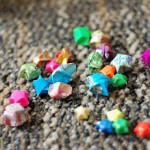
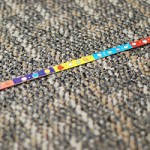
“All the girls would get this long strip of paper—expensive as hell—and you, like, fold it into little tiny stars—it has to be perfect, like, you can’t dent it anywhere—you make a thousand of them; and once you get to one thousand, you can make any wish, and it will come true.”

Q: “So do you only do this in a private setting, or do you do it with a bunch of other girls?”

A: “We did it in middle school—let’s see, we all had a bunch of paper and do it in front of each other, do it at home, or do it when we’re bored because we’re like, “I need to get that thousand!’”

Q: “Did you or anyone you know ever make it to a thousand stars?”

A: “I knew a couple people who did.  They were like, “Yay!  I got a thousand!”  And, I don’t know what their wish was….”

Q: “Do you know if their wishes came true though?”

A: “No.  But it made us really happy when, for presents, we’d give each other different designs of paper—there’s, like, the shiny foil; the little designs on them—we’d give them as gifts, and we’d be like, “Yes!”  There were clear ones….”

Q: “Can you describe briefly how you made the stars?”

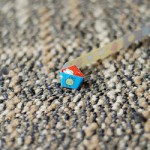
A: “Someone gave me a paper, and I was like, “I don’t know how to do this.”  So, my older friends would teach me how to make it.  And I was like, “Oh my God, I’m learning something important!”  But, first you make a knot at one end, and then you keep folding over and over and over until you have a flat pentagon; and then you squeeze the corners.  And you get a 3D star.  And then you put it in those, like, collectible jars.”

My informant has demonstrated for me how to make these paper stars which are folk objects tied to the folk belief that if a person could make one thousand perfect paper stars, his or her wish would come true.  Though she has never achieved this goal, she told me that she was never an adamant believer of it in the first place—she only made them because they were fun way to pass the time and hang out with friends.

The folk object and folk belief have been commercialized over the years to target Asians—a folk object that makes its greatest profit by selling back to its own culture.  This item often targets tween to teenage girls who go on to eventually teach younger girls how to make these stars and tell them that they will be able to make a wish if they can make one thousand perfect stars.  I think that the stars play on the romantic idea that stars are lucky and somehow possess powers to grant a person’s wishes.  Perhaps the reason a wish can only be granted after a person has made one thousand perfect ones because it will demonstrate that the individual in question has demonstrated skills and patience worthy enough of one granted wish.  Or perhaps the creation of a thousand stars as perfect as the ones found only in the heavens proves that a person is “god-like” enough to have a wish granted—somehow being able to create these perfect stars demonstrates mastery over the heavens.