
Tag Archives: New Orleans

The Ghost of Chloe

Nationality: American
Age: 57
Occupation: Professor (USC)
Residence: Los Angeles
Performance Date: October 24, 2020
Primary Language: English

The Story (over Zoom):
There’s a plantation called Myrtle’s that was a South Louisiana plantation outside of New Orleans that General Bradford, who was a famous general, owned. He, like many plantation owners, was sexually assaulting a slave in the house and her name was Chloe. So he had a relationship with Chloe. And Chloe got caught eavesdropping on the family. She was outside a room listening in, and to punish her they cut off her ears. Or maybe an ear. And so to get revenge she slowly poisoned the wife and children of the guy by, in the kitchen, poisoning food. And when she was caught doing that, she was killed, she was hung. And so, Myrtle’s plantation is said to still be haunted by her, if you go to the plantation in South Louisiana and go on tours, they’ll tell you about sightings of Chloe… And she had worn a scarf around her head after her ears were cut off, so y’know, you couldn’t see, and people knew the ghost was Chloe because the ghost has that green scarf on her head.

Context (as given by the informant):
When I was in middle school we did a tour of South Louisiana, a history tour where we went to different places, and that was one of the stories that we heard, that people regularly saw her ghost. If you take a tour there today they’ll tell you the story of Chloe.
The story is a way white guilt about the history of slavery gets manifest. It gets manifest in a way that is indirect, and frames Chloe as at fault.

Analysis:
The story is definitely intertwined with histories of oppression, and it both reflects and documents some of the injustices that occurred in the plantation era south. The use of the story as a tourist attraction is also interesting, as Myrtle plantation (and by association, Chloe) has been commercialized.
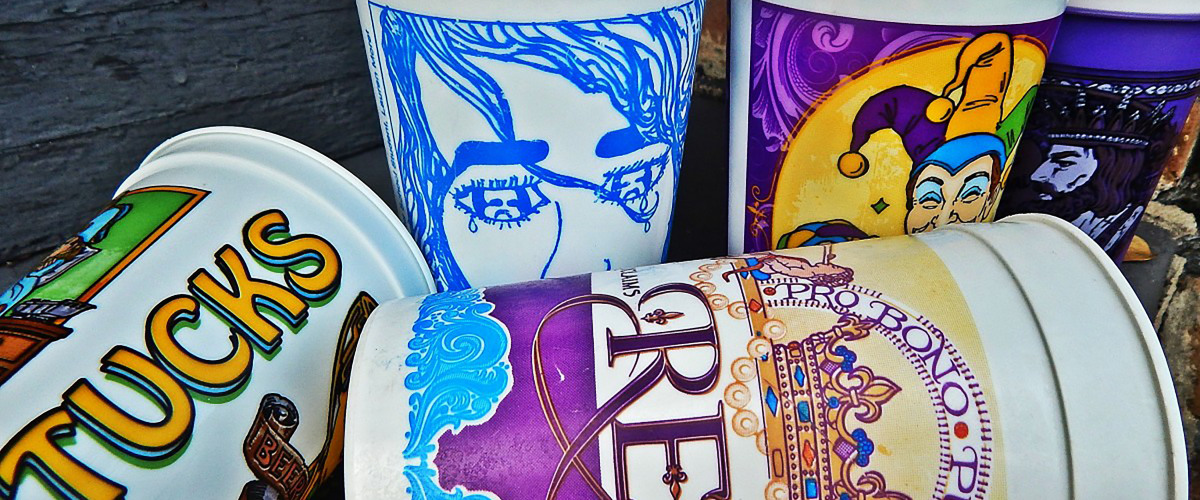
Mardi Gras Cups

Residence: New Orleans
Performance Date: 4/20/20

Main Piece:

SG has been to Mardi Gras almost every year since she was a little kid. Decorated plastic cups are a typical throw in every Mardi Gras Parade. Parades, known as Krewes to the locals, each have a unique name and theme to them. Riders in each parade have “throws”, which are items riders throw off of floats. These commonly include beads and doubloons, but what is solemnly talked about is cups. Cups are a collectible item during Mardi Gras as they have more value than most other throws. Not only can you keep it as a memorate of a parade, but you can use it for years to come. Families collect these and use them as normal drinking vessels in their homes and lives. Go in any cabinet and next to the glass cups you will find various Mardi Gras cups themed to each parade.

A Swig of History: The Mardi Gras Cup | Where Y'at
https://www.whereyat.com/a-swig-of-history-the-mardi-gras-cup

Context:

SG is my mother and has been to Mardi Gras with kids since I was born. She is from New Orleans and attends every year. This was taken during a conversation with her in our backyard while reminiscing Mardi Gras. She still collects cups and send me them each year.

Thoughts:

As a New Orleanian and a avid fan of Mardi Gras, as I have been many times before, I did not realize that this was not much of a practice outside of New Orleans, collecting cups to use throughout the years. For instance, after my first year at USC, I missed Mardi Gras for the first time in my life. As a response I got my parents to ship me a King Cake and some decorated cups. In the house I was living in, I used them frequently, and people always commented on the designs on the cups calling them unique. I was so used to using the cups that I never took a moment to think about the designs. Each design reflects the idea of that parade. Krewe D’etat, a parade devoted to a satirical take on the previous year, would have cups that mock events from the last year. Krewe of Muses, an all female parade, would have cups with feminine symbols such as the iconic red lips symbol of the krewe. Each design is unique and can only be gotten if one attended that parade in that year.

Mardi Gras Ladders

Nationality: American
Residence: New Orleans
Performance Date: 4/20/20
Primary Language: English

Main Piece:

Mardi Gras ladders are used during Mardi Gras each year. They are used to put children higher up in the air to see the parade and to keep them safe from going in the street. Usually decorated in purple, green, and gold with a family’s name. They are on a ladder so that kids can see a float. Wheels are on the sides to help them roll easier from the car to parade route. On top of the ladders are seats which children sit in and they usually have a bar on the front to keep the kids from falling. Cup holders are put on the side for a parents’s drinks. They are put 6 feet away from the curb on the sidewalk or neutral ground, all painted differently. Families tend to put their ladders in certain spots next to each other forming a long row of ladders.

Context:

SG is my mother and has been to Mardi Gras with kids since I was born. She is from New Orleans and attends every year. This was taken during a conversation with her in our backyard while reminiscing Mardi Gras. She still brings ladders out each year for her younger children.

Thoughts:

I like this piece of folklore a lot as it brings me back to when I was much younger attending Mardi Gras. When I only went with my parents and not friends, my mom would put me in a ladder with my twin sister as we shouted at the float riders to throw us beads and other items. The uniqueness of these ladders is very important to me as I had the opportunity to decorate the newest ladder that we use for my little brothers. We painted it purple, green, and gold, while also putting our hand prints on it. This is something I had grown up with and realized how specific a ladder with a seat on it like this is to New Orleans and that you rarely see it elsewhere.

Holy Name of Jesus Crawfish Boil Competition

Residence: New Orleans
Performance Date: 4/20/20
Primary Language: English

Main Piece:

SG is a mother in New Orleans. Crawfish boils are major events throughout New Orleans and Louisiana as a whole. They tend to be more of a social hour rather than a meal. Holy Name of Jesus, SG son’s school, has an annual crawfish boil as a fundraiser for their school. Around 10 different groups, parents and relatives of kids at the school, compete to see who makes the best crawfish boil. Generally each boil has potatoes, corn, crawfish, seasoning, but everyone puts their own spin on it trying to win the competition. The voters are the students and families visiting, and they each get tickets which they can give to the group that they think had the best crawfish. We have gone a couple of years in a row, and they usually have good music, atmosphere, and of course food. As a social hour, since Crawfish at typically eaten standing up, you stand around a table with others and socialize more than just eat crawfish. SG says that crawfish boils are a big aspect of Louisana culture.

Context:

SG is a resident of New Orleans who’s youngest sons attend Holy Name of Jesus School. She has attended this with the rest of her family since her youngest sons attended the school, and plans to go after.

Thoughts:

The idea of this being a social event is really appealing to me. The idea of dining as a social event has always been present be it with dates, luncheons, or business dinners, but this is different. It is similar to a barbecue or cookout, in which you invite others over to eat with you and socialize, but is unique in how people are positions. The fact that you are usually standing at a crawfish boil is interesting to me because that is more like behavior at a bar which functions mainly as a social place. The idea of it being a competition is also interesting because it shows the culture of food in New Orleans. It shows that everyday people in the city care about perfecting the craft that their city is known for and that they want people to socialize around it.

New Orleans King Cake

Nationality: American
Age: 20
Occupation: Student
Residence: New Orleans
Performance Date: 4/20/20
Primary Language: English

Main Piece:

EG, a resident of New Orleans, if very fond of the Mardi Gras season and the treats that come during it. One of these is King Cake. King Cakes originate in France as a cake to eat during Carnival season. It is a sweetcake covered in sugar and icing. A tradition for carnival season. They begin selling them on Twelfth Night, January 6th, and stop on Mardi Gras day. Some stores sell them any time of the year but not as a true “king cake”. A Baby is inside of the king cake. In many traditions if you get the baby you must buy the next king cake. In school every Friday one person would bring a king cake and the next week another person would have to get the king cake. 

Context:

EG is a college aged resident of New Orleans. She was born there and has lived there her entire life. This was collected in a conversation at my home. She has been to Mardi Gras every year since her birth and considers it to be a central part of her life.

Thoughts:

I enjoy the history and idea of king cake not just as a New Orleanian who likes the food, but as a tradition. The whole idea to me is that we eat this super unhealthy food so much during this carnival season as last hurrah before Lent begins right after Fat Tuesday. The baby being inside of the cake as a reward is very interesting. I like the tradition of having the recipient of the baby bring the king cake the next week. The wide variety of them in New Orleans also would mean that different people would bring in different king cakes which would give everyone in her class a different experience each time they eat it.