
Author Archives: Sarah Aurelio

Hula Dance – Performance Rituals

Context:

The informant is a 19-year-old student from Santa Monica, California. Her dad is from Hawai’i, so she has been learning and performing hula since she was 5 years old.

Text:

“At the start of every practice before entering like the practice space, we all circle–stand in a circle at the entrance and do like a chant, which is it’s called like Kunihi Ka Mauna. And basically like any hula dancer you ask, they know this chat because it’s like in every halau, which is like the school’s, they do this chant. It means like ‘steep and calm is the mountain.’ And so the idea is that before you start practice, you’re asking permission to learn the hula and like enter the space. And so you’ll do, it’s called like an Oli Kahea and the Kumu, the teacher, will respond back and then when you hear like a certain line of their response, that means you can enter.

And then also you always put on and take off your skirt, like, over your head. Like, you never like step into it or like step out of it if that makes sense because, like, it’s about like– It’s, like, disrespectful to, like, put the energy, like, below you or something. Yeah, so you’re putting it over yourself, like, over your heart.

Something kind of similar to that is whenever you have a lei, the flower, the direction of the flowers goes like upward facing on your left side. So like on your left side, they’re, like facing up same thing with, like kukui nuts, are like those, you know, like the blonde or black, like, nuts. And they’re kind of like heart shaped. Same thing, like the heart shape goes up on your left side because it’s like, your heart is. So, for flowers and any kind of lay that it goes in that direction because it’s like the, since your heart is on your left side, it’s like the circulation of the energy in the correct direction.

And you dance barefoot to be closer to Mother Earth.”

Analysis:

This is a ritual that the informant says, everyone who practices hula learns early on. Hula seems to have a strong connection to both Mother Earth and their home of Hawai’i. They want to show their respect every time they perform with these rituals. Performing these rituals repeatedly every time they perform dhow their dedication to respecting Mother Earth and the culture.
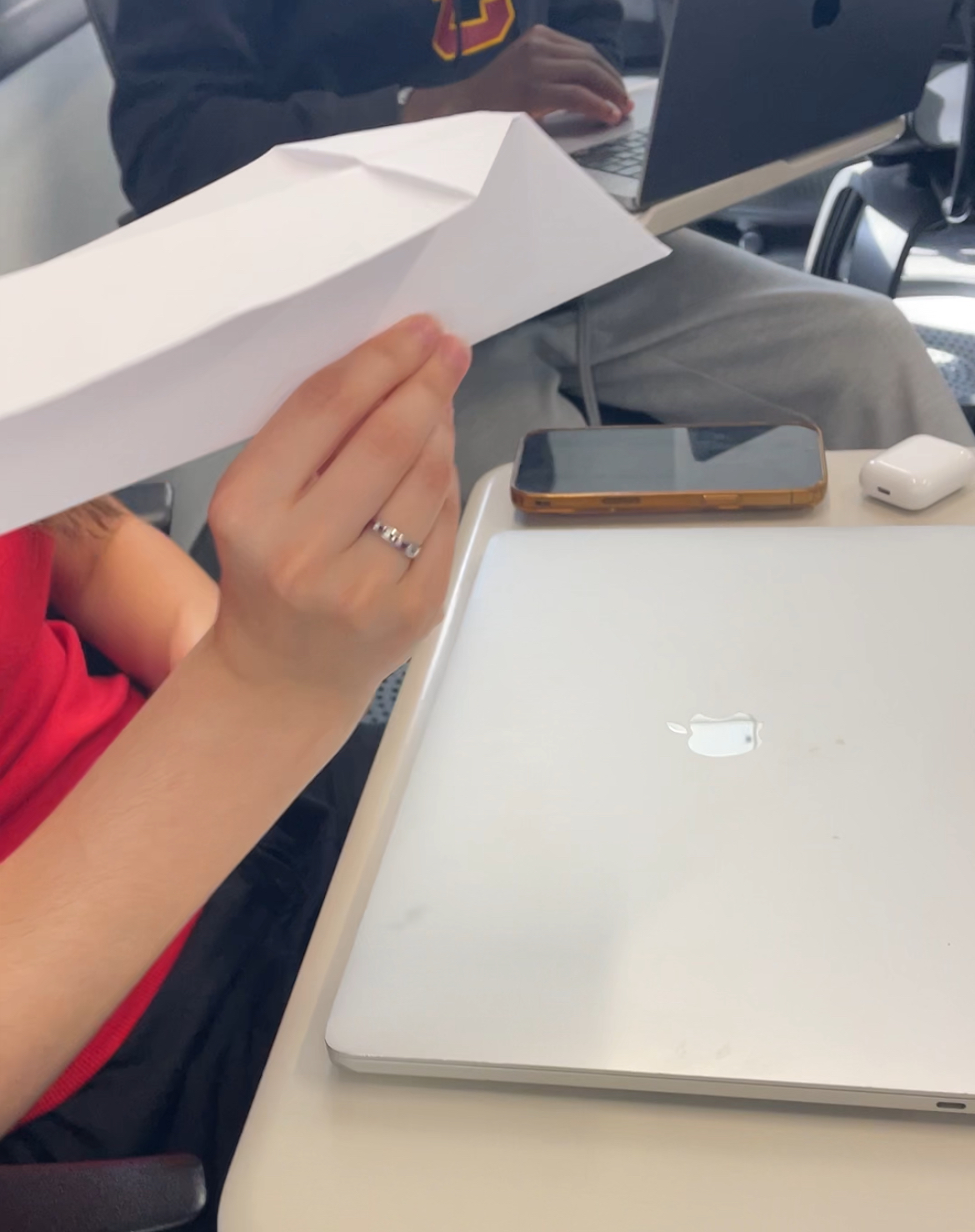
How to Make a Paper Plane

Context:

My informant is a college student from Arizona and learned how to make this paper plane in elementary school from one of her classmates.

Text:

Take a loose-leaf piece of white paper and fold two corners of the top of the paper to the middle. Then fold the paper in half. Take one half and fold that in half again. Repeat to the other side. Now you have a simple paper airplane.

Analysis:

This is a common childhood craft that many children learn how to make when they are bored. People often learn different variations of the paper airplane. In this case, C learned how to make a simple version of the plane. Since this is such as simple craft, this piece of material folklore is easy to pass from person to person.

Filipino Musical Folktale – Dip Dippo

Context:

My informant is a 18-year-old girl from Seattle, Washington. She is half Filipino and grew up learning about Filipino culture.

Text:

“One of my old, like, great grandpas from the Philippines told me a story about this guy who I’m pretty sure is like reincarnated into a drum, like a traditional drum. And he goes around and he’s like being used by the people and it’s bringing back all the memories of like, how important music is for like, the community and cultural celebrations. And it’s talking about just like how traditions are passed down through generations through music. He later wrote a short story, called Dip Dippo about it. But it was really cool.”

“Do you know where he learned it?,” I asked.

“I think that he was drawing on old Filipino folklore, but he told it to me as a children’s story in his own way.”

Analysis:

I noticed that as my informant was telling the story of this folktale, although she did remember the specifics of this tale, what she took away seems to be the core values of Filipino culture. This tale revolves around music, community, and culture. The tale builds off of the belief of reincarnation but adds in Filipino values. I think the story describes that, even after their loved ones have passed on, they can still connect with their spirit through music, building off of their community and culture.

Pouring Tea – Chinese Ritual

Context:
My informant is a 19-year-old student from Orange County, California. I was having dim sum with my three friends and when we sit down at the table, we have tea cups and a pot of hot tea set before us on the table. I begin pouring the tea into one of my friend’s cups and she begins placing the two tips of her fingers by the side of the cup as I pour.

Text:

She begins explaining to us, “whenever my family pours tea we tap our fingers (she continues the action, tapping her fingers on the table) to show respect for the one pouring the tea. I think my mom said this was how kings used to do it but I don’t really know.”

The rest of us copy the movements when we get our tea poured.

Analysis:

My friend grew up in a traditional Chinese household. Both of her parents raised her immersed in Chinese culture teaching her Cantonese at a young age. I think this ritual can be traced back to one of the many Chinese dynasties. This ritual seems to have been passed down through generations. This combines food as folklore with this ritualistic performance, as hot tea also holds traditional value. Again, this is one of those beliefs that puts a lot of value on respect.