
Tag Archives: festival

Windsor Caroussel of Nations

Background Information: 

The informant is a middle-aged person who grew up in Windsor, a city in Canada. They emigrated to Windsor from Turkey, at a young age. They are describing a festival that they remember from their childhood. 

Main Content: 

ME: Can you tell me about the Windsor Caroussel of Nations? 

ED: So there was this festival called the Caroussel of Nations when I was growing up, and you know Canada prides itself on being a multicultural society and they consider themselves a cultural mosaic, as opposed to a melting pot, like the US. They fund a lot of festivals that, you know, help people stay connected to their cultural backgrounds and stuff. So one of those things was the Caroussel of Nations and it was around Canada Day. It was a festival where all of the cultures that wanted to get involved sign up, and they get a little grant for their space, and people have arts and crafts that they sell or display, there’s some different venues that have people who do shows like cultural dancing and displays. There’s always food, of course, which is probably the biggest thing and my mom would always make Turkish shish kebabs and shish koftes and things like that. People from all the community go around and check out all of the different cultures and enjoy the food and the environment.

ME: Did you ever participate? 

ED: I used to do this Turkish dance as a kid, we used to dress up in old traditional Turkish outfits and do a traditional Turkish line dance called Halay, you know? We would do that as a display, we would be like performing monkeys for the visiting Canadians (laughs). It was a lot of fun, everyone was coming together and the whole Turkish community would come together to put this on, it was fun visiting the other communities too. I think it’s still going on today.

Context: 

This interview happened at my house.  

Thoughts: 

The informant is my father and it seems that he really enjoyed it growing up. It seems like the Turkish community in Windsor would rally together to put on a good event and it would bring the community closer together. I have attended this festival once, and it is really amazing to see dozens of different cultures on display. It is also interesting to analyze the approach that Canada takes as a “cultural mosaic” as opposed to the “melting pot” here in the United States. I think that festivals like these are great examples of the difference. This festival is not about assimilating to Canadian culture at all, but it is about celebrating the folk dancing and traditional food from the countries that people immigrated from.
Boise Basque Festival

Text:


“Every 5 years there is a Basque festival in Idaho. Idaho is the second largest concentration of Basques in the world outside of the Basque country because the terrain in Idaho and the surrounding areas is the most similar to Spain as a whole, like having very good soil and being pretty flat with some mountains, and you can go fishing there and there is a lot of room for cattle. The Basque festival is in Boise, and they have a lot of food and street fare, and tapas which are small dishes which are traditional to the Basque heritage. They also have a strongman competition (a traditional Basque sport) where people see who can lift the largest boulder. They have traditional Basque dancing and a pelota [ball] game where you hit a ball against a wall, kind of similar to racquetball. There is lots of paella and there are drinks called ‘Calimochos’ which is Coca-Cola with red wine, which is a traditional Spanish drink and everyone drinks those.”

Context:

OA is a 21-year-old American student at USC. She grew up in Washington. Her family is of Basque heritage, so I asked her about any Basque specific traditions she has, since the Basque people are from a very small region in Northern Spain/Southern France. She told me about a Basque festival her family goes to in Idaho. 

Interpretation:

Festivals are a unique expression of cultural heritage because they can bring together people from a wide area in celebration of one specific thing, in this case Basque people celebrating and honoring their culture. Since it only happens every 5 years, it makes it even more special, and the people can honor their ancestors by partaking in the things they did traditionally. The geographical location of the Basque country in Europe explains why some of their traditions are similar to others in nearby countries, like tapas and pelota which are both Spanish words. But even with these similarities, this festival and these people are incredibly unique. It is special too that there is a huge community of Basque people who all live in a common area that represents their homeland in the way it is geographically similar to where they came from. These continued connections with the past can give people a sense of identity that are derived from the community they are in. 

Užgavėnės

Main Text

GD: “Užgavėnės is a Lithuanian holiday, um, that’s translated to ‘The Before Lent.’ So, it takes place, um, right before the Lenten season, the weekend right before that, and what it is culturally is, um. It’s a festival in which we scare away the winter pretty much, and welcome the spring. Um, it’s been compared to, like, Mardi Gras and you’ll see as I talk more about it you’ll be able to connect that a little bit more, but um. The entire festival is just Lithuanian people getting together, making really scary masks and decorating them and going really big with these costumes and these like huge masks that they’ll wear, um, to scare away the winter. There is a structure that we construct that is usually a representation of winter, like taking place in like the form of a man or something or like a stick figure, uh, just this really large totem that we burn ultimately to just say ‘To the end with winter, here comes spring.’ And in the same light there is a little staged playing of a man and another man dueling pretty much, and one guy represents winter with the other guy represents the spring, and always the spring will overcome that and win against the winter.”

Background

GD is a 19 year old Lithuanian-American second year student at USC studying Theatre and Classics. Her mother was born in Lithuania and moved to a Lithuanian community in New Jersey, where GD attended Lithuanian school and church. GD describes Užgavėnės as her favorite holiday growing up, attending it not only in America but also in Lithuania. She remembers waking up before dawn in order to peel potatoes in order to make pancakes specifically for the festival. GD believes Užgavėnės to be so important not only to her but also to her culture because it was one of the few pagan holidays that survived Christianization in Lithuania.

Context

GD describes Užgavėnės as one of the more important holidays in the Lithuanian calendar with it originally being celebrated on the last day of winter before Christianization. It has been hastily Christianized and is now celebrated on the weekend immediately preceding Lent, but the traditions and meaning of the festival remain. GD describes Užgavėnės as being full of food like bagels and pancakes, and performers playing music as people dance.

Interviewer Analysis

Many traditional folk festivals and celebrations have been slightly changed in order to fit into the rising wave of Christianity, even Christmas retains many aspects of its original pagan traditions. It is unfortunate however that many of the traditions were lost in these re-skinnings, so it is nice to see that Užgavėnės, according to GD, was able to keep so many of its traditions. Festivals celebrating the end of winter and the coming of a sweeter season are a very common phenomenon especially in northern countries that experience harsher winters like Lithuania.

Baba Marta

Main Text

CS: “So the next one I was thinking of was the tradition of Baba Marta, which is like the first day of spring for Bulgarians. It’s like the first of March and you hang up these white and red like crochet, or like knitted things, like yarn and they sometimes look like people, sometimes they’re just abstract shapes. I don’t really remember what the shape is. But people always wish each other ‘Chestita Baba Marta’ or like happy first day of spring and Baba Marta is like baba of spring. I guess somewhat similar to the Baba Yaga story, there’s this grandma who is the incarnation of spring and shes just like a joyous type I guess.”

Background

CS is a 21 year old Bulgarian American from California and is a third year student studying Computer Science: Games at USC. CS describes the Baba Marta holiday like Christmas, you do not remember your first one but it is an ever-present time in your life. CS loved Baba Marta as a holiday because he could look forward to seeing his family and having an excuse to eat. His father, aunt, and grandmother all celebrate it with him every year.

Context

Baba Marta is a spring time festival celebrated in Bulgaria on March 1st. Confusingly it is also the name of a physical embodiment of springtime that comes to people as a joyous old woman.

Interviewer Analysis

Festivals celebrating the end of winter and the coming of a sweeter season are a very common phenomenon especially in eastern European countries with Slavic influences, even though Bulgaria’s geographical placement further south in Europe means that its winters would not have been as harsh as say countries like Lithuania. Lithuania’s Užgavėnės festival however is a very similar celebration, in that it celebrates the end of winter and the beginning of a more fertile season.

Šokių Šventė, Traditional Dance Clothing

Main Text

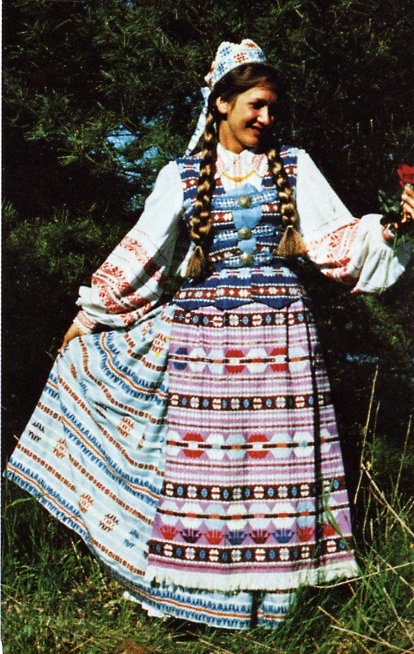
GD: “Šokių Šventė is the International Lithuanian Folk Dance Festival that happens once every four years, and what it is, it’s a folk celebration. So everyone dresses up in their tautiniais drabuziais which is their traditional clothing and does their hair, does their makeup. So everything is made out of wool and linen, the women traditionally wore like long skirts with aprons, obviously not floor-length as you have to go work, shirts with poofy sleeves which often had red embroidery around the wrist and a vest that matches the skirt. There are a lot of patterns in Lithuanian culture, in terms of vest and the skirt, and they would mainly distinguish where you are from.”

Background

D is a 19 year old Lithuanian-American second year student at USC studying Theatre and Classics. Her mother was born in Lithuania and moved to a Lithuanian community in New Jersey, where GD attended Lithuanian school and church. She is excited to attend Šokių Šventė for the very first time as it is being hosted in Philadelphia this year.

Context

This traditional clothing was once everyday wear for people living in Lithuania, but has now been relegated to special wear for high profile cultural events like Šokių Šventė. It is also worn at weddings and other folk celebrations.

Interviewer Analysis

JThe phenomenon of once widespread folk dances being raised up as a symbol of a culture and then relegated only to manufactured displays of “Folk Culture” is a very common occurrence. Dance trends change, especially in our modern and more global times. Taking a cultural snapshot of dance and placing it into a category of folk importance may ensure that the dance lives on, but not that it will continue being the preferred style by the people. This has happened not only with the dances performed at Šokių Šventė, but also the clothing worn to the festival.