
Category Archives: Customs

Customs, conventions, and traditions of a group

Kumkum Sacred Powder

Age: 20

Context: This red powder, referred to as kumkum, holds religious significance to the informant. She recalls it being spread on her forehead after praying.

Text: The informant puts this red powder, kumkum, on her forehead to signify devotion and spirituality. Although her family buys it from a store, she believes it is made from combining turmeric, a prominent holy ingredient in Indian food, and lemon.

Analysis:

This practice involves material culture and customary folklore as kumkum is symbolically used to express religious identity. The application of kumkum on the forehead connects to Victor Turner’s two poles of symbolism, as the visible red mark indicates a sensory experience that reflects a larger idealogical, spiritual meaning tied to faith. The belief about its natural ingredients, even when store bought, shows how folklore holds vernacular significance and can impart sacred meaning onto everyday ingredients like turmeric.
Death & Ash Rituals

Age: 56

Context:

My informant has dealt with the death of both of her parents. Each funeral procession took around a week including preparation of the body. This ritual has distinctive religious and cultural meaning for her. She told me that when she passes away, she will also participate in this ritual as an active bearer of tradition.

Text:

In Hindu tradition, deceased family members are often cremated. When gathering the ashes, ashes cannot be brought into the house. Instead, ashes are wrapped in pots made from natural ingredients and these pots are kept in nature. Specifically, the information recalls her father’s ashes being placed into a carved out tree. Then, the ashes are carried to a sacred river, Talakaveri. At Talakaveri, the ashes must be placed into flowing water rather than still water.

Analysis:

This funeral practice reveals the importance of the connection between the departed soul and the living. Ashes are not brought into the house to preserve the soul of the person and their transition to reincarnation. According to Van Gennep’s rites of passage, the process of cremation, placement in nature, and later integration into sacred water, helps both the deceased and living navigate death as a transition. The specific emphasis on Talakaveri, a river that all Hindus believe they originated from, and flowing water conveys the symbolic nature of customs and the inseperable bond between a body and its environment. From an emic perspective, the informants intention to continue this ritual shows how folklore is actively performed to maintain tradition through communal lived experiences.

Don’t Step on the Chalk Lines

Folklore:
Don’t step on the lines of a baseball field before the game starts. It is bad luck to step on the line during the warm ups or moving through the field before the start of the game.

Context:
The informant is a baseball player who “learned baseball superstitions through players” who heard it from their teammates, coaches, parents. The informant notes it likely “became a thing out of respect… [it’s] respectful to keep it in check.” It preserves the “feel of the game.” Practically, the lines serve as a marker to help play the game and count foul balls which are important for play.

Analysis:
The function of this folklore is a way to help keep the field of the baseball game cleaner before the game. It could hold many functions as a way for more experienced baseball players to identify newer or more inexperienced players. The folklore is spread from older members of the community to younger members. This superstition tends to help preserve values of the community and as the informant discussed, create respect for the caretakers of the field, who may also be their coaches or seniors. 

Kiss the Ring to Graduate

Folklore:
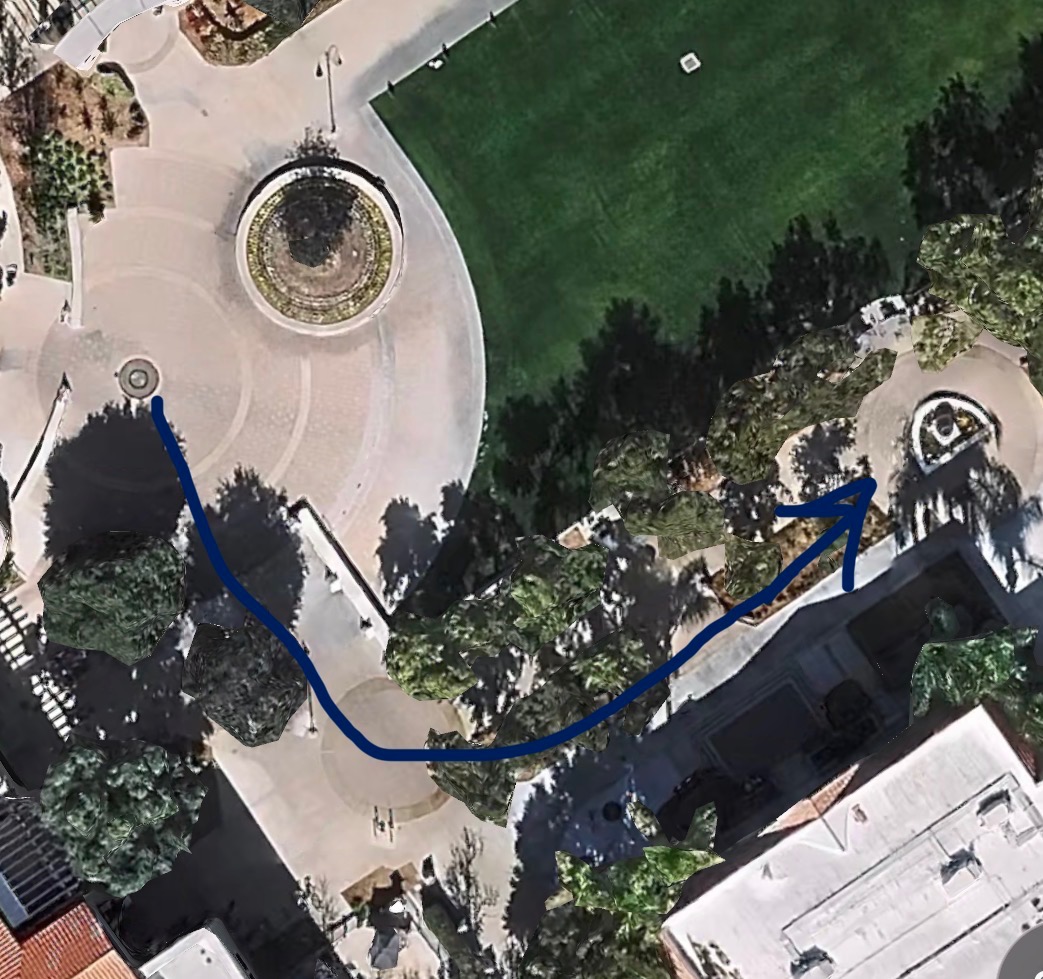
Don’t step on the emblem at California Baptist University or else you won’t graduate. You can break the bad luck by running as fast as you can to the ring statue and kissing it.

Map of the University from the Emblem to the specific Ring Statue

Context:
The informant is a freshmen at Cal Baptist University, where he learned from his First Year Experience Leader this folklore. There is a specific emblem placed on campus where if you step on it, he was told he won’t graduate unless he runs to a ring statue nearby and kisses it. His friends were forced to do it after they stepped onto the emblem. The informant noted it likely was to show respect to the university and a possible hazing ritual from upper class man to lower class men. It showed they were a part of the community.

Analysis:
The story and superstition is shared within the community and specifically shared from upper class men to lower class men. The experience helps build camaraderie between the students and create a distinctive identity for its members. It also on a practical level, helps discourage disrespect against the university and encourage attention to detail and care for the campus and its members. The bad outcome being failing to graduate also emphasizes the communities interest in education.

Meal Train

Folklore: A meal train is a tradition where following a member of the community having a baby or another significant event, the community organizes a group of people to help make and provide meals immediately following the event.

Context:
The informant encountered the practice through her local church and after moving to Los Angeles. The informant noted they were exposed to the practice a bit as a child, but not in such a large and traditional scale. It is to help provide meals to a member of the community and help them in times where the extra care is helpful.

Analysis:
The folklore is used to help bring together community and emphasize care for its members especially those in tiring, difficult, or wonderful situations. The experience brings people together and helps the member receiving the care feel appreciated.