
Author Archives: Magnolia West

Don’t Step on the Chalk Lines

Folklore:
Don’t step on the lines of a baseball field before the game starts. It is bad luck to step on the line during the warm ups or moving through the field before the start of the game.

Context:
The informant is a baseball player who “learned baseball superstitions through players” who heard it from their teammates, coaches, parents. The informant notes it likely “became a thing out of respect… [it’s] respectful to keep it in check.” It preserves the “feel of the game.” Practically, the lines serve as a marker to help play the game and count foul balls which are important for play.

Analysis:
The function of this folklore is a way to help keep the field of the baseball game cleaner before the game. It could hold many functions as a way for more experienced baseball players to identify newer or more inexperienced players. The folklore is spread from older members of the community to younger members. This superstition tends to help preserve values of the community and as the informant discussed, create respect for the caretakers of the field, who may also be their coaches or seniors. 
Ultimate Spoons

Folklore: Hiding spoons or other items around the house and racing with the other participants to try and find them all before anyone else.

Context:
The steward of the folklore described the game as hiding spoons around the house. She and her siblings would play it to see who could find them the fastest around the house. She noted they on occasion asked their parents to help hide the spoons over the house, but they didn’t take part. She implied asking for the parents participation in the game was rare. She didn’t have a name for the game, though she researched it and found the name ultimate spoons which sounded familiar.

Analysis:
The game the informant describes seems to allow for connection and camaraderie within her siblings or other children. The informant was clear on how the parents did not participate in the game, and only rarely with the preparation of the game. It shows a shared value of fun and cleverness, with the goal of the game being good at finding and quick at it.

Frog Tail Saying

Folklore:
“Sana sana colita de rana.” – “Heal heal little frog tail.” – A saying used to help with healing if someone got hurt.

Context:
Informant is a Mexican American senior at USC. Her family originated from Chihuahua Mexico, and she grew up frequently hearing this saying from friends and family. She remembers hearing it from her grandma. The folklore is a part of a larger saying, but the informant commonly used the shortened version.

Analysis:
The folklore is something that shared between elders to youth, who commonly are energetic and prone to injury. It is shared throughout the generations and may even be shared from youth to youth, having learned it from their parents or elder figures.

Kiss the Ring to Graduate

Folklore:
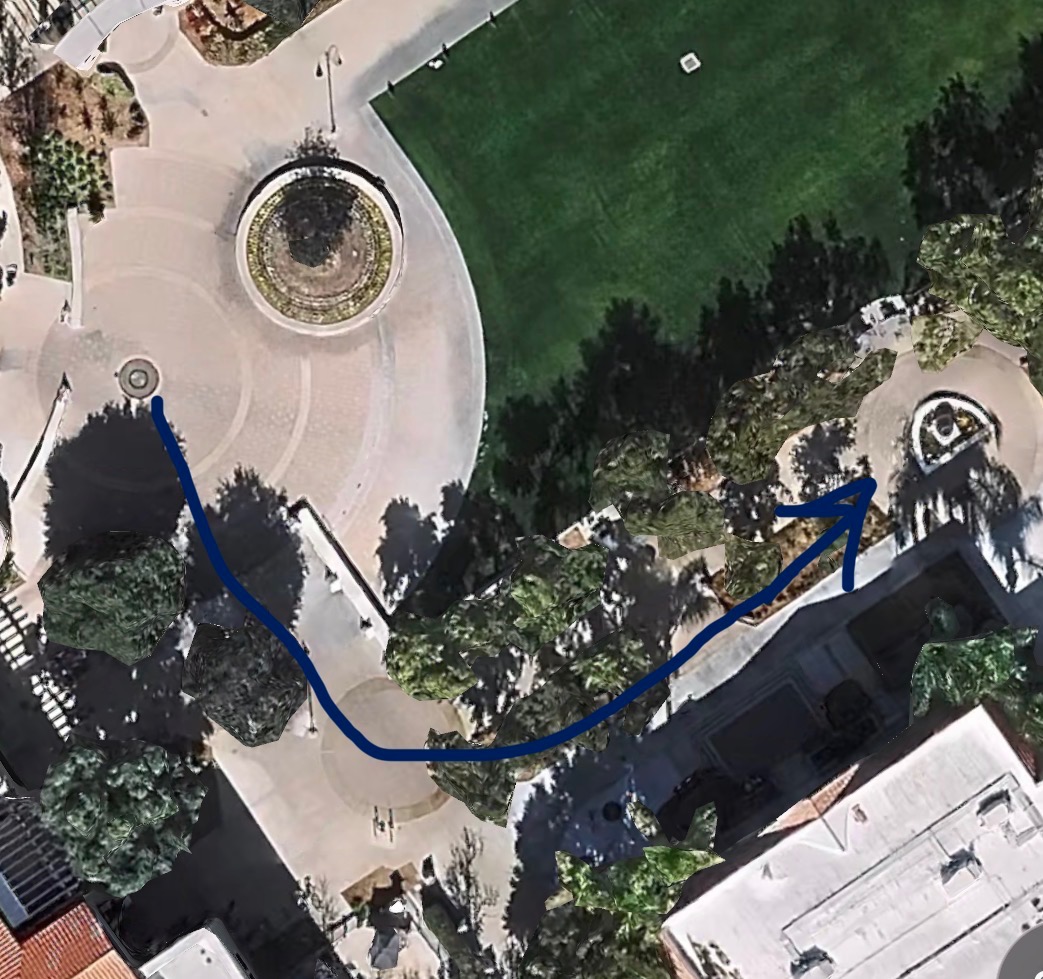
Don’t step on the emblem at California Baptist University or else you won’t graduate. You can break the bad luck by running as fast as you can to the ring statue and kissing it.

Map of the University from the Emblem to the specific Ring Statue

Context:
The informant is a freshmen at Cal Baptist University, where he learned from his First Year Experience Leader this folklore. There is a specific emblem placed on campus where if you step on it, he was told he won’t graduate unless he runs to a ring statue nearby and kisses it. His friends were forced to do it after they stepped onto the emblem. The informant noted it likely was to show respect to the university and a possible hazing ritual from upper class man to lower class men. It showed they were a part of the community.

Analysis:
The story and superstition is shared within the community and specifically shared from upper class men to lower class men. The experience helps build camaraderie between the students and create a distinctive identity for its members. It also on a practical level, helps discourage disrespect against the university and encourage attention to detail and care for the campus and its members. The bad outcome being failing to graduate also emphasizes the communities interest in education.

Rally Cap

Folklore:
Flipping a baseball cap inside out to bring on a rally of good plays in a baseball game. The action can be performed by players or the fans in the stand.

Context:
The informant was a baseball player in Santa Clarita, CA. During games, he or his teammates would perform this ritual to try and help bring good luck or spur on a rally where a lot of good events would happen in quick succession like “a guy gets a hit, a guy walks, a double and they score… a lot of them go with quick bursts of runs.” The informant noted the rally cap “is trying to initate a hot streak,” to get the game on their side and moving.

Analysis:
The ritual is intending to bring good luck and try and spur on the team into a favorable position. The informant noted in the interview that baseball is a game of rhythm that is hard to hold and keep it going. The team aspect and the harder rhythm makes supersitions common to try and create a favorable outcome for the game and the team.