
Green Frog

Nationality: American
Age: 18
Occupation: USC Student
Residence: Los Angeles
Performance Date: 2/21/23
Primary Language: English
Language: Korean

Text:

Original script: 청개구리

Roman script: chung-geh-goo-ri

Transliteration: Green frog

Full translation (according to performer): Expressing your frustration by calling someone a contrarian

Context:

This saying is inspired by a Korean folktale that explains why frogs croak when it rains. A disobedient frog regrets how burdensome he was when his mother dies. To finally follow her wishes, he buries her near the riverside and cries out for her in fears that she’ll be swept away. In a less tragic light, CL says that her mother often recites this to her when she “didn’t do what she asked for certain things.” An example CL provides is when she pulled an all nighter instead of sleeping, even though her mother advised her to rest. As usual, her mother was proven correct when CL “complained about feeling like I did bad on the test the next day.” Thus, CL’s mother said “청개구리” to express her frustration.

Analysis:

Minor genres can act as forms of discipline or advice. By taking from culturally significant knowledge, the dite holds extra weight than if it were a stand alone saying. Almost like an “I told you so,” certain sayings can reflect broader knowledge that exists outside intimate relationships. A mother’s advice appears much grander when it is connected to a cultural tale or traditional story–the saying exceeds her and carries the weight of the “wisdom of the masses.” The saying universalizes personal experiences, thus considering disobedience an expected aspect of child development. Folklore doesn’t necessarily illustrate how to live life–it can also be used to discourage behavior and tell a cautionary tale. Thus, this saying is applicable to a multitude of situations: its moral and disciplinary motive can be used for various situations of disobedience or hypocrisy. Furthermore, it reinstates the mother-child dynamic and confirms the mother’s superior level of experience and life knowledge. However, the tale that inspires this imposes restrictions as to who can be the performer and who can be the audience: it can only be told from a mother to a child, not vice versa. Otherwise, the moral implications would fall short. Motherhood is prevalent in various forms of folklore–symbols, characters, and metaphors immortalize the mother-child bond. Even when their relationship appears ruptured, mother and child are eternally united through folklore.
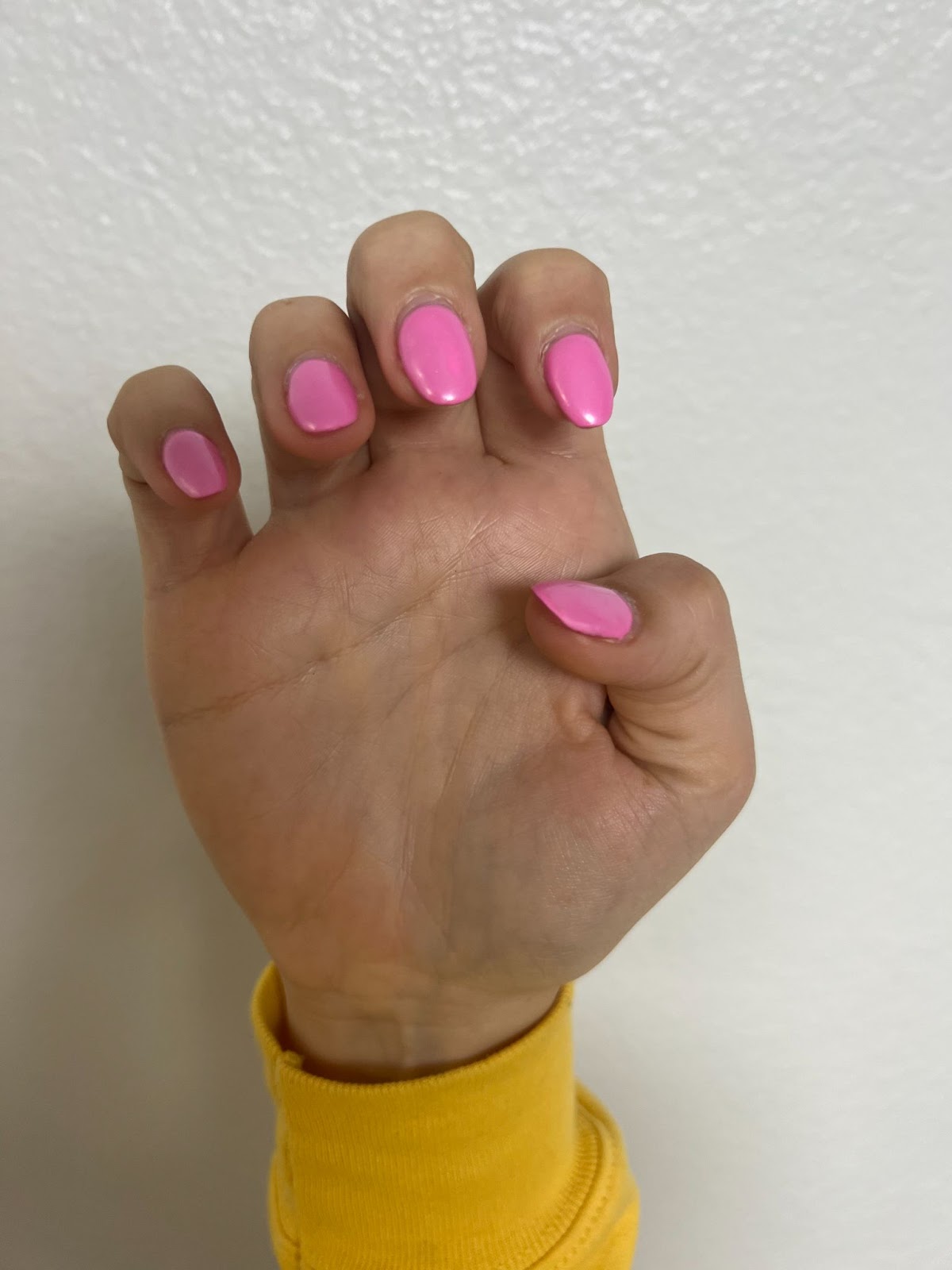
Gesture:

Nationality: Mexican
Age: 19
Occupation: Student
Residence: USC
Performance Date: Feb 16th, 2023
Primary Language: English
Language: Spanish

Context: The interviewee, D, is 19 years old and they were born and raised in Mexico. They told me that when they were a kid, they accidentally made this gesture while trying to get their family dog to sit down. When D’s dad saw what they were doing, he asked them why they were cussing out the dog. D obviously did not know what the gesture meant, so their dad explained it to them. That’s how D found out that this gesture was basically a way of saying “F*** you” to someone.

Analysis: There are a lot of gestures that mean very different things depending on where you are in the world and so it’s important to keep that in mind, especially if you decide to travel internationally. When I moved to Canada from China, there were a lot of words and gestures that I didn’t know the hidden meaning of. I never knew this gesture was a way to cuss at people until D told me. However, I was unable to find the origins of this hand gesture because it’s rather hard to describe what I’m looking for online. I actually make this hand gesture quite often, but only towards myself and not other people thankfully as it’s how I check my nails and cuticles to see if they need fixing.

Joke/Riddle:How do you say pollo in English? And how do you say repollo in English?

Context: D also introduced me to this Spanish joke that they had learned from her childhood friends. D explained that “pollo” is chicken in Spanish, and “repollo” is cabbage in Spanish, so the joke is that people would answer chicken for the first question, and then rechicken for the second question. They told me that the joke would only make sense to people who were bilingual in both English and Spanish since it plays off of the similarities of both Spanish words and their English translations.

Analysis: After D explained the joke to me, I found it quite funny even though they thought it was silly since it was just a stupid joke they played on each other in grade school. It’s interesting how language works with jokes because they sometimes don’t work when translated. This actually reminded me of a joke that I heard from a family friend of mine that only bilingual people who speak both Mandarin and English would understand. You put up four fingers and ask the person what word you are putting up and they will usually respond with “four”. Then you bend your four fingers down and ask them again what word you are putting up and they usually get stumped, so you tell them that it’s “won-der-ful” putting emphasis on the “won” and pronouncing the “ful” similar to four. This is because the “won” sounds a lot like the mandarin word for bend is “弯”, so together it’s roughly translated to “bent four”. 

Proverb: “An apple a day keeps the doctor away.”

Context: The interviewee, M, is 18 years old and they were born and raised in what is commonly known as the Bay Area in San Francisco, California. M had brought up this common proverb that they heard growing up while we were discussing minor folklore genres because both their parents are doctors in internal medicine, and they joked that they would eat an apple every time they wanted their parents to stop bothering them.

Analysis: The proverb originated in the 1860s in Wales, but it was in a different format: “Eat an apple on going to bed and you’ll keep the doctor from earning his bread.” It wasn’t until 1913 that it became the proverb we know today (Davis, 2015). This was because they were advocating for children to eat more apples and healthy foods in general so that they will be in good health and not need to go to the hospital as often. I was also familiar with this saying growing up. I had some health issues when I was younger, and I frequently visited the hospital/emergency room growing up. I had a lot of allergies, one of them being dust, and I used to have asthma as well, so together, they were not a great combination. I was not a big fan of hospitals and doctors, so I would eat apples all the time to try and prevent myself from getting sick or having an allergic reaction and having to go back to the hospital. 

Davis, M. A., Bynum, P. W., & Sirovich, B. E. (2015). Association Between Apple Consumption and Physician Visits: Appealing the Conventional Wisdom That an Apple a Day Keeps the Doctor Away. JAMA internal medicine, 175(5), 777.

Proverb:  “Mit dem Hut in der Hand kommt man durch das ganze Land.” 

Nationality: German-American
Age: 18
Occupation: Student
Residence: USC
Performance Date: Feb 22nd, 2023
Primary Language: English
Language: German, Korean

Context: The interviewee, S, is 18 years old and they were raised in Dusseldorf, Germany. Their mother had taught them this German proverb when they were young. The English translation of this proverb is “with hat in hand, you can go through all the land” and S told me that it basically means to be polite and everyone will be nice back because tipping your hat is a gesture of politeness. 

Analysis: I wasn’t able to find when and where the proverb originated from, and S also did not know, only that it’s a common German proverb in the city where they grew up. I think it’s quite an interesting proverb and it makes a lot of sense to me. I interpret it as not holding your chin up too high and thinking you’re better than everyone else around you but instead staying humble and grounded, which will help you lead a much more fruitful and insightful life. I have always learned to not wear hats inside because it’s a sign of disrespect to the people around you, so by having your hat in your hand, you are communicating that you’re giving all of your attention to the room and the people in it.