
Category Archives: Folk Beliefs

Shaking Off the Luck

Nationality: American
Age: 18
Occupation: USC Student
Residence: Los Angeles
Performance Date: 2/21/23
Primary Language: English
Language: Cantonese

Text:

Shaking your leg at the dining table shakes off good fortune.

Context:

As a child, KF would unconsciously shake her leg up and down while sitting at the dining table. However, her mother would always tell her to “stop doing that because it basically means that, like–it’s thought to be that you’re shaking off your good luck and wealth.” After the interview, KF took to the Internet to see if this was a typical Chinese superstition or just something her family believed in. Based on her findings, this is a well-known Chinese belief, where leg shaking will result in a hard life trying to provide an income for yourself.

Analysis:

The meanings behind gestures go beyond surface level; they can be forms of communication or acts of summoning/getting rid of. Folk gestures often refer to performed gestures, such as a handshake or a secret code, but they can also involve gestures that are strictly avoided to banish bad luck. To some people, including myself, shaking your leg while sitting still is second nature. We often don’t think twice about its implications. However, for those who believe in its effects, there is a conscious awareness behind what their legs are doing. Shaking your leg is often associated with the idea of restlessness–perhaps it could be interpreted as feelings of anxiousness in the present, which hinders a successful future. Not only does verbal speech reflect the ideologies and superstitions of a particular group, but so does physical behavior or lack thereof. Our body is a vehicle that we rely on for life and prosperity–legs are our foundation, as they walk us through life’s path. Thus, in order to ensure a fulfilling life, we need our base to be sturdy. In broader terms, folklore that is reliant upon bodily functions may enable us to reflect on our sense of self and autonomy–in fact, we may have some control over how the course of our life unravels.
A Fishy Remedy

Nationality: American
Age: 19
Occupation: USC Student
Residence: Los Angeles
Performance Date: 2/18/23
Primary Language: English

Text:

Make your hiccups stop by saying “fish” over and over again.

Context:

When PK was younger, he had hiccups and couldn’t get them to stop, so he asked his dad what to do. He told him to say “fish” over and over again until they went away. He tried a bit, found that it didn’t work, and then asked his father a second time. His father said to try again–“it will work eventually.”

He would say it over and over and over again until the hiccups stopped. Whether or not they stopped because of “fish” or of natural causes is unknown, but PK likes to believe that saying “fish” was the remedy.

Analysis:

These folk “remedies” are told to children to provide an effective, lighthearted solution to their inexplicable problems. This is where folklore separates from science and biology: unofficial knowledge passed down from parent to child cannot be taught in institutions. Even if saying “fish” doesn’t actually stop the hiccups, it further establishes this sense of trust; it is comforting to know that your father has different tricks up his sleeve for each problem you encounter. The magic behind folklore rests upon our ability to believe. These ‘life hacks’ reflect a reservoir of experience and knowledge; the power dynamic between parent and child is created from the differences in our stages of life. What we learn from our parents can be passed down to our children, and remedies can soon become familial traditions. Even without fully understanding why you’re doing something, you believe in it because of parental authority and familiarity. We don’t question the logicality of folklore. Although some of these remedies may be widespread and have different variations across multiple regions, it’s almost as if your parent has this special, niche understanding of how the world works–they possess wisdom beyond standardized, common knowledge.

Gesture:

Nationality: Mexican
Age: 19
Occupation: Student
Residence: USC
Performance Date: Feb 16th, 2023
Primary Language: English
Language: Spanish

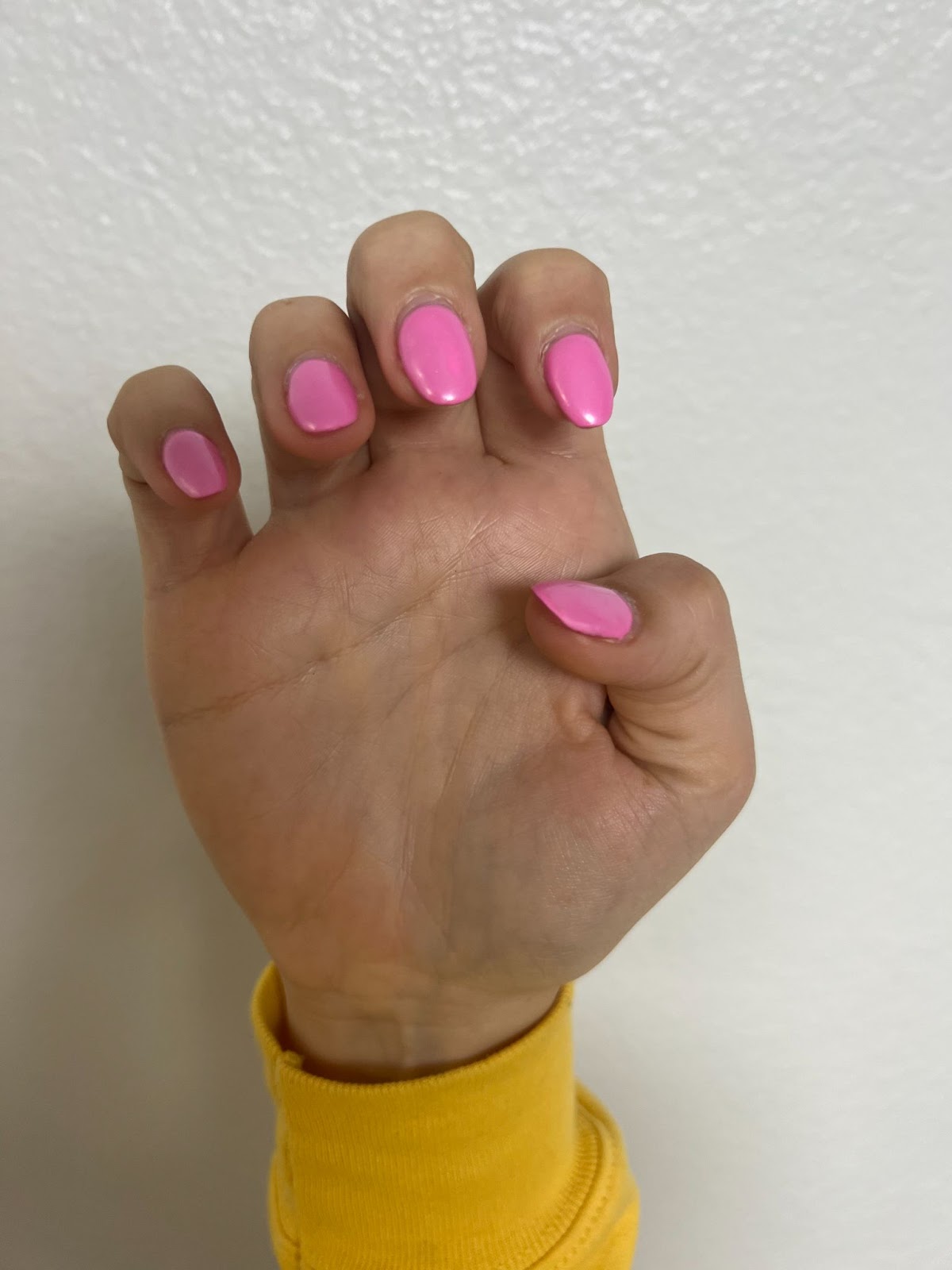
Context: The interviewee, D, is 19 years old and they were born and raised in Mexico. They told me that when they were a kid, they accidentally made this gesture while trying to get their family dog to sit down. When D’s dad saw what they were doing, he asked them why they were cussing out the dog. D obviously did not know what the gesture meant, so their dad explained it to them. That’s how D found out that this gesture was basically a way of saying “F*** you” to someone.

Analysis: There are a lot of gestures that mean very different things depending on where you are in the world and so it’s important to keep that in mind, especially if you decide to travel internationally. When I moved to Canada from China, there were a lot of words and gestures that I didn’t know the hidden meaning of. I never knew this gesture was a way to cuss at people until D told me. However, I was unable to find the origins of this hand gesture because it’s rather hard to describe what I’m looking for online. I actually make this hand gesture quite often, but only towards myself and not other people thankfully as it’s how I check my nails and cuticles to see if they need fixing.

Proverb: “An apple a day keeps the doctor away.”

Context: The interviewee, M, is 18 years old and they were born and raised in what is commonly known as the Bay Area in San Francisco, California. M had brought up this common proverb that they heard growing up while we were discussing minor folklore genres because both their parents are doctors in internal medicine, and they joked that they would eat an apple every time they wanted their parents to stop bothering them.

Analysis: The proverb originated in the 1860s in Wales, but it was in a different format: “Eat an apple on going to bed and you’ll keep the doctor from earning his bread.” It wasn’t until 1913 that it became the proverb we know today (Davis, 2015). This was because they were advocating for children to eat more apples and healthy foods in general so that they will be in good health and not need to go to the hospital as often. I was also familiar with this saying growing up. I had some health issues when I was younger, and I frequently visited the hospital/emergency room growing up. I had a lot of allergies, one of them being dust, and I used to have asthma as well, so together, they were not a great combination. I was not a big fan of hospitals and doctors, so I would eat apples all the time to try and prevent myself from getting sick or having an allergic reaction and having to go back to the hospital. 

Davis, M. A., Bynum, P. W., & Sirovich, B. E. (2015). Association Between Apple Consumption and Physician Visits: Appealing the Conventional Wisdom That an Apple a Day Keeps the Doctor Away. JAMA internal medicine, 175(5), 777.

Gesture:

Nationality: German-American
Age: 18
Occupation: Student
Residence: USC
Performance Date: Feb 22nd, 2023
Primary Language: English
Language: German, Korean

Context: S is Korean as well as German, and they also showed me a gesture that they were taught growing up. Their parents told them to always accept a gift from someone with both of their hands rather than one because it showed respect and politeness and that you are giving your full attention to the person who is giving you the gift. 

Analysis: I believe that this is a big part of Asian culture. I was also taught to receive gifts with two hands and say thank you, especially if they were my elders, to show them my respect and my thanks. I know many of my Asian friends were also taught the same by their parents, and the gesture doesn’t always only apply to gifts, but when you are handed anything of importance because it signifies that you are giving the item and them your full attention and focus. I think it is a nice habit to have because so many interactions now aren’t even in person, but over the phone, or online, and they’ve lost their intimacy. It’s nice to slow down and just take a moment to put your focus entirely on one person and acknowledge and savour the moment you’re sharing.