Category Archives: Initiations

College rite of passage Tradition

Informant: “One of the traditions I remember most from Yale happens on Class Day, when we all sing the alma mater, Bright College Years.” Toward the very end of the ceremony, everyone pulls out these white handkerchiefs and starts waving them during the final line: “For God, for country, and for Yale!”

It’s kinda the moment where you realize everyone around you is about to go their separate ways. You’re all doing the same thing, singing, waving these white handkerchiefs, and kind of holding onto that shared experience for just a little longer. It’s simple, but it really sticks with you.”

Context: The informant attended Yale University in the 80s and attended the Class Day celebration the day before graduation at the university. She recalled this tradition after being prompted if there were any traditions at her university. 

Analysis: This tradition is a clear example of institutional folklore, where a formal organization (Yale) sustains and transmits a ritual that becomes meaningful through repeated student participation. The act of waving white handkerchiefs during a specific line of “Bright College Years” acts as a ritual, tied to the incoming graduation.

This is also a rite of passage, marking the shift from individuals being students to alumni. The waving creates a visible sense of unity and collective identity, while the lyrics reinforce shared values. Even though the handkerchiefs have been officially distributed since 1984, the meaning of the tradition comes from its performance and emotional resonance, not just its institutional origin.

Throwing coins in car

Context: the informant, AC, describes a tradition where you throw coins inside of a new car.

“When you first get a new car, you’re suppose to take a bunch of coins and like throw it in the backseat so that it gives you good luck when you’re like driving so you don’t, its usually like parents or friends.”

Q: How did you first hear about?

“It was when I first got my car and my dad just came running out of the house and he had a bunch of coins and he just threw them in the back…I had never heard of it before. I was like ‘dad, what is happening?’ and he was like ‘Oh I don’t know its just good luck so you don’t crash.’ It like came from back then you had to put coins into tolls and so in this way people give you coins so you don’t run out of money when you have to pay a toll.”

Analysis: Throwing coins in a car seems to be a tradition done by many after someone purchases their own car. People close to the person, such as family or friends, begin to throw coins in the back of a car in order for the person to be protected from any car crashes. The ritual originated from when people had to pay tolls with coins. In this way, throwing money in the back of the car not only ensures your safety and protection, but makes sure that you have enough money with you whenever you need to pay a toll.

Trojan Marching Band Rights of Passage

CL: I was in the marching band [Trojan Marching Band], and it’s this big, big thing, especially being a first year, to have two sort of rights of passage or hazing or other traditions to kind of make your way fully into whatever section or whatever instrument you’re a part of. So the first one would be for trumpets, as I am a trumpet. Um, it would be a night called Carne, in which there would be this big feast, and then afterwards, um, all of the first years would go in, answer a couple of trivia questions, and then come out one by one, and effectively answer a few of those questions, and get water balloons thrown at them, completely drenched. And I remember at some point, there was like a slip and slide, a handful of other things, but it’s also, this is a place where you would either get, like, your name for the band, or you would get it at a later. This would be like the first time where you would actually get your name for the band or your band name in that sense.

Interviewer: What is a band name?

CL: It’s just kind of like a nickname for each of the other band members that you get your first year, either in that section or as part of the band, that then it’s like a thing that for your next year, the first year is try to guess everyone’s band names or try to figure out whose band name is whose, because in all the group chats, no one uses their actual name for like the first half of the semester. They just use their band name. But then, in addition to that, there is the every year there is the USCxUCLA game, and then the entire week, that’s called Fuck The Week. Um, every section sort of has this tradition where they go to Tommy’s chili cheeseburgers, the original Tommies, at least for us, it has to be the original Tommy’s. Every single time. And concoct a very vile brew. Um, then the first years would have to drink. And of course, there’s like a little bit more leniency now, but when you did do this, it was like, now you’re part of the section. Like, before it was like the first step that, like, welcome to the band, but then now you’re part of, like, this intersection family.

Interviewer: And it’s just a drink mixed with a bunch of different things?

CL: It’s root beer and chili…It’s not great.

Interviewer: So, do you have to drink the whole glass or just a sip?

CL: Uh, the whole glass. Um, but it’s bad because it gathers on the bottom…It’s not great. But it has been done for as long as I’ve known it, as well as my brother, who was in the band before me, and then everyone before him, like almost everyone’s done it.

Context: Discussing rights of passage in class, CL was able to describe to me their time in the Trojan Marching Band as a trumpet player. Then, going on to describe how one acquires a “band name,” as well as different initiation/hazing rituals that truly make one a part of the TMB family. These are generational traditions – and while they are less harsh and strict now, they are rooted in traditions that have been happening for years and years prior. AN experience shared through many past and current members.

Analysis: This interview shows how group tradition ( in this case, the USC Trojan Marching Band) is used to create a strong sense of belonging, even if they involve a bit of discomfort or embarrassment. Events like “Carne,” getting a band name, and drinking the chili/root beer mix at the original Tommy’s chili cheeseburgers act as rites of passage that separate first years from returning members and mark the moment someone fully becomes part of the group. Despite some of these traditions seeming closer to hazing, they’re framed more as bonding experiences, where everyone has gone through the same thing and can relate to each other because of it. The idea of band names is especially important because it creates a shared identity within the group. Overall, these traditions show how organizations build tight communities through repeated rituals.

Blessing a New House

Context:

The informant has only moved homes twice in her life. Each time she moves her family does this custom before moving their stuff and furniture into the space. It is a Hindu tradition.

Text:

When the informant moved into her new home, a priest had to ensure the space was good to move into. The priest blessed the home and performed a pooja involving incense, allowing for her family to fully move in. The priest had the family repeat after him to chant in Sanskrit. The informant admits that she does not know nor understand this language.

Analysis:

This practice is a transition ritual, where moving homes involves leaving the old home, a liminal blessing of the new one, and re-introduction into a purified environment. These processes within the ritual reflect Van Gennep’s rites of passage where the pooja holds culturally shared significance. Using incense and chanting, the house is symbolically transformed into a sacred, safe space. In this way, people can manage their anxieties and uncertainty over new environments with such spiritual protection. Additionally, the informant’s relationship with Sanskrit demonstrates an instance of esoteric communication, where meaning is rooted in tradition even if it is not fully understood by participants.

Kiss the Ring to Graduate

Folklore:
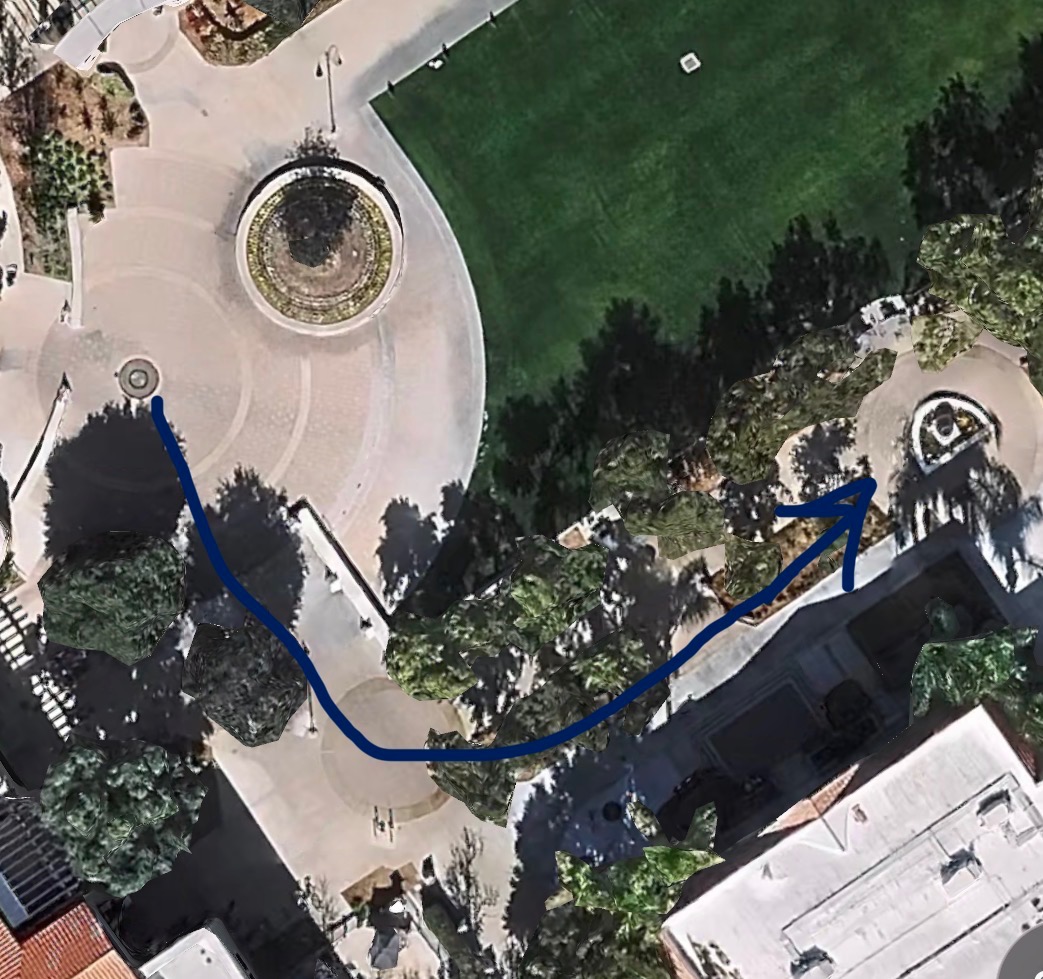
Don’t step on the emblem at California Baptist University or else you won’t graduate. You can break the bad luck by running as fast as you can to the ring statue and kissing it.

Map of the University from the Emblem to the specific Ring Statue

Context:
The informant is a freshmen at Cal Baptist University, where he learned from his First Year Experience Leader this folklore. There is a specific emblem placed on campus where if you step on it, he was told he won’t graduate unless he runs to a ring statue nearby and kisses it. His friends were forced to do it after they stepped onto the emblem. The informant noted it likely was to show respect to the university and a possible hazing ritual from upper class man to lower class men. It showed they were a part of the community.

Analysis:
The story and superstition is shared within the community and specifically shared from upper class men to lower class men. The experience helps build camaraderie between the students and create a distinctive identity for its members. It also on a practical level, helps discourage disrespect against the university and encourage attention to detail and care for the campus and its members. The bad outcome being failing to graduate also emphasizes the communities interest in education.