
Category Archives: Kinesthetic

Body movements

PARAI – FOLK MUSICAL INSTRUMENT

Nationality: Indian
Age: 55
Occupation: Chief Information Officer
Residence: Nevada USA
Performance Date: 02/19/2023
Primary Language: English
Language: Tamil

Informant Info

Nationality: Indian

Age: 55

Occupation: Chief Information Officer

Residence: Las Vegas, Nevada

Date of Performance/Collection: 2023

Primary Language: English

Other Language(s): Tamil

Relationship: Father

Referred to as JS.  JS was born in India and moved to the United States when he was 22. 

Text

The parai is a traditional percussion instrument commonly used in South India, particularly in Tamil Nadu.  Predominantly, this instrument is played at funerals.  It is also played at many events, including weddings and religious festivals.

Context

While growing up, JS heard this from his parents and relatives.  He has witnessed this instrument being played at funerals and some religious festivals.  He also saw this during his father’s funeral.

The music is often played by professional parai players who are skilled in the art of traditional drumming.  The rhythm of the Parai is believed to have a robust and mournful quality, which is supposed to help mourners express their grief and sadness.  The playing of the Parai is often accompanied by singing, and the songs and stories sung during death rituals are believed to help the deceased journey to the afterlife.  In addition, at funerals, the parai is often used to provide musical accompaniment during the procession and to announce the dead’s arrival.

Interpretation

The interpretation of parai music at funerals is tied to its cultural and historical context. In Tamil Nadu, music and dance have long been an essential part of funeral customs, and the parai at funerals is seen as a way to preserve this tradition and pay tribute to the dead.  In traditional rural communities, the parai music at funerals is also seen as a way to respect the deceased and remember their life and legacy.   In addition to its cultural and historical significance, parai music at funerals is also seen as a way to comfort and support those grieving. The powerful sound of the drum is believed to bring a sense of closure and peace to the mourning process.

Overall, the Parai is an essential and profoundly symbolic instrument in Tamil Nadu, and its use during death rituals is a testament to the region’s rich cultural heritage and traditions.
KAAVADI – SOUTH INDIAN FOLK DANCE

Nationality: Indian
Age: 54
Occupation: Senior Programmer Analyst
Residence: Nevada USA
Performance Date: 02/19/2023
Primary Language: English
Language: Tamil

Informant Info

Nationality: Indian

Age: 53

Occupation: Computer Programmer

Residence: Las Vegas, Nevada

Date of Performance/Collection: 2023

Primary Language: English

Other Language(s): Tamil

Relationship: Mother

Referred as AS.  AS was born in India and moved to the United States when she was 24. 

Text

Kaavadi Aatam is a traditional dance-drama performed in Tamil Nadu and other parts of South India, particularly during religious festivals. The performance is typically associated with Hindu temple festivals and involves a procession of people carrying a large, decorative structure called a kaavadi.  The kaavadi is usually made of bamboo and is decorated with brightly colored cloth, flowers, and other decorations. Participants in the performance carry the kaavadi on their shoulders and dance to the beat of drums and other musical instruments.

Context

While she was in India and during her visits to India to visit family, she saw the  Kaavadi dance performed by various community members. While telling me about the dance, she would occasionally perform small parts of it.

The performance is seen as a way to pay the gods homage and seek their blessings. The dancers and participants in the performance are typically devotees who have pledged to carry the kaavadi as an act of devotion and to fulfill a vow or promise.

Interpretation

The interpretation of Kaavadi Aatam is rooted in its religious and cultural context.  In addition to its religious significance, Kaavadi Aatam is also seen as a cultural expression. The performance is a way for people to express their creativity, energy, and devotion through dance, music, and the elaborate decoration of the kaavadi.

One of the main significances of Kaavadi Aatam is the offering of penance by the devotees. It is believed that by carrying the kavadi, a physical burden, the devotees are offering their penance and devotion to Lord Murugan.  The dance is also a form of self-mortification and a way of seeking purification and atonement for one’s sins.  Another significance of Kaavadi Aatam is seeking blessings and fulfilling vows. Devotees carry the kavadi as a symbol of their devotion and commitment to Lord Murugan, and they believe that by doing so, they will receive his blessings and protection. The dance is also a way of fulfilling vows or promises made to the deity, such as granting a wish or seeking a cure for an illness.  Kaavadi Aatam is also seen as promoting communal devotion and spirit.  The dance is performed in groups, allowing devotees to come together, bond, and strengthen their relationships. 

Telephone Gesture

Nationality: American
Age: 19
Occupation: college student
Residence: USC
Performance Date: 2/23/2023
Primary Language: English

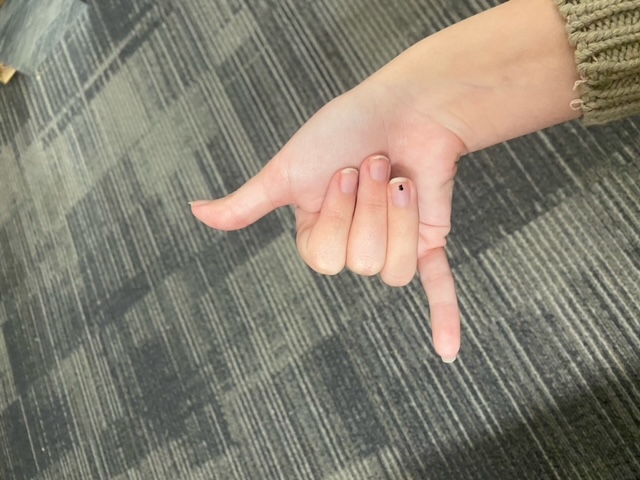
M is a 19 year old college student. She shares a gesture that she learned from her mother in Colorado Springs when she was a toddler playing pretend.

“When you mention you’re calling someone, you put your pinky out as the receptor and the thumb as the transmitter to motion you’re calling someone. When playing with my mom I’d pretend to be calling someone and my mom would answer with her “phone” that was actually her hand.” 

This gesture is particularly interesting because it is rapidly fading out. Now, if you ask a toddler or a child to show you them making a phone call, they’ll put their whole hand flat to their ear, replicating a cell phone. The informant and I are nearly the last generation to learn the gesture of a telephone using our fingers. The gesture is terminus post quem the invention of the dial telephone, and terminus ante quem the generation raised with cell phones. This shows how rapidly folklore changes, and how easy it is to lose folklore. My generation will be the last ones to use the finger gesture, and eventually it will entirely die out when kids barely remember what old phones used to look like. As technology rapidly changes, folklore is changing at an even faster rate than ever before. We have no clue what folklore might look like for children in 20 years. It will be interesting to see what folklore says, and which is phased out. 

L.A. Hand Sign

Nationality: American
Age: 19
Occupation: Student
Residence: San Diego, California, United States
Performance Date: 2-23-2023
Primary Language: English

Text:

Context:

The informant learned this at a summer camp in San Diego from some girls from Los Angelos (L.A.).

Analysis:

The gesture is representative of an “L” and an “A.” As the initials of the city of Los Angeles, these two letters are an easy connection to the city. While this sign could be a gesture used to identify with other citizens of Los Angeles, the arrangement of the hands does not seem intuitive enough to me to align with this. Instead, I think this gesture is connected with experimentation on what shapes one’s hands can create. Like the hand llama this gesture could be used in a variety of ways and it stretches the traditional uses of hands.

Minor Genre: Folk-Gesture

Nationality: Puerto Rican/Dominican
Age: 18
Occupation: Student
Residence: USC
Performance Date: 2/20/23
Primary Language: English
Language: Spanish

*Cheek to cheek gesture*

Younger person to elder – “¡Bendición!”

Elder response – “Dios te bien diga”

Translation: – “good blessing or good health”

Context: This is a saying used to greet family, typically when you are greeting an elder in your family such as your grandparents. While saying these phrases you do a cheek to cheek greeting almost as if you are kissing each other on the cheek. The informant learned this growing up around their family and used it out of respect for their elders when greeting them. It has a connection to Christianity in the sense that you are giving them a blessing and it used very commonly in Latin households. The informant said this is a more formal way of greeting family however when you greet your friends, you just do the cheek to cheek gesture.

Analysis: Interestingly, this folk-gesture is similar to many European gestures for greeting but is different because you kiss both cheeks in Europe but only one cheek in this gesture displaying the difference in meaning/significance in the different cultures and groups of people. It is not a very common thing in American culture because there is not much of a cheek to cheek gesture, however, my grandparents tend to say things such as, “God bless you,” when saying goodbye, connecting back to Christianity shaping these gestures and greetings.