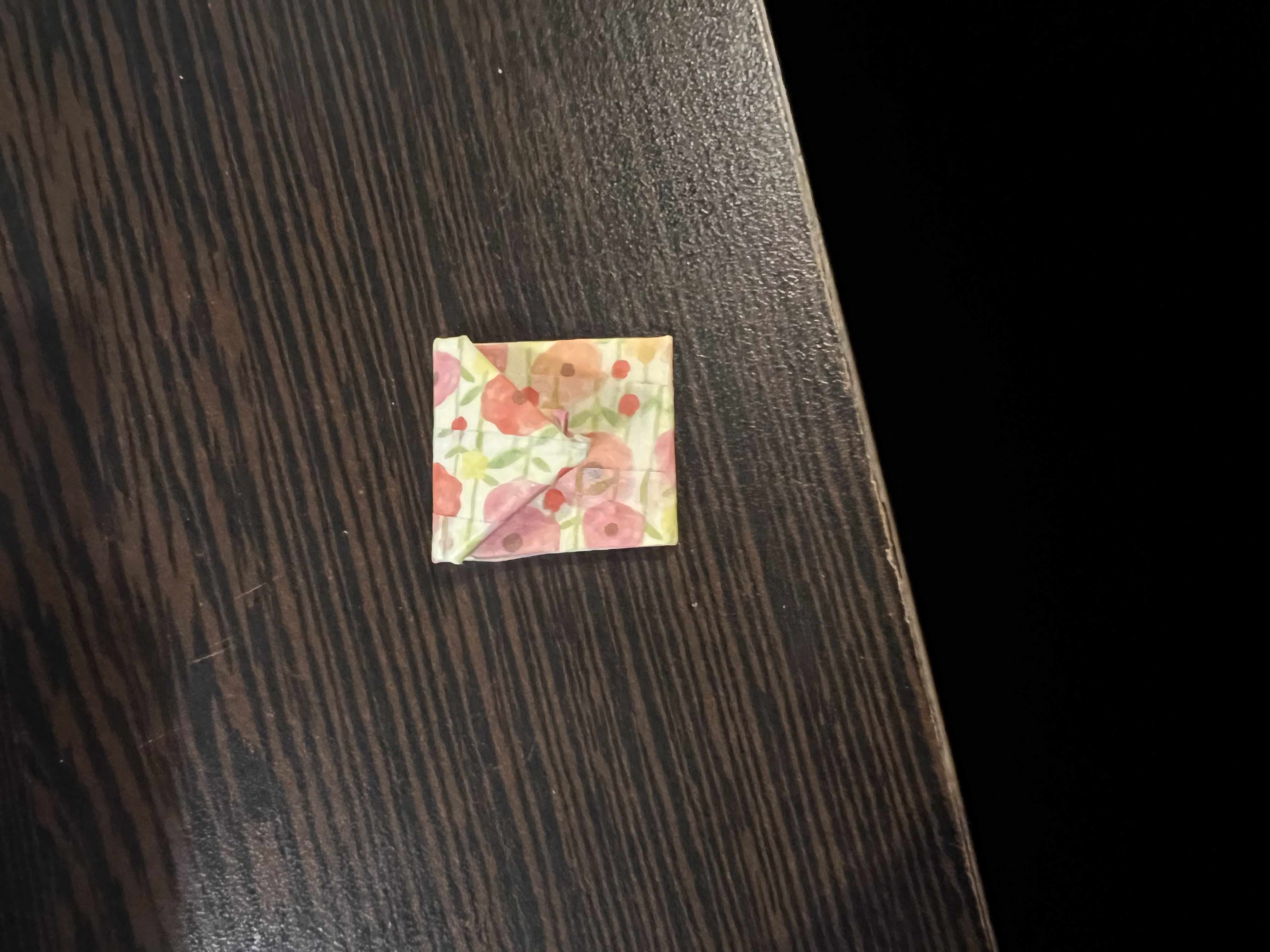
Handmade Envelop Bookmark

Age: 20s

Text:

Context:

Informant-The significance of my envelop bookmark was to encourage me to read since I would decorate them to match the book cover and would leave my personal reviews in them!

Analysis:

The informant spoke to me about the evolution of their bookmarks, how they shared them with friends, and customized them over time. Their process of creating them and showing others how to make them reminded me of origami projects teachers would teach young children, or kids showing each other how to make cootie catchers or paper airplanes in their downtime, during recess, or at camp. Crafts such as these are a way of entertaining oneself with few resources. This craft, in particular, enhanced the activity of reading. These examples of material culture give us insight into what crafts children around the world filled their free time with!

Domestic Detroit Ghost Stories

Age: 20

TEXT:

Informant- “I have seen a ghost before. I remember when I was moving out of my second home that I ever lived in to move into the home that we currently live now. I was, I got into an argument with my sister and I was sleeping by her feet and my feet were by her head and I was looking at the hallway because the door was right in front of where our feet should be, but by my head because I was mad at her. And I was on my phone and I looked up and I remember, it happened for two nights, the first night, it was these two white girls and they were like from the shining and they were like laughing like “hee hee hee” it was almost at like slow-mo and they rushed past me and it was like instant. I screamed and then I turned around and I went to bed. Second night, same thing, I had my head where (my sister’s) feet was. And I was looking up the stairs that’s like right in front of, um, right on the side of the doorframe. And I see this little black boy and I’m thinking it’s my younger cousin, J. And I’m like,” J, like, what are you doing here? Like, how did you get here?” And same thing, he just starts laughing, “ha ha ha ha.” And he skips down the stairs and runs past me. And that was the first and last time I ever seen ghosts. It was the most craziest thing I ever, like, whoa, I never experienced anything like that in my life. Even now, like, it feels surreal because it’s like, did that really happen? But it did.”

CONTEXT:

These ghost stories happened to the informant herself and in her adolescence in her home in Detroit, MI. The informant later shared with me that the previous owner of the house that these occurrences happened in, had gotten very sick and passed away, but had not died at the house, which I feel like is helpful to add to the story.

ANALYSIS:

Because these occurrences only happened once it is hard to say if they are true, but because my informant believe so deeply in the validity, of them, so do I. Ghost tales and legends traditionally are spread throughout time and repetition, but because the informant still lives in the house where these occurrences took place one could say there is still time for repetition.

鬼压床 or gǔi yā chuáng

Age: 24

TEXT:

鬼压床

gǔi yā chuáng

CONTEXT: Informant-“One thing relative to ghost is like in Chinese sleep paralysis is often called “gǔi yā chuáng”, which literally means a ghost pressing on your bed. So scientifically, it means your mind wakes up before your body fully does, so you feel like unable to move. But in folk belief in China, like people describe it as a ghost or spirit sitting on your chest. So this is interesting because it shows how people use like folklore to explain scary bodily, bodily experiences before scientific explanations became common. And I heard it from my family when I was a little. I think if it’s in both ghost stories and folk-like explanations of strange experiences”

ANALYSIS:

The informant explains that gǔi yā chuáng, at least to her, is a cross between folk belief and a ghost story as it, in some ways, has to do with the paranormal. Learning the story from her family, she has grown up with this belief and come to understand it as a dated way of understanding the more scientific world around us at a time that we lacked the means to fully comprehend sleep paralysis.

财气酒 or cái qì jiǔ

Age: 24

TEXT:

“财气酒” or “cái qì jiǔ”

CONTEXT:

Informant- “There’s also fun little like Chinese New Year story about the last sip of wine. So at the New Year’s Eve dinner or any kind of like family family gatherings after everyone has eaten, talked, loved, and toasted, there may be one last sip of one life in the glass or in the bottle. So in many families, people call it cái qì jiǔ, which means fortune wine, or wealth and luck wine. The idea is not really about the alcohol itself. It is about the blessing behind it. So that last step is seen as a little bit of good fortune or money left at the end of the bottle. And if you drink it, it is like taking the remaining luck, wealth, and prosperity and carrying it with you. So if someone said, don’t waste the last step that that’s the fortune wine and pour you a cup of the last one. That means you will gain the last bit of prosperity and wealth. And they will always like say, “oh, may you receive all the good luck and good wealth, get rich.”

ANALYSIS:

This holiday ritual or tradition focuses on wealth and prosperity, as well as community, and act as a way to cement good fortune going forward into the new year. Though it involves wine, I would not specifically classify it as foodways as the tradition itself is not solely based on the dish and more of the remnants of the shared alcohol and the experience of being with one another. I would instead classify it as a ritual surrounding life and maybe even a rite of passage as you enter into a new year of life.

Quinceañeras

Age: 21

TEXT:

Informant- “I would say that one of the coming of age rituals that I have experienced with in my family is quinceañeras. So pretty much it’s once you turn 15, you get a coming of age party where you pretty much use a big old puffy dress and all your family and friends will be there to celebrate you finally being a woman. But I remember in my experience, I didn’t really have quinceañera, unfortunately, due to COVID, everything was closed down since the shutdown had just been two weeks beforehand. I just remember getting my quincea ring, because in my family, we always get rinks once you become 15, it’s just tradition and getting a big old ice cream cake. But my mom’s experience was very different from mine. Since she did have a quincea, it wasn’t extravagant, though. She had a nice, simple silk dress. It wasn’t the big old puffy dresses, and she had all her family there. But my aunt, though, on the other hand, she had a big old extravagant dress, it was pink and black, and she had a whole dance recital on a photo shoot and so on, which was really cool.”

CONTEXT:

This coming of age ritual is very common among Hispanic households across the globe. This tradition comes in the form of a large party thrown for the birthday girl on her 15th birthday in celebration of her new womanhood.

ANALYSIS:

From what the informant shared, I can see how no matter what kind of celebration is given to the birthday girl, though they are traditionally supposed to be very extravagant, the most important thing in my informant’s opinion is to share it with those who you are closest and to be able to symbolize the transition into womanhood with this rite of passage. A unique aspect of the informant experience that I hadn’t heard of prior to her explanation was the symbolic rings that the women in their family are given. I think this is a great signifier of womanhood as jewelry is traditionally used an heirloom that is passed down from generation to generation, and by having this physical reminder of the transition into the next step of life, you are reminded of your new status.