
Shellback, Golden Dragon, Golden Shellback

Nationality: American
Age: 54
Occupation: Lawyer
Performance Date: April 29
Primary Language: English

This is folk speech that is found in the maritime world. They are names that are given under various circumstances when sailing around the world. A shellback is a name given to someone who crosses the Equator for the first time while aboard a ship. A golden dragon is someone who crosses the dateline. The dateline is the imaginary line that runs North-South through the Pacific Ocean, on the other side of the globe as the prime meridian. Finally, a golden shellback is someone who crosses where the international date line meets the equator for the first time. These names are given to sailors to recognize their global travels. Sometimes, this is accompanied by hazing if it is the first time the sailors have received this name, such as treading water in the ocean. The informant has not crossed any of these lines by ship but was involved in the sailing community growing up and associated with people that had done this.

The informant learned about this folk speech from his uncle when he was growing up. They remember it because they had always been interested in making these achievements and traveling the world by ship. The informant always looked up to people that had done this because he thought they were hardy and real seamen/adventurers. There are other terms used for some of these accomplishments, such as a son of Neptune. There are names for people who have done none of these, like tadpoles, as well.

It is certainly an achievement to have accomplished this, but the navy and other similar organizations are notorious for hazing and rites of passage, being secluded on a boat with just other sailors. It is interesting to think about in comparison to other rites of passage within different branches of the military. Although this is a general sea term overall, it is often used frequently in navies across the globe.
Burn’s Night

Nationality: American
Age: 55
Performance Date: April 22
Primary Language: English

This folklore is a holiday celebrated by the Scottish. It takes on January 25 and is used to celebrate the poet Robert Burns. Typically, families host a supper that begins with mingling. Poems by Robert Burns are recited. He is a very important figure in Scottish lore because many refer to him as a hero of Scotland, being their national poet. It is also referred to as Rabbie Burns Day. A traditional Scottish supper is then hosted, with a principle dish being Haggis. Haggis is the national food of Scotland and is meat mixed with oatmeal and seasoning that is then cooked in an animal’s stomach. There is a poem recited about Haggis because of how important it is to Scottish culture. Of course, whiskey is then drunk after this.

The informant spent four years living in Scotland when she was a young girl. She attended what would be the equivalent of an American middle school. She remembers this night well because it takes one day before her birthday. In addition, it represents a very Scottish dinner and was quite a culture shock coming from California. They learned it from their Scottish family friends who helped introduce them to Scottish culture. It is always a fun event that emphasizes heritage, pride in one’s country, as well as a close friends and family gathering.

 I like the idea of celebrating culture as a national holiday. In America, there are few holidays that are geared towards the arts and Robert Burns Day helps young children stay connected to their traditional Scottish roots.

Playoff Haircuts

Nationality: American
Age: 20
Occupation: Student
Performance Date: April 28
Primary Language: English

In high school sports, playoffs are consistently a big deal and represent a payoff for hard work and a good record during the sports season. This form folklore is both a folk practice and afterward, a folk object. The practice is giving certain haircuts during the time after the regular season but before playoffs begin. These are not normal haircuts but wild ones with different patterns and styles. Some of them include mohawks, bald heads, bowl cuts, words shaved into heads, monk haircuts, old man haircuts, and a plethora of others. They are not set haircuts but rather up to the imagination. This practice is similarly performed in other high schools across the United States, sometimes with other variations.

This folk practice is traditionally done by the upperclassmen within a team. The lowerclassmen get worse haircuts while the upperclassmen get better ones. In this way, it is a form of hazing. The informant said that the haircuts are typically shaved off or bettered once the playoff streak end because they are only to remain during the postseason. They learned it from the upperclassmen when they were younger and then performed this practice as an upperclassman. This is only typically done on varsity sports. The sports observed to do this include baseball, football, lacrosse, and some others. They remember it wholly fondly, even as a lower classman. It is not meant to be malicious but more a harmless rite of passage because it makes the kids feel like more of a coherent group. Another instance of this at different schools include bleaching the team’s hair during playoff time.

It seems to me that this sometimes is about a dynamic of power. Younger kids may be intimidated into doing this, but other kids may enjoy it because they are a part of a larger group and help self-identify with that. It is a physical way of making teammates more similar and improves as the kids get older, causing interest to do it for the first time.

Leaves of Three

Nationality: American
Age: 20
Performance Date: April 7
Primary Language: English

“Leaves of three, let it be. If it’s shiny, watch your heiny. If it’s hairy, it’s a berry”

This piece of folklore is a saying to talk about how to identify poison oak. If it has three leaves or is shiny with oil, watch your heiny, meaning that it is likely poison oak. If the plant is hairy, it is a berry bush. This piece of folklore is performed typically outdoors and used for a very practical sense. It is a teaching tool to enable people to identify poison oak, whose oil will cause rashes on anyone who touches it with bare skin.

            The subject learned this piece of folklore from Boy Scouts. It embodies the type of preparedness and learning the boy scouts emphasizes and is a very practical way of remembering the qualities of a poison oak plant. The subject learned it from their Scoutmaster during a camping trip. The subject, of course, made use of it as a practical saying which is its intended purpose. They remember it because of their interest in the outdoors when they were younger, which was the reason they joined Boy Scouts in the first place.

            This saying is not just a warning for kids. It represents technical education through oral folklore. Typically, something like this would just be told by another person or read in a book. Instead, this saying was created in order to help people remember their qualities. Because of this, it takes on a different form and really represents the importance of passing down knowledge to the younger generations.

Ebleskivers

Nationality: American
Age: 19
Performance Date: April 2
Primary Language: English

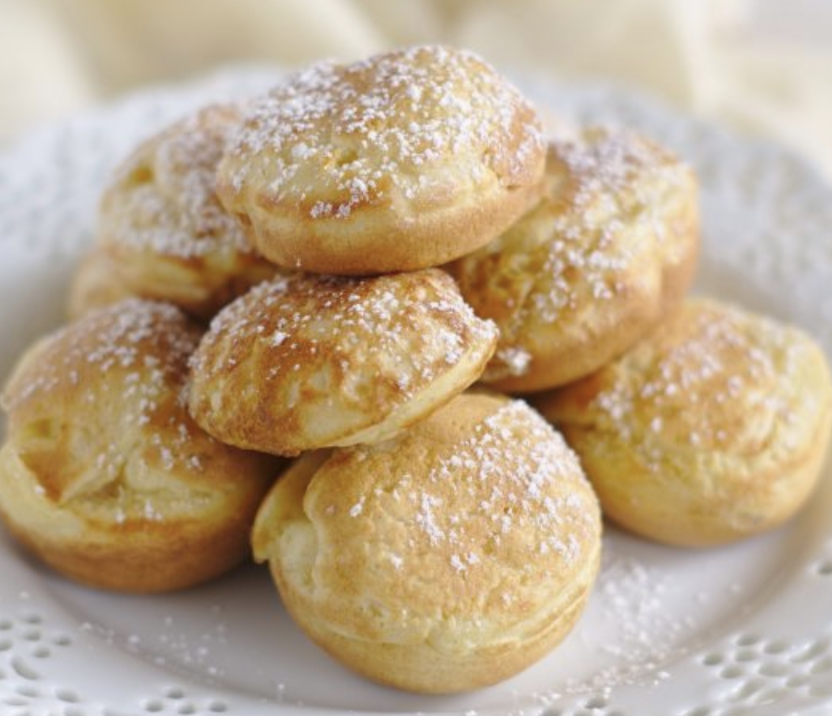
Ebleskivers are a folk object and food that originates from Denmark. They are very similar to pancakes and are a breakfast item. They are spherical and cooked with another folk object, an ebleskiver pan. This is a cast iron pan with round holes in it to cook the batter. This pan is used exclusively for this food, so it is a very important folk object to food culture in Denmark. They are typically served with jam or other breakfast condiments, but the informant eats them with butter and powdered sugar. There is yet another folk object used, which is a porcelain bowl filled with butter placed in a rack over a candle. It is similar to an object used to melt butter for shellfish like crab and lobster.

            The informant learned this practice from her mother. The initial recipe goes back to the informant’s great, great grandparents and she still uses the same pan passed down by the family members. The great great grandmother is from Aabenraa, Denmark. The informant only has it with family members and the combination of butter and powdered sugar seems to be a family-specific thing.

            Upon further research, it seems that this food is rarely prepared by restaurants. Instead, it is typically only made in family gatherings and by street vendors in Denmark. Because of this, it seems to me that the food is more authentic and less likely to have a standardized recipe and in doing so, is not found in much-authored literature. The folk objects only add to the culture and lore around it as these are food-specific, something not often found in many cuisines.