
Author Archives: Ruby Bierman

College Theater Macbeth Superstition

Informant: Yeah, actually—when I got to college, there were a lot fewer theater traditions. But one thing we usually still do before shows is kind of tied to theater superstitions, especially around Macbeth. You’re not supposed to say “Macbeth” in a theater, and if you do, there’s this whole ritual you’re supposed to follow to undo the bad luck.

I think what we do comes from that idea. Before a show, we all chant together:
“Shit, damn, motherfucker, motherfucker, damn, this dumb bitch just stole my man, gotta find another fucker better than the other fucker—shit, damn, motherfucking motherfucker, damn.”
And then we repeat it a couple more times, getting louder each time.

It’s kind of our way of shaking off nerves and maybe warding off bad luck.

Context: Informant has participated in main stage theater productions in university and has experienced these superstitions themself. Informant did not learn about this conversion superstition until they came to university. Informant attends school in southern california. 

Analysis: The knowledge about the superstition around saying “Macbeth” during the production of a show is fairly widespread. However, the conversion superstition performed in this entry is not as common. It represents how niche folk groups can make their own beliefs. This performance of a conversion superstition is not something the informant was familiar with when they participated in theater in high school across the country, so it could possibly be evidence of more regionally folk belief as well. This conversion superstition is performed to comfort the actors in a show and help them fight back against any fear they might have at their production being harmed by an individual saying the words “Macbeth.” 
High School theater tradition

Informant: “So in high school theater, we had a lot of traditions before a show. We would always start with some kind of focus activity, which was really nice. Then we’d go around and do a compliment circle, where everyone would give a compliment to someone else.

After that, we’d pass around a “squeeze,” and then the last thing we’d do was this kind of chant-and-movement game. One person would stand in the center and start shouting, “We are riding on a pony, we are riding on a pony, we are riding on a pony…”

Then you’d find a partner, and together you’d do the moves: front, front, front, front—pony; side, side, side, side—pony; back, back, back, back—pony; on a big fat pony.

As it went on, more and more people would join in, and you’d keep repeating it until eventually everyone was doing it together in the final round.”

Context: Informant attended high school in Connecticut and was taught and participated in this theater tradition before their shows. Tradition was passed down from past upperclassmen within the high school program. 

Analysis: This tradition happens right before the performance, which allows actors to mark the threshold between their “normal” life and their staged life. The exaggerated movements and chanting suspend normal behavior, allowing participants to enter a different mindset that is more expressive and less self-conscious.

Additionally, traditions like this are usually passed down from older members of the group to newer ones. This gives older students to pass down to younger ones to continue the ritual as kids age out of the program, but ensures something is left behind by them. 

This also marks who is “in” the folk group of this theater department or ot. Generally, theater communities are known for having their own rituals, superstitions, and games. Participating in these traditions signals membership; if you know the chant and movements, you’re “in” the group.

Thanksgiving Tradition

Age 20

Informant “Growing up, we always watched [Pactical Magic] when I was a kid. Then, during COVID, we started watching it a lot again. My family all lives in the same town, so Thanksgiving used to be a huge gathering—like 35 or 40 people—because we’re basically all neighbors. We’d always go to my aunt’s house.

But because of COVID, we couldn’t do that anymore. Everyone had Thanksgiving at their own houses, and we started having a smaller one at my grandma’s. There were still a lot of people, but it dropped to around nine, which was a big change.

Around that time, we started doing something inspired by a scene in Practical Magic called “Midnight Margaritas.” In the movie, they make margaritas, turn on the song “Coconut” (the “lime in the coconut” song), and dance around the table. We do a kid-friendly version—no margaritas—but after we say grace, we turn on “Coconut” and dance around the table until the song ends. We have to finish the song before we can eat.

It’s honestly such a random tradition. My aunt and I were like, “This would be so fun if we started doing this,” and it just stuck. At the time, we didn’t know how long things would be different because of the pandemic, but now it’s something we do every year.

We only do it if Thanksgiving is at my grandparents’ house—it’s just not the same anywhere else. Plus, no one else really knows the movie like we do. But it’s really fun, and it’s kind of special to look back on videos of it. You can see how much everyone has changed—some of the kids weren’t even walking back then, and now they are. It’s cool to see that transformation over time.

Context: Following the COVID-19 pandemic the informant’s family started a new Thanksgiving tradition based on a movie they watched a lot as a family. It only occurs when they are at her grandmother’s house. 

Analysis

While this tradition is ultra-specific to the informant’s family, I think it is an interesting example of “family lore” possibly being created. Twenty years down the line, when this tradition is still possibly occurring the lines of how and why this tradition may be blurred and have a story passed down with it. 

More generally this is a  family-based ritual tradition embedded within the larger cultural framework of Thanksgiving. Thanksgiving itself is a widely recognized American holiday centered on food, gathering, and expressions of gratitude, but what the informant described shows how individual families develop micro-traditions that distinguish their celebration from others.

It is also evidence of how pop culture and access to the internet can affect long-held traditions of groups and shape the way they are done moving forward.

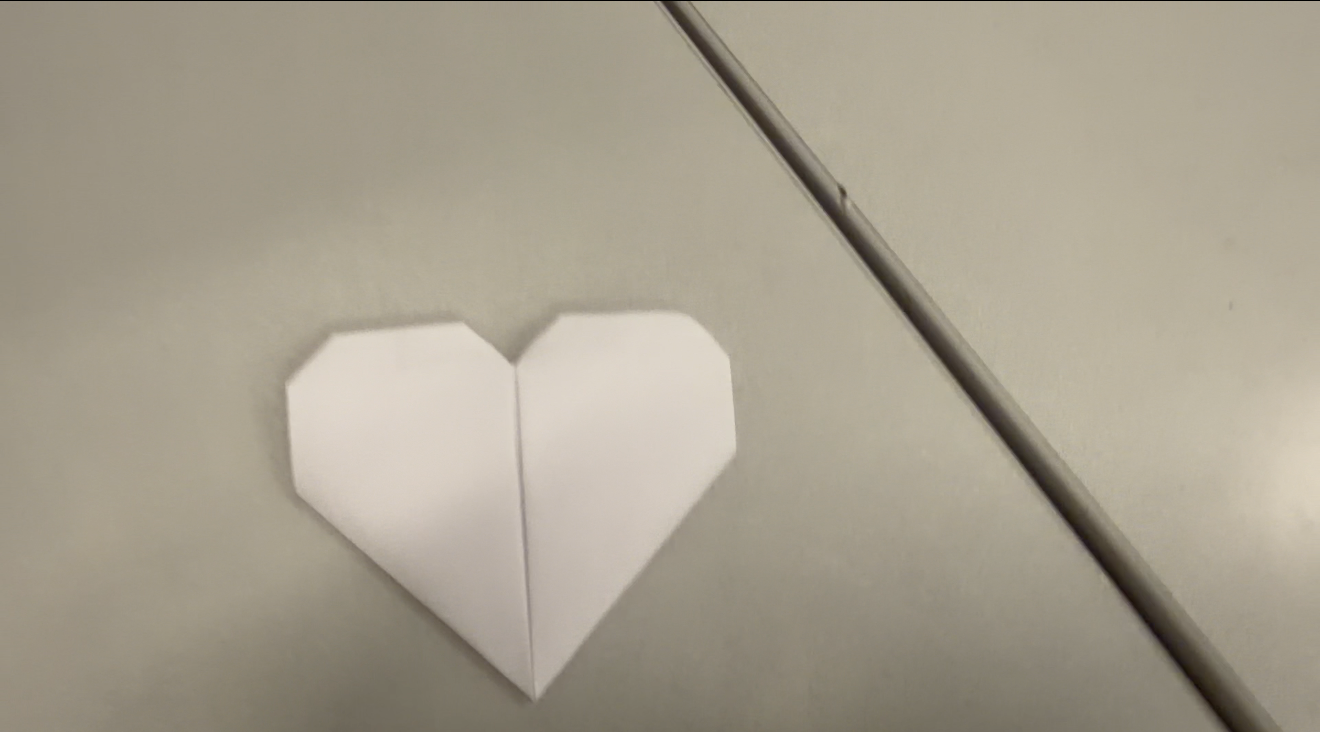
Paper Hearts

Context: The informant learned this art form of paper folding from an elementary school teacher around Valentine’s Day. They were encouraged to fold them and give them to people in their class. However, the informant and her friends continued to make these throughout school and would give them to each other with messages as she got older. 

Analysis: What’s interesting is how the practice of making the paper changes within one person. Initially, it’s a structured activity, everyone learns the same folding technique, and is encouraged to give hearts to classmates. This reflects a kind of guided folk practice, where authority (the teacher) transmits a tradition tied to a holiday (Valentine’s Day). 

After the initial introduction and purpose, it becomes more personal. The informant continues making paper hearts outside of that original setting, which shifts the practice into a more organic tradition. This expands it from being just about Valentine’s Day to being a tradition among friends. 

I also would view this as a form of gift exchange ritual. Even though the object is small and made from inexpensive materials, its value comes from the time, effort, and intention behind it.

School Legends

Age 20

Informant: “So, at my high school, I went to high school in Manhattan, in New York, and it was in this big mansion that got… converted into a high school. So, there’s this really fancy library with a little stone staircase in it. And there’s this little stain on the staircase that’s…this reddish, coppery tone. And the story goes that when…it was a mansion, and when the man who lived there was living there, someone tried breaking in. And that stone staircase in the library leads to a secret door in his bedroom, which is now a classroom…So then, when someone tried breaking in, they tried going up that staircase to sneak into his bedroom and kill him, and the maid was on the staircase, and she got shot. And so that, like, coppery tone is actually a bloodstain…But that is how the story goes, and that’s what the teachers told us.”

Context: The informant was told this story when she was on a field trip by a head teacher at her school. She went to school in Manhattan and would’ve been told this story in the spring of 2023.  The informant told this story when prompted if she had been told any ghost stories growing up. She does not necessarily believe it is true, but finds it humorous that the teacher would tell students this type of story. 


Analysis: I think an interesting view of this specific ghost story is looking at it as school lore or a legend within the school. Legends themselves are stories set in the real world, told as if they are true, in which truth value is debatable but plausible. A story like this, a murder in a city, isn’t entirely unbelievable. The story was specifically told by a person in authority (teacher) to students. This is interesting because it is common that the institution attempts to police folklore that undermines its power or public image. A murder in a school is surely not something the administration would want public, and makes the teacher telling this legend interesting. I think this shows that the teacher is comfortable sharing this story with the students and knows it will not affect their overall view of the institution, but rather think it is an interesting piece of historical knowledge of the building.