Category Archives: Foodways

Dumpster Pasta Ritual

Interviewer: “Thank you for meeting with me can you please tell me more about ritual practices you and your family perform?”

DA: “The one that comes to mind is this tradition we have where we make pasta every week. The pasta is called dumpster pasta because we use whatever is left in the fridge in the end of the week to make a pasta dish. The ritual started when my dad lost his job, money was tight so we tried making unfortunate financial circumstances into fun ritual practices in my family”

Interviewer: “Thank you for sharing that with me, do you still perform the ritual?”

DA: “Yes even though my family is doing better we still do the ritual as an act of gratitude to remind us of our struggles.”

Context: This ritual started in her immediate family and became an event for her and her family to break bread weekly and share a meal together. She mentioned that although her families finances are stable now, that she and her family still do the ritual, and she still partakes from her college dorm.

Analysis: This ritualistic practice spans distance as she still performs it even though her physical connection from her family is severed. It can be considered a ritual of healing for them now, and serves as a sort of liminal ritual as her family transitioned from financial statuses.

Biltong – South Africa’s meat

Age: 21

Collection Date: 04/29/2026

Context:

My mom’s side of the family immigrated from South Africa when they were really young. My cousins on that side all have had more experiences and exposure to South African culture because their dad immigrated from South Africa much later, when he was in his thirties. I remember going to their house as a kid and seeing biltong and being very interested in it. So to learn more, I called one of my cousins to ask more about the tradition.

Text:

My cousin goes to South Africa with her family on holiday very often. Nearly once or twice a year. She explains that meat is very central to the food culture. For example, when she was younger, her family would throw Braai (South African BBQs) for their neighbors and other Afrikaner families who lived in the area. The Braai were their way of sharing the fun side of South African culture. They would play South African music, play games, and cook South African food.

One of the foods her parents taught them to make is called boerworst (farmer’s sausage). It’s a traditional South African meat sausage that the whole family would make on the spot for the party guests. They would mix chopped onions and coriander with fatty tri-tip cuts, sometimes with pork. The meats weren’t lean, but quite juicy. My cousin was always in charge of the meat mincer, a large metal machine that ground up all the meat, onion, and coriander into a bowl. Then her sisters would take the ground meat and put it into a sausage-making machine. They used pig intestines for the sausage liner and turned the machine handle to crank out freshly made, delicious sausages. She remembers this being very fun while she was growing up, and looking back, it’s a fond memory. They’d give the boerworst out to guests as party snacks, and with the leftovers, they would stick them with a metal stick and put them into a homemade cardboard chicken-wire box in the garage. There, they had fans set up so that they could dry the meats out into droeworst. They would save these for snacks around the house. They’re easy to store, last a long time, and are seriously tasty.

Her parents are both immigrants, but her mom basically grew up in America because she moved so young. Her father on the other hand, lived most of his life in South Africa. When they decided to get together, they planned to live in America, but her dad really wanted to teach their kids South African traditions. It was important to him that, while they weren’t raised in South Africa, they would learn Afrikaans and Afrikaner music, and eat as well as make traditional foods.

One of her favorite foods to make and eat is biltong. Biltong is “the” South African food, like burgers or hot dogs for us Americans. For biltong, they would buy nice, high-quality tri-tip, going for very lean cuts. They would pack a suitcase full of spices like coriander and peri-peri when they visited South Africa, because the spices are rare and just not the same here. They wouldn’t really eat the peri-peri, though, because it’s too spicy. She explained that most South Africans can’t handle spicy foods, least of all her dad. They would use a biltong block (a huge knife with an attached cutting board that looks kind of like the huge cutting boards teachers used to cut stacks of paper) to cut it really, really thin, then stick it onto a thin metal spike. The meat spikes would be placed in the same boxes in their garage, with fans to quickly dry them out. They would eat these as a casual household snack. But her dad loved eating them with bread and butter as a biltong broodjie (pronounced “broikie”, meaning biltong bread). They would also put them in a gritty porridge called Pap, which was a great sweet-and-savory breakfast food.

I asked her if the biltong is any different from what they make here compared to what they make in South Africa. She explained that “the meat cuts are just fire in South Africa.” You just can’t beat the fresh cuts a meat they have. Growing up, the food didn’t feel South African; it was normal. They didn’t especially feel South African, but her parents would pack her little baggies of biltong for school. She’d share them with friends and get really mad if they made fun of or refused to eat any. I remember growing up, I was really weirded out by their biltong setup. The stakes of small cuts of dried meat were so weird-looking. My older cousins used to tease me, saying that it was bug meat, and I refused to ever try any until much later in life.

I also brought up how Biltong is becoming somewhat trendy. I have seen it on Instagram, in stores like Sprouts and Costco. In a way, biltong is a cultural ambassador for South Africa. She’s actually really happy because when she tells people she’s South African, they might say, “Oh, I love biltong.” It’s just a fun food to become popular and great to have some positive South African representation besides Chappie. I told her about Kalahari Biltong. The brand was founded by three non-Afrikaners after a great vacation. They ripped off the name from Famous Kalahari Biltong, an already existing biltong chain in South Africa. Its the biltong I see most commonly in stores and has the slogan “goodbye jerky, hello biltong.” Very American. She was somewhat surprised at this, because all she’s seen is the Costco’s biltong, which paid homage to its South African roots. In Kalahari’s case, the reference to South Africa was more of a marketing gimmick rather than any sign of respect.

We’re conflicted. On the one hand, it’s frustrating to her and me that companies like Kalahari Biltong are basically dressing up their product’s authenticity. They don’t proudly use South African suppliers, or give back to the community that gave them this product. And somehow, they are more popular in America than other brands that use century-old family recipes. On the other hand, it’s great that the food is gaining popularity and that people are learning about our culture. It’s great to see foods you grew up with in a store.

Analysis:

It’s really sweet to hear that her dad wanted to keep the traditions going. It also makes complete sense, because he had to give up a lot, like family and friends, to move here and start a family. To him, these traditions were home, and teaching them to his girls was creating a new home. To my cousin, the traditions are home as well. They were normal, integrated, and part of their culture, and what made them unique. I always remember growing up, they did feel different. Even for me with my South African roots. They embraced their roots, while others like me are only just discovering them.

For her and her sisters, making boerworst was a family event. She mentioned how at the braai, they weren’t just showing food. They were showing their strong family values and culture. It was undercover diplomacy. The whole family was helping make food. Nobody left hungry, everyone enjoyed. It’s something she looks back on fondly, and it brought her and her sisters really close together.

It’s also really interesting to see how a simple food holds so much power. It’s fun to hear people talk about biltong when they hear South Africa, because as silly as the food or connection is, it’s real and it’s our culture. The food is showing what it means to be South African to average Americans; it’s approachable, it’s easy, and it tastes really good. When my cousin’s gave out South African foods, they did it from a place of passion. Food doesn’t preach, yet it’s a really effective communicator.

But what upsets my cousin and I is seeing others profiting from that culture. For Kalahari Biltong, biltong isn’t a passion, interest, or any sort of personal connection to the culture. It’s a product. These tourists created a company to make money. The brand’s story centers around them, not the people, the country, or the food. I think that is what my cousin found upsetting about it. The fact that the brand wasn’t showing any appreciation beyond the bare minimum. That makes it really difficult when the brand is so popular. We love what the company is doing, spreading South African culture and good food. But we don’t like why they’re doing it.

My cousin hasn’t tried Kalahari’s biltong, and she probably won’t. She has tried the Costco version of biltong. She explained, “The cuts of meat just aren’t the same.” Her family made them out of larger, higher-quality slices. She appreciated it, but it couldn’t beat the ones she made at home, and definitely not the biltong in South Africa. The taste was similar, but that doesn’t make it authentic. Kalahari’s choice of slogan, “goodbye jerky, hello biltong,” is also worth some attention. It suggests that biltong is a replacement or an alternative for American culture instead of its own unique thing. We don’t need biltong to replace beef jerky.

When community folklore gets commodified, something is lost for those who grew up with it. The authenticity comes from an individual’s context and experience. To an average American, that biltong is about as real as it gets. It might as well be speaking Afrikaans. To me, maybe it’s partially authentic. But, to my cousin, it’s just not and it can never be.

Homemade Jams

Age: 62

Collection Date: 4/24/2026

Context:

My dad told me the story of how his mom used to make homemade jams from the fruit trees they had growing around their yard. My dad grew up in Canoga Park, CA, in the 1980s living in a lower-class, community-centered neighborhood. He said that his parents were very self- sufficient almost homesteaders and that my grandma had a way with plants unlike anyone else in the neighborhood. My grandma passed very recently, so this is a good positive memory for my dad, but difficult to ask too many questions on her specifcally. He told me this story while sitting around our kitchen, thinking of folklore and stories from his past.

Text:

My dad is pretty sure my grandma learned how to make jam from her mom, but he isn’t too sure because he never really helped out. He was usually “out in the neighborhood getting into trouble.” My grandma grew up in Orange County Ca in the 40s and 50s, back when they actually had oranges. In her neighborhood at that time, self-sufficiency and homesteading were essential. She lived on a small ranch with chickens, horses, fruit trees, and some vegetables. Essentially, the modern-day homesteader’s dream. She watched as their neighborhood turned more and more suburban. When she moved to the San Fernando Valley, she tried teaching those jam-making, gardening, and other valuable skills to my dad and his siblings so they could be self-sufficient, and because that was the world she knew. But it seems now, skills like jam- making aren’t a necessity, they’re more of a hobby.

My dad remembers that their house in Canoga Park had plenty of fruit trees and berry bushes, all grown and maintained by his mom. The property wasn’t especially large, but it had several plum, apricot, orange, lemon, and peach trees. As well as grape vines, strawberry bushes, and blueberry bushes. He thinks some of the trees came with the house when his parents first bought the place, but the fruit trees were an added plus that my grandma appreciated. They didn’t have any animals besides dogs growing up. so I can imagine that the fruit trees were a great way for her to pass on her upbringing. I always enjoyed talking with her about the fond memories she had of riding her horses and growing up in such a pleasant environment. I can imagine she viewed that as a real positive environment for kids to grow up in and wanted that for her own kids, even if making homemade jams weren’t necessary.

Most of the fruits ripened in different seasons, so there wasn’t a single specific time or season for making jam. But my dad fondly remembers playing under the plum tree and snacking on fresh plums in the summer. The trees were so large and bore so much fruit that the plums, apricots, etc., often spoiled. His family was very conservative with their money because they didn’t have much. So, to avoid wasting good food, my grandma would turn all that extra fruit into homemade jams.

As far as my dad remembers, the process involved cutting the fruits and putting them in pots to boil on the stove. After that, they were sealed in mason jars with some special procedure to keep them from rotting. The mason jars were then left to cool and turn into jams. He never really saw her use a specific recipe, probably from memory. He said that his family “learned to be smart with their money and use everything.” He remembers they would mix flavors, sometimes adding sugar or new fruits. Generally speaking, it was much healthier and cheaper than store-bought options. The original jams were all used by their family in day-to-day cooking or eating. My dad usually snacked on the jams. He doesn’t remember them ever sharing any with their neighbors or using them for special occasions, but they did share fresh fruits with neighbors.

His older and younger sisters did help out a lot, though. My grandma taught them how to properly make the jams so that they were safe to eat. We briefly asked them if they still make any. They still do occasionally, following the general recipes that they remember, but it kind of fell off because it’s easier to just buy jams. They also don’t live in neighborhoods where they can grow their own fruits, so it’s not the same as when they were little.

Analysis:

At the most basic level, my dad and I understand that making food at home was primarily a money thing. They grew up in a relatively low-income household and neighborhood where saving money was important. So, saving money on foods like jams and homegrown fruits wasn’t just for aesthetics; it was primarily a practical necessity. My dad isn’t wasteful, and a large reason why is because of his upbringing. Making jam was first and foremost to prevent food waste.

But, I believe she also taught it to her kids for a more personal reason. It was the life my grandma knew. We don’t know if they picked the house specifically because of the fruit trees or whether that was a coincidence. But regardless of the reason, my dad’s family grew up in a house that had fruit trees. My grandma grew up in a similar environment, back in Orange County. To her, turning excess fruits into jam was just what you do. That’s likely a skill she learned growing up, and bringing it to Canoga Park was just natural. Teaching those skills to my dad’s sisters was probably a fun way to connect, but also to teach them a valuable skill. To her this wasn’t a hobby, it was a way of life. By teaching her kids, she was giving them a glimpse into her upbringing and teaching them to be self sufficient.

This is just speculation, but she saw the urbanization of Orange County. The gradual disappearance of that way of life she grew up with. I didn’t even know Orange County used to have anything besides suburbs and homes. So bringing that practice to Canoga Park could have served as a way to revive that tradition or keep it going. It could also have been a way to remember her past. Whenever I spoke with her about her childhood, she always had very good things to say. So, she probably enjoyed re-living those memories and loved being able to provide that same lifestyle and memories to her kids.

I’d say that worked! My dad and his siblings fondly remember the jams; such a simple food became an important piece of their upbringing. His siblings picked up and carried on the tradition as much as they could. But in a world that was slowly urbanizing, homegrown fruits weren’t as common. That homestead way of life is becoming a rare exception, especially here in California. My aunts all occasionally make jams, but they explained that it’s just too much work to make it, especially when it’s cheaper to just buy. This reflects what we learned. As folklorists, we try to collect these stories and dying ways of life, as we learned it’s salvage ethnography. They feel so different and strange, making them all the most interesting to collect and preserve. But, it’s important to remember that as the ways change, traditions don’t die, they just change.

The jams weren’t just for my grandma to preserve food. Whether this was her intent or not, she was also preserving a way of life. Planting the trees, making jam instead of buying it, was a way to resist urbanization and hold on to how she was raised. Now, some of her daughters make jams without fresh fruits, from memory, without her. The urbanization that changed her way of life is slowly eroding tradition, but that’s part of what makes it so special. If the tradition were timeless or abundant, then maybe my dad wouldn’t think it as special. It’s the fact that it has a lifespan that makes it special.

Bobotie – South African Dish

Age: 52

Collected 4/18/2026

Context:

My mom immigrated from South Africa to California as a child, growing up she was raised mostly as any other American child in the area would have been. But, to help and her siblings connect with their culture and history, her parents would occasionally cook them all bobotie, a traditional south African meat dish that is kind of like a meatloaf.

Text:

My mom explained, that once every two weeks, her parents would cook her and her siblings foods from South Africa. This wasn’t anything special, “just a nice family dinner to give us a taste of home.” One of the most memorable dishes for her growing up was Bobotie. The recipe originates in the lower Cape, but her family was north-east of Johannesburg, quite a ways from the historical origins. The recipe, as she explained, was fairly common in South Africa; they used a printed poster brought with them when they immigrated, which listed the ingredients and instructions. She says, “that poster is probably still somewhere in their family house.” But, back when her parents were cooking (this was 30-40 years ago) things like curry powder and chutney weren’t available at your local grocery store. So, her parents had to substitute other ingredients. For example, one that she remembered was substituting apricot jam for the chutney. Her family also commonly used raisins, bananas and other fruits to add to the sweet profile of the dish. To her this was normal, but back then, fruits and meat weren’t a common combination in American cuisines. She wasn’t embarrassed though, as she told me “it does remind you that you’re different, but that’s just a thing our family.” For her and her family, it was a way to connect with their roots and pass on some of that identity to my mom and her siblings who grew up primarily in America.

One funny memory my mom mentioned is that her family would sometimes serve the Bobotie to her friends when they stayed over. To most kids, this was a really strange (never-before-seen food). So, to mess with them, my mom and her parents would tell the kids they’re eating elephant stew, which surprisingly worked. Most of the friends she remembered trying it thought it was tasty and quite exotic.

She never really got to try the original until much later in life when visiting her “home town” in South Africa, but by that point, the California Bobotie was the norm. So, when she tried the real thing, she was kinda disappointed. Funny enough, “it didn’t taste nostalgic or like home because it was different.” She can’t remember whether her parents told her that they were substituting ingredients or not, but it didn’t matter. Because to her, the substitutions were the dish.

Analysis:

Before I go into my analysis, I should note my perspective. I grew up with similar cultural exposure. Especially from my mom’s side of the family and my cousins. So, to me some of these things were normal. I wasn’t eating weird foods, but also, I wasn’t raised with as much influence as she was. So to me, these things are somewhat normal, but also somewhat foreign.

One thing from this story that interests me is how the substitutions were forced by a necessity. The ingredients just didn’t exist in common grocery stores, so her family had to create their own “spin” on the dish, which I’m sure wasn’t uniquely their substitution. After a quick Google search, it looks like substituting the chutney is a fairly common thing to do. So many other families in similar situations might have made similar adaptations or substitutions when bringing the food here. My Oupa and Ouma weren’t degrading the dish or making it any less, they were adapting it to their environment so that that culture might continue to exist in their children.

As mentioned, my mom grew up mostly like any other American child. But small things like this are examples of how her parents allowed her to grow up in a new environment while maintaining that cultural identity and connection. And to that effect it worked. She doesn’t remember much else of what they did that was South African, maybe because whatever they did was just “normal” to her growing up that was all she saw. But, seeing and tasting a different food definitely resonated with her.

It’s also so funny that they all leaned into the weird or exotic food aspect. That really sounds in character for my Ouma to mess with someone like that. They didn’t hide the food when friends came over, instead they made it seem exotic by using the unfamiliarity of it. Also, it kind of flipped the roles. Typically, I would have pictured my mom to be embarrassed or nervous for her friends judging the food, but the joke reverses that idea, allowing my family to hold the power in the situation. They’re in on the joke, the other kid, not so much.

But, by far the most interesting piece to me is how my mom mentions that the California Bobotie was just Bobotie. To her, the substitution and “odd” recipe is what she grew up with, so trying the “real thing” felt weird. This shows that there is no one way to do something; instead, it’s in the cultural context and shared meaning that makes it the “right way” or normal. It’s all about perception and experience. The authenticity and connection to the food come from repeated experiences, not just the origin. This highlights the loose boundaries that can make it difficult to categorize or “own” folklore.

This raises a serious question we’ve asked in class. What makes folklore genuine? Well, my mom’s experience would suggest that authenticity is not about adherence, but about shared value and experience. To her, the California Bobotie was more authentic and genuine than any traditional Bobotie could ever be.

The Legend of Chang’e and Houyi

Performance Date: 2/26/2026

CONTEXT:

The performance is a telling of the Chinese legend of Chang’e and Houyi told to me by a Chinese international student at USC, who I will refer to as “EY.” We are sitting together outside of Taper Hall discussing legends. EY goes on to explain the legend and its connection to the Mid-Autumn Festival, along with the cultural beliefs associated with the story.

TEXT:

EY: The legend story I’ll be telling you about is called Chang’e’s legend. It is a Chinese legend um that explains where we have or how we have the Mid- Autumn Festival in mid September in China. Umm so the story basically is about like there’s a goddess whose name is Chang’e who kinda like takes a pill and turns into a rabbit that runs to the moon on the day of mid-autumn festival. Nowadays people in China usually have moon cakes on that festival to celebrate Chang’e.

Interviewer: Oh that’s interesting

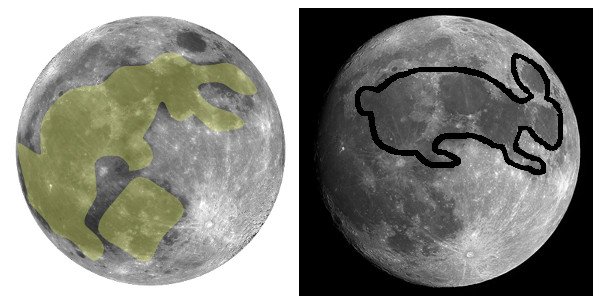
EY: So if you look closely at a picture of the moon, there’s a shade that’s in the shape of a rabbit and so people often see that shade as the picture of Cheng’e. The rabbit shape is Cheng’e.

The longer version of the story is mostly about how previously there’s a god called Houyi who kinda shoots the sun in the sky. Chang’e and Houyi get married to each other. Bu then, Houyi was originally supposed to take a pill but he refused to and like the person who asks him to take the pill hides in their home. When Houyi is out and Cheng’e is home, Cheng’e has no other options but to take the pill. When Houyi returns home, he finds out his wife is gone and he’s sad… He might be sad… He must must be sad.

Interviewer: Probably, he’s probably sad.

EY: Yeah, and so the two are separated and Cheng’e is in the sky.

Interviewer: Okay, that’s cool. Do you think there’s like a metaphor, like a meaning behind the story. A meaning that you or your family and friends associate with it?

EY: Yeah, so it’s mostly about nostalgia and separation, I guess. There’s a metaphor in China where we compare the moon to reunion and a happily ever after.

Interviewer: That’s pretty cool, I never thought of the moon as associated with that before.

EY: And so we can associate the moon with romance or reunion in some sense. In Western [Chinese culture] ideas.

Interviewer: I don’t think that’s very common over here. We don’t typically associate the moon with romance. I think I got the story and the meaning behind it. Is there a personal meaning for you that you take on specifically to that story?

EY: I just felt like the look of the rabbit is very interesting. Yeah if you google a picture of the moon.

*looking up a picture of the moon*

* not the image referenced, but gets the idea*

EY: For example, this part is the rabbit’s head. These two are the ears of the rabbit.

Interviewer: So, I gotta look at it upside down.

EY: Yeah, so this is something that most people don’t usually observe.

Interviewer: Interesting, is that something you can only see at a certain time? Cause there’s different phases of the moon and seasons. Is this something you can only see in September? [The month of the festival].

EY: I guess yeah, but like that time that day is when the moon is like a full moon.

*end of interview

Analysis:

EY explains the story has a significant meaning not just to her, but her family and culture. The story explains the shapes in the moon, gives meaning to culturally significant foods like moon cakes and serves as a fun story to tell. The story is distinctly Chinese and like any cultural story serves as a great reminder for who you are. Without the legend, the mid-autumn festival is really just another holiday. The legend gives the celebration new meaning and amplifies the significance beyond just a fun tradition.

It also gives a standard story to relate to across generations. The culture as a whole can appreciate and enjoy this story. Parents telling their children aren’t just entertaining them. They’re connecting them to their family and culture giving them an identity. It also creates a symbolic meaning that Chinese people can relate to.

EY explained how the story recontextualizes the moon as a symbol of reunion, romance or “happily ever after.” This is interesting because in my culture, the moon doesn’t really mean anything in particular, it’s just the moon. So, to hear how this legend breathes new meaning into the natural world is quite cool. It gives an “everyday” object new culturally significant meaning. In this case, love and reunion. I’m familiar with the idea of roses symbolizing love and affection. But I actually think the moon is better. Unlike a rose, the moon won’t fall apart over time. It might wane, but it always comes back. That makes the reunion and meaning so much more impactful. The same moon can be seen across cities or continents, so it really does connect family and friends. Also, I think there is some more meaning with the moon in that it represents reunion. Every morning, the moon disappears, but we know it’ll come back. That physical movement and repetition adds to meaning that EY explained.

I think that the ritual of eating moon cakes and celebrating during the festival is a way for people to connect with their family, culture, and partners. It’s something that I’ve heard my other friends do, whether they were in China or here in LA. That makes it a cultural signal and reminder of shared belief and identity. It’s given meaning by the story, and eating mooncakes is a way for people to actively participate in that story and culture. The food, story, and importance of the moon itself are great because they can be transmitted anywhere. People can relate to and appreciate that meaning, whether in China or here in America. That story, food, and connection to the moon a ways for people to share their culture without needing to be “at home” for the festival and celebrations. These traditions can be transported and adapted to new regions or environments while maintaining that unique cultural identity.

It’s very interesting to me because, like Houyi, my informant is away from home, separated from loved ones. This must be a very personal story for her, and maybe a very significant one at this moment as well. The legend she chose to share specifically covered longing, separation, and the desire to be together. Whether she meant to or not, the choice to tell that story seems to have been influenced by her feeling away from home; it is probably a way to process her emotions, which is quite cool.