
Category Archives: Rituals, festivals, holidays

Kaveri Shankramana Festival

Age: 23

Context:

The informant comes from a cultural community that values agriculture. He comes from a distant line of native farmers and plantation owners. The festival is performed back in the city he is ancestrally from. It is not performed during a specific time, but instead depends on the progression of nature. The informant remembers his mother lamenting on the importance of this festival.

Text:

Kaveri Shankramana celebrates when fresh spring water flows into the Kaveri river. This is an approximate time and people tend to bathe in the river during this festival. Rice is thrown in celebration to honor the goddess Kaveri. A jug of the holy water from Kaveri is kept in each home and when people fall ill, they are to sip from the cup to heal them.

Analysis:

This festival acts as a ritual tied to the time of year according to nature. The acts of bathing in the river and throwing rice turn nature into a sacred, meaningful place that connects the informant to the goddess Kaveri. The use of the stored water for healing invokes the idea of sympathetic magic, as described by James George Frazer. Specifically, the healing property of water reflects contagious magic, in which contact with a sacred source continues to influence others even once separated from the original source itself. As a result, ritual healing appears to produce real perceived effects for those suffering from sickness.
Rituals for Expectant Mothers

Age: 56

Context:

The informant has gone through pregnancy three times and childbirth twice. In each instance, the informant relied on their family during difficult times and found comfort in cultural customs. However, the informant is an immigrant and their experience was influenced by the distance and long travel between them and their family.

Text:

Expectant mothers in India usually must return to their current childhood home to deliver the baby in this house. They must reside here for 3-6 months as they recover from childbirth and settle into their new role. Every day, their family and in-laws with provide them with oil massages and baths to rejuvenate them. The new mothers are fed meal and high-protein meals constantly and told to sleep/rest whenever possible.

Analysis:

This practice is a life-cycle ritual and rite of passage, in which childbirth marks a transition into motherhood. There is separation in the act of returning home, liminality during the recovery period, and reincorporation after the mother re-enters society. The emphasis on care and rest demonstrates how rituals are intentional and promote both mental and physical healing. According to Ted J. Kaptchuk, these performative and symbolic aspects of healing can create real, tangible change. In this way, rituals reinforce cultural values about family responsibility and create communitas, a strong social bond, through caregiving. The informant’s specific experience as an immigrant highlights how folklore adapts to context and yet, traditions persist even when separated from community.

Death & Ash Rituals

Age: 56

Context:

My informant has dealt with the death of both of her parents. Each funeral procession took around a week including preparation of the body. This ritual has distinctive religious and cultural meaning for her. She told me that when she passes away, she will also participate in this ritual as an active bearer of tradition.

Text:

In Hindu tradition, deceased family members are often cremated. When gathering the ashes, ashes cannot be brought into the house. Instead, ashes are wrapped in pots made from natural ingredients and these pots are kept in nature. Specifically, the information recalls her father’s ashes being placed into a carved out tree. Then, the ashes are carried to a sacred river, Talakaveri. At Talakaveri, the ashes must be placed into flowing water rather than still water.

Analysis:

This funeral practice reveals the importance of the connection between the departed soul and the living. Ashes are not brought into the house to preserve the soul of the person and their transition to reincarnation. According to Van Gennep’s rites of passage, the process of cremation, placement in nature, and later integration into sacred water, helps both the deceased and living navigate death as a transition. The specific emphasis on Talakaveri, a river that all Hindus believe they originated from, and flowing water conveys the symbolic nature of customs and the inseperable bond between a body and its environment. From an emic perspective, the informants intention to continue this ritual shows how folklore is actively performed to maintain tradition through communal lived experiences.

Kiss the Ring to Graduate

Folklore:
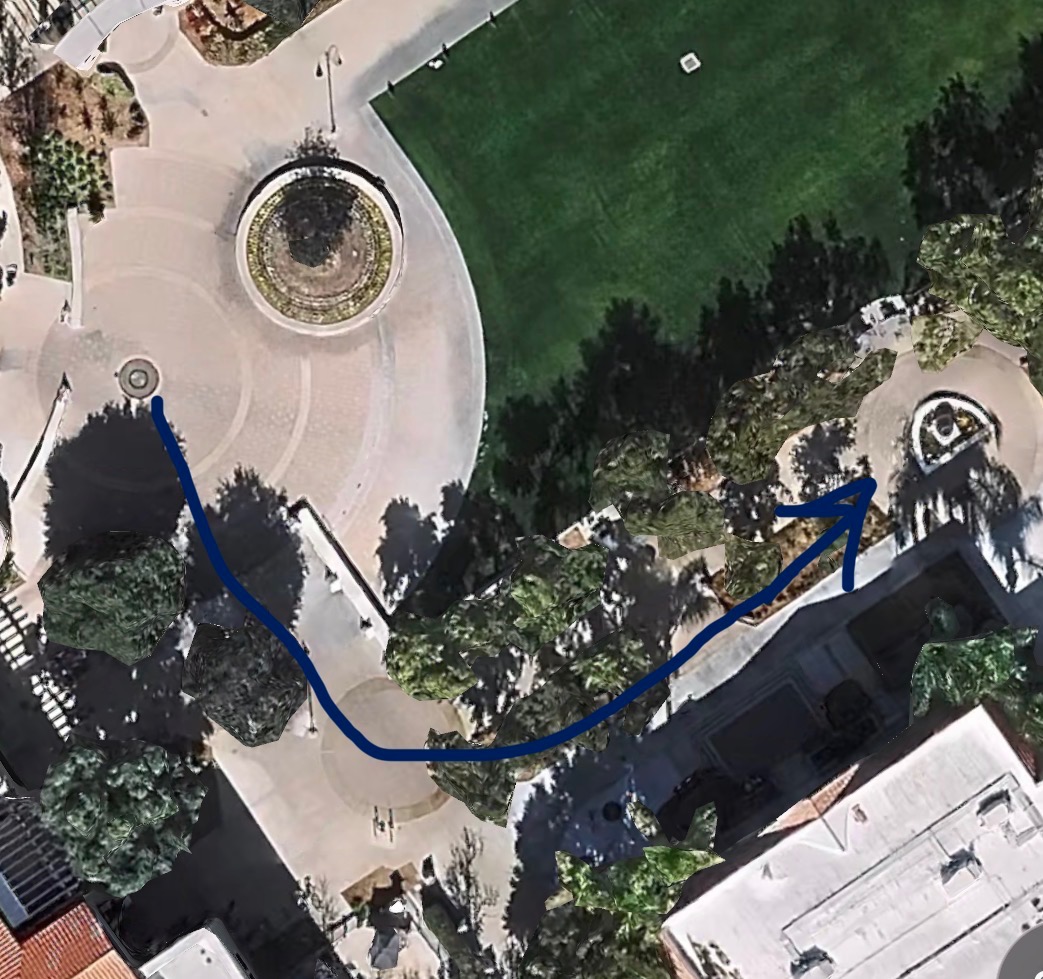
Don’t step on the emblem at California Baptist University or else you won’t graduate. You can break the bad luck by running as fast as you can to the ring statue and kissing it.

Map of the University from the Emblem to the specific Ring Statue

Context:
The informant is a freshmen at Cal Baptist University, where he learned from his First Year Experience Leader this folklore. There is a specific emblem placed on campus where if you step on it, he was told he won’t graduate unless he runs to a ring statue nearby and kisses it. His friends were forced to do it after they stepped onto the emblem. The informant noted it likely was to show respect to the university and a possible hazing ritual from upper class man to lower class men. It showed they were a part of the community.

Analysis:
The story and superstition is shared within the community and specifically shared from upper class men to lower class men. The experience helps build camaraderie between the students and create a distinctive identity for its members. It also on a practical level, helps discourage disrespect against the university and encourage attention to detail and care for the campus and its members. The bad outcome being failing to graduate also emphasizes the communities interest in education.

Rally Cap

Folklore:
Flipping a baseball cap inside out to bring on a rally of good plays in a baseball game. The action can be performed by players or the fans in the stand.

Context:
The informant was a baseball player in Santa Clarita, CA. During games, he or his teammates would perform this ritual to try and help bring good luck or spur on a rally where a lot of good events would happen in quick succession like “a guy gets a hit, a guy walks, a double and they score… a lot of them go with quick bursts of runs.” The informant noted the rally cap “is trying to initate a hot streak,” to get the game on their side and moving.

Analysis:
The ritual is intending to bring good luck and try and spur on the team into a favorable position. The informant noted in the interview that baseball is a game of rhythm that is hard to hold and keep it going. The team aspect and the harder rhythm makes supersitions common to try and create a favorable outcome for the game and the team.