Tag Archives: bad luck

Bad Luck Number 4 in Chinese

Context:

My informant is a 19-year-old student living in Orange County, California. She was raised in a Chinese household, celebrating holidays such as Chinese New Year.

Text:

“The number 4 in Chinese, even regardless if it’s like Mandarin, which is like sì, or if Cantonese, then it’s like sei. It has a very similar pronunciation to the word that means dead or die. So like in Cantonese it’s like sei (she says it with an down note at the end) is four and sei (she says it with an up note at the end) is like dead. So that’s why like people don’t like using the number 4. So like for Chinese New Year for example, we don’t like giving four bills in like a red envelope. Or you don’t do things in increments of 4 because it’s considered bad luck.”

Analysis:

Hearing about this folk belief/superstition after learning so much about Chinese culture, I have gathered that they do not like to associate with death in any way. Whether it is something that resembles death such as a simple pronunciation or interacting with death in any way. I think that the Chinese culture just wants to bring prosperity into their lives in any way possible, which means rejecting the bad luck from associations with death.

“Cursed” Medallion

Text:

H: “So when I went to Florida with my family, I got on some sketchy website, there was like a weird like medallion with like snakes on it. And it was like probably like two bucks, um, but I just like got it ’cause I thought it was cute and I started wearing it. And all of a sudden, like I was getting a lot of bad luck … I had a really bad night, like of sleep, and I was like getting really bad nightmares, like very vivid, like as if it was like, I was like put in an alternate reality and it was actually happening to me. Like for example, since we were on vacation, I was sharing a bed with my sister, and like I would turn over, I would think that it’s real life, like we’d be talking and all of a sudden like her eyes would go red and she’d like… I don’t, she wouldn’t even do anything, but like it was just like scary.”

C: “And were you like still wearing the medallion?”

H: “Yeah, yeah. At this point I didn’t attribute it to the medallion. And then I went… And then like for example, like she turned evil at one point and then like I thought I went back to sleep, and then I thought I woke up again, but like it was still a dream and like she, ’cause she went normal and I was crying. I was like in tears and she was like helping me, like patting my head like, ‘Oh, it’s okay.’ And then like all of a sudden she would turn evil again and I’m like I can’t tell what’s real and fake, so I now attribute it to sleep paralysis. At the time I thought I was like possessed, um, and that was just like reoccurring all night. I was so scared. And then like the next day I asked I think my dad what to do and he told me to like get rid of the medallion, but I didn’t want to touch it so I made my brother put it in the sand, like just to like get it off my head, out of my hands … That night I had another awful night of sleep, not as bad as the first one, and I found out the next day that he [brother] didn’t put it in the sand. He like kept it in my room for some reason ’cause he was just being like a little brother. And I was like… I had like another like possession thing. So then we threw it in the ocean and it was gone for real. Everyone was mad at my little brother ’cause it was like I wasn’t kidding. I was like crying all night both nights. So yeah, now I attribute it to sleep paralysis, but I don’t know. It’s kind of weird. Like the second I started wearing it, it, that happened. And then it made it weirder with like the whole sand thing, like that, it was still in my room.”

Context:

H was on vacation in Florida with her family when she bought this medallion necklace with a two snakes on it. After purchasing it, H started to have terribly bad luck. After falling asleep, H started to have terrible night terrors like where her sister was evil with red eyes. She woke up screaming & crying, so she gave the medallion to her little brother and asked his to bury it in the sand at the beach. That night, H continued to have nightmares, but not as extreme as the previous night. She once again woke up crying only to find out that her brother didn’t get rid of the medallion but left it in her room. They then threw the medallion into the ocean, and she stopped having the nightmares and bad luck.

Analysis:

Since this is a story that takes place in the real world and is/could be believable, this narrative would be classified as a legend. To get more specific, this legend could also be defined as a Memorate since it is a personal narrative encounter with legendary “cursed item,” which are widely believed throughout the world.

Kiss the Ring to Graduate

Folklore:
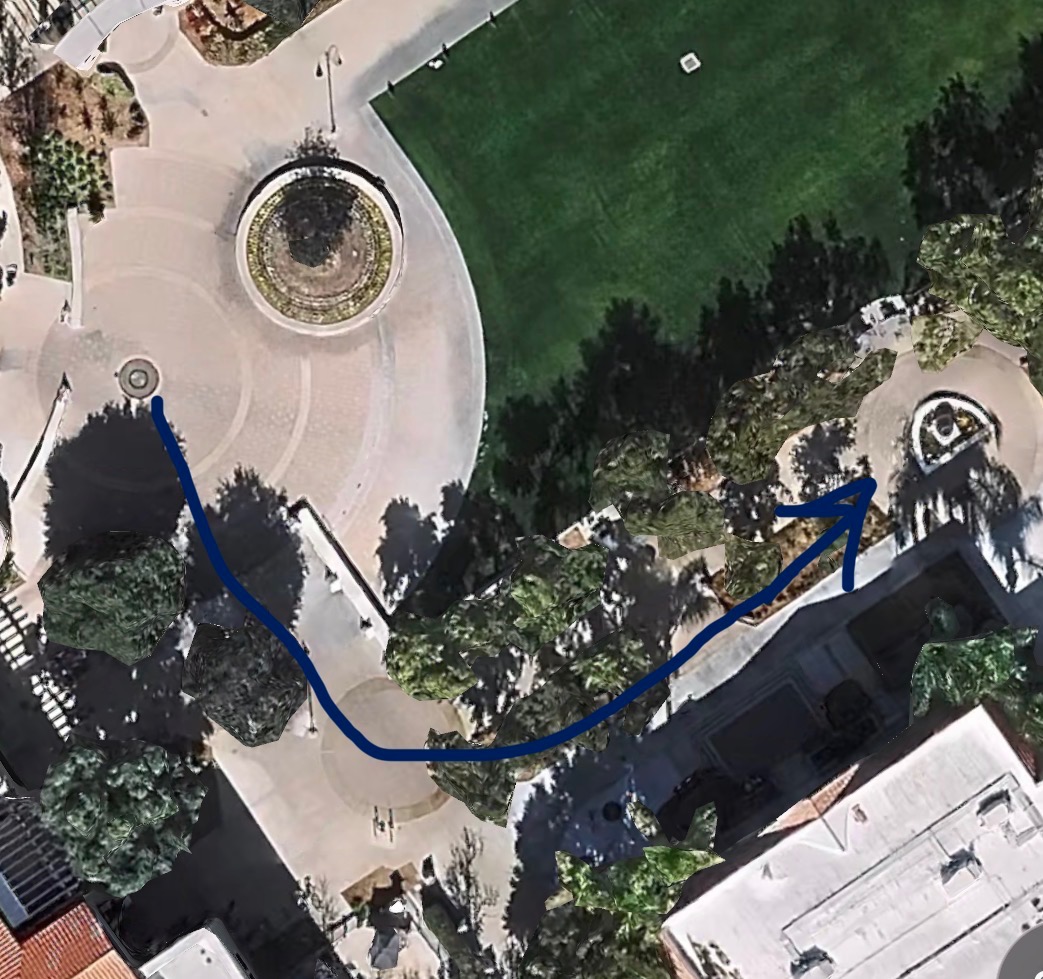
Don’t step on the emblem at California Baptist University or else you won’t graduate. You can break the bad luck by running as fast as you can to the ring statue and kissing it.

Map of the University from the Emblem to the specific Ring Statue

Context:
The informant is a freshmen at Cal Baptist University, where he learned from his First Year Experience Leader this folklore. There is a specific emblem placed on campus where if you step on it, he was told he won’t graduate unless he runs to a ring statue nearby and kisses it. His friends were forced to do it after they stepped onto the emblem. The informant noted it likely was to show respect to the university and a possible hazing ritual from upper class man to lower class men. It showed they were a part of the community.

Analysis:
The story and superstition is shared within the community and specifically shared from upper class men to lower class men. The experience helps build camaraderie between the students and create a distinctive identity for its members. It also on a practical level, helps discourage disrespect against the university and encourage attention to detail and care for the campus and its members. The bad outcome being failing to graduate also emphasizes the communities interest in education.

No Hitter Superstition

Folklore: Don’t talk about a no hitter game in baseball until the 7th inning or else the game will change.

Context:
The informant was a baseball player and noted how it was bad luck to talk about a no hitter game until it reaches the 7th inning. They noted it may not always be the 7th inning, but “there is a certain inning” in which it becomes okay to talk about it. In fear of “the baseball gods” or the game turning following speaking it into existence. The informant noted how the game is reliant on rhythm and keeping the rhythm of the game.

Analysis:
The folklore is a superstition meant to try and control the affects of a game and not ruin good luck. The event of a no hitter game is a rare one, which tends to create a ritual to help the rare event continue. The community creates these rituals to help take part in the event as a community by trying to help their players or team through performing or preventing certain things for their team for the desired outcome.

Black Cat Bad Luck

Age: 51

Text:

Informant: “If a black cat crosses your path, that means like bad luck.”

Interviewer: Okay. Is there anything you can do to, like, undo it?

Informant: No. That’s bad luck. So I gotta, yeah, I don’t know. I gotta watch out for things. Yeah. Gotta be more careful. Maybe not. I don’t know. bungee jumping.

Interviewer: So there’s not like, something to like make the luck like fine.

Informant: No, we don’t, we don’t really have that at all. Like that you could do something about it.

Analysis:

This example of superstition, a belief-based form of folklore. It is widely known that a black cat crossing your path is bad luck, even when people don’t fully commit to believing it. Many superstitions come with a clear way to reverse the bad luck, taking it into your own hands and making it good. However, the informants cultural perspective believes that bad luck is not something than can be reversed or controlled. Instead, it is accepted as something that simple “is,” reflecting a more fatalist approach to superstition.

This belief emphasizes acceptance over intervention, with the informant even mentioning to watch your actions after and be more careful. This response to be more cautious shows how similar superstitions can functions differently across cultures even when the core belief is shared.

This example connects to the broader idea that folklore operates within a shared cultural logic and helps people connect to a folk group and other values. The superstition does not require proof or an explanation. Its truth comes from being widely accepted and in this case, the absence of a “fix” becomes part of the tradition itself. This reinforces a worldview in which certain outcomes are unavoidable.

This example demonstrates how across cultures and spaces stories and beliefs can adapt and change. Folklore is not just about the content but the belief and importantly the response. Different cultures respond to uncertainty and misfortune differently, shaping behavior through shared assumptions about luck and control over the events in life.