
Text
*Translated from Chinese
“Ever since, I guess my mother hurt her body from all the hard work that she did, so ever since that she would suffer from rheumatism and she would especially feel pain in her joints and muscles when it was raining. And drinking cold water would make her joints hurt, so she basically confirmed to herself that drinking cold water was bad for the body because that was also something she learned from her parents and grandparents growing up, to not drink cold water or cold drinks because they would cause health issues or mess with your body.”
Context
KL notes that her mom was taught from her family that drinking cold water/drinks was not good for the body and health, and personally confirmed it after it made her joints act up. KL (who is my mom) then learned this idea growing up, and would tell my brothers and I not to drink cold water/drinks too often when we were growing up. She says that her husband (who is also Chinese) does not believe in this idea and says that it is just an old traditional Chinese belief that has no scientific backing and should have been outgrown by now.
Analysis
This opinion on cold water is an example of traditional Chinese folk medicine beliefs that were passed down to my mom then to my brother and I through family advice and sayings. For my grandmother, or KL’s mother, the belief was validated by her experience with rheumatism, showing how beliefs become stronger through lived experiences. The most interesting part of this story is the conflict. Dundes makes a point that we should not just disregard folk medicine because of scientific reasons, which is what my dad/KL’s husband tries to do by dismissing the belief because there is no scientific proof behind it. It’s interesting that my parents are both Chinese, and have both passed down similar folklore such as Chinese New Year rituals, Chinese stories, and values, but vehemently disagree on more “non-scientific”, pure folk beliefs. This could be because my mom had that lived experience that enforced the belief from her mother while my dad didn’t, but could also be because my mom is more apt to believe in the “supernatural” or the unknown, while my dad believes that most things in life are under his control. Either way, this story shows how even among the same folk group, beliefs will vary.
Tag Archives: Chinese
The Legend of Nian
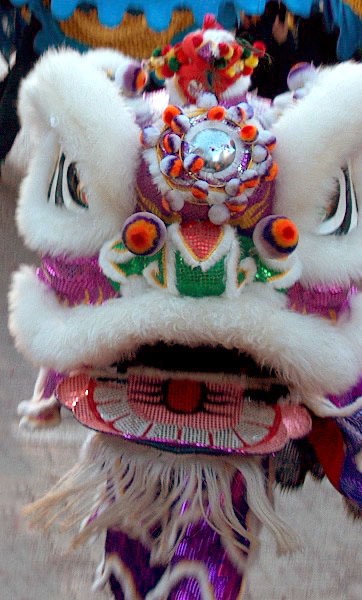
Context: The informant, CC, describes the legend of Nian that is a popular Chinese folktale
CC: “In chinese lunar new year theres this story where in this old Chinese village, they were all terrorized by this big ol monster called ‘Nian’ …and to combat this they ended up creating big sounds through fireworks and firecrackers, which is a predominant reason why people today as tradition uses fireworks to celebrate the new year.”
Q: Where did you first hear about the story?
CC: “I first heard about it from my parents and other family members since we always get together to celebrate the Lunar New Year.”
Q: Have you heard of the story being told outside of your family?
CC: “Honestly no…well, there was this thing my middle school used to do where we celebrate each other’s culture and one of my teachers told us about the story of Nian. It was pretty accurate to the story I already knew.”
Analysis: The Legend of Nian, as described by CC, is a popular Chinese folktale that tells the story of Nian, a beast who used to terrorize villages in China. Many feared Nian due to its destructive nature. Because of this, many created loud sounds using fireworks and firecrackers in order to scare off the Nian beast and ward it away.
争上游 “Struggling Upstream” Card Game
Folklore:
争上游 or translated as “Struggling Upstream” is a card game played with family and other guests, uses a normal 52 card deck with variations about the jokers. The game splits the deck into part depending on how many players playing with the goal of getting rid of them the fastest. To get rid of the cards, they must be placed in mostly numerical order as the strength of the card with 3 being the weakest card and 2 being the strongest. Pairs, Triples, or Fours (known as The Bomb) of the same number card increases the strength of the cards. Combos of cards can be combined to get rid of lesser cards faster. The first game starts with the 3 of Spades. A Joker works as a wild card and if placed alone is stronger than other cards.
Context:
The informant is a Chinese American student at USC. She plays this game with her family on trips with her family in China or in the greater Los Angeles area and enjoys teaching it to others to play. She found there are many variations on the game “vary like Egyptian War.” Her family enjoys playing with The Bomb, which is a combination of 4 of the same card. A joker could be used to replace one of the four, but if someone has a stronger number in four will beat other the pair. The informant notes the game is difficult at times due to the late game making it harder to get rid of weaker cards, so strategy is an important focus of the game.
Analysis:
The game helps connect her family in a shared strategy experience. The game challenges strategy and forward thinking with its mechanics on cleverness and knowledge of the rules. Playing the game, also invites the family and guests into partaking in a shared experience and play together. It also provides entertainment in possibly boring situations.
天时地利人和
Folklore:
天时地利人和 (Tiān shí dì lì rén hé)
Context:
The informant is a Chinese American student studying business at USC. She encountered the saying in situations where when asking for advice from an elder or someone in a more successful position, they would give this saying. She found it used in response to questions like “why are you successful?” She roughly translated it to “The right person at the right place at the right time with the right amount of luck or fortune.” Noting how many things needed to come together in order for the favorable situation to happen.
Analysis:
The folklore saying is used in interactions between elders and youth about success, wisdom, or favorable situations. The saying places credit of the situation on multiple factors, most outside of the person’s control while also celebrating the work and opportunity it took to get there. It may be used to brush off credit from the speaker or the inverse.
Chinese New Year’s Red Envelope
Folklore:
Giving red envelopes of money to members of the family until they get married at Chinese New Years.
Context:
The informant is a Chinese American student at USC. She described the practice and noted how the rule of marriage being the end marker of the tradition was a variation she noticed through her experience. The extra money helped with people still not married or able to comfortably give out the red envelopes by themselves. The informant noted how it tied into a larger normal of giving money as a gift on all occasions and presents were rarely specific items. Finding money is able to better support them and prevent negative outcomes such as embarrassment of not liking the gift and returning it.
Analysis:
The folklore reflects a larger value of caring and supporting the members of their greater family. The money allows for the most function to the receiver and prevent emotionally negative outcomes from lack of knowledge. The tradition of money also allows for the support of each members needs and not just the wants that giving a particular gift might not be able to address.