Category Archives: Life cycle

Yam for Pregnancy

Text:

“Something that a lot of Yoruba and Igbo and just Nigerian people in general will do during their pregnancies is eat a lot of yams. There are many positive associations with yams — they’re seen as a nutritious food, a staple starch in Nigeria, found in many dishes. My mom said that when she was pregnant with me, she ate a lot of yams. And her mom did as well — my grandma gave birth to twins, and my grandma’s mom did too, and my grandma was a twin. I think it’s a good luck thing. It won’t always mean you’ll have twins, but it’s just a superstition.”

Context:

As the informant notes, this practice is common in Nigerian customs related to pregnancy and health. The belief, common among the Yoruba and Igbo people to whom her family belongs, has been passed down through at least four generations of women in her direct family line. She reflects that she has already thought of following the same practice eventually. Nigeria is the world’s largest producer of yams, supplying more than half of the world’s yams, meaning that cultural importance in Nigeria amplifies a value that goes far beyond nutritional benefit.

Analysis:

This belief is a colorful example of sympathetic folk medicine: yams are a food associated with abundance, fertility, and foundational nourishment in Nigerian culture, and it is believed that those same qualities will be imparted to a pregnant body. The association between yam consumption and twin births is particularly interesting — twins are sacred in Yoruba culture, associated with good fortune and spiritual power, and this may be why the belief has such strong associative logic. The documented history of twins in this informant’s family over generations empirically supports the folk belief, at least in the family’s narrative. The community’s encouragement to eat is also an endearing form of support for women during a biologically vulnerable period. Whatever the yams do or don’t do, the practice is an act of cultural continuity: each generation of women who eats yams during pregnancy takes part in a chain of care and tradition that links them materially and symbolically to their mothers and grandmothers before them.

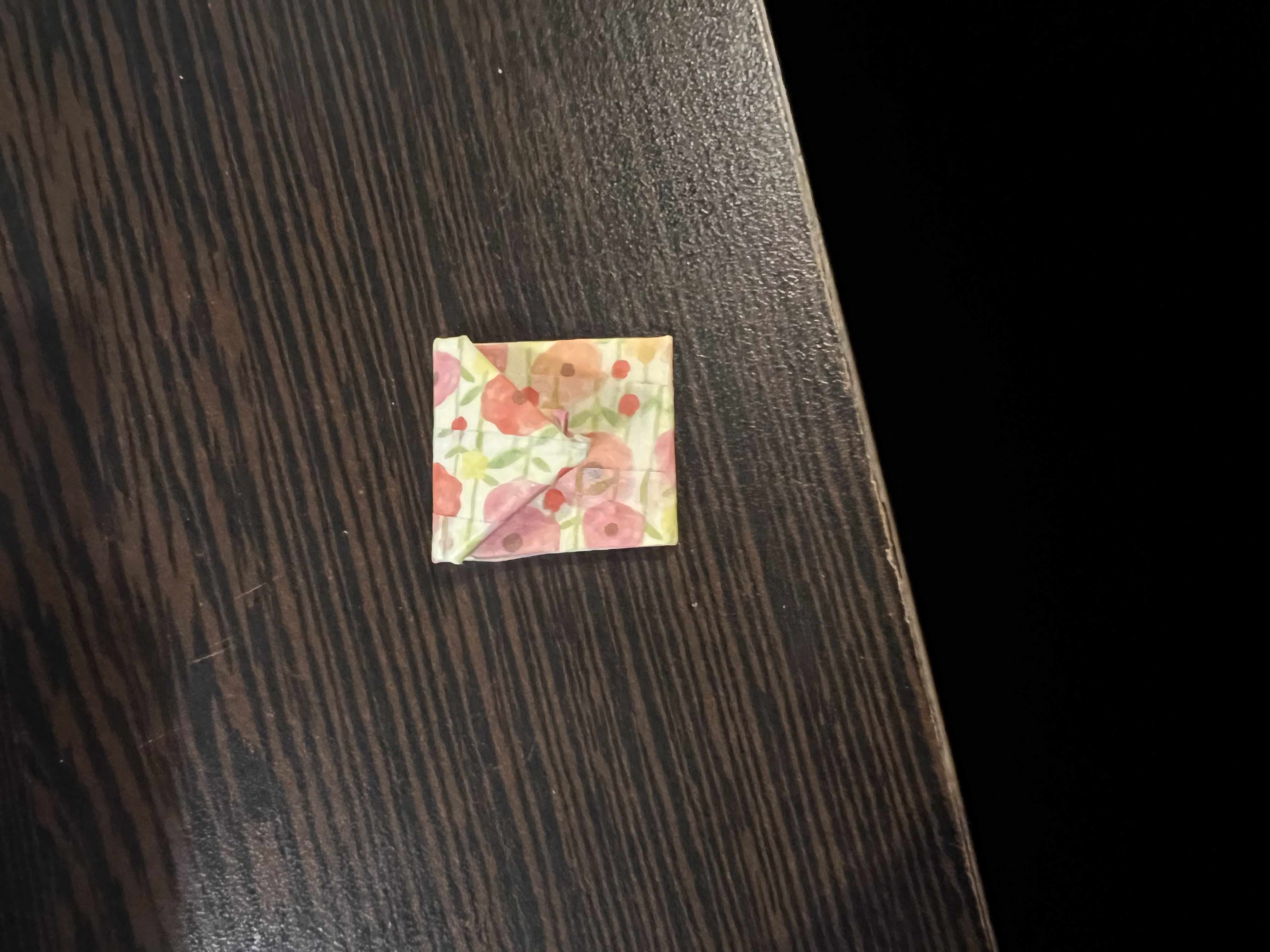
Handmade Envelop Bookmark

Age: 20s

Text:

Context:

Informant-The significance of my envelop bookmark was to encourage me to read since I would decorate them to match the book cover and would leave my personal reviews in them!

Analysis:

The informant spoke to me about the evolution of their bookmarks, how they shared them with friends, and customized them over time. Their process of creating them and showing others how to make them reminded me of origami projects teachers would teach young children, or kids showing each other how to make cootie catchers or paper airplanes in their downtime, during recess, or at camp. Crafts such as these are a way of entertaining oneself with few resources. This craft, in particular, enhanced the activity of reading. These examples of material culture give us insight into what crafts children around the world filled their free time with!

Quinceañeras

Age: 21

TEXT:

Informant- “I would say that one of the coming of age rituals that I have experienced with in my family is quinceañeras. So pretty much it’s once you turn 15, you get a coming of age party where you pretty much use a big old puffy dress and all your family and friends will be there to celebrate you finally being a woman. But I remember in my experience, I didn’t really have quinceañera, unfortunately, due to COVID, everything was closed down since the shutdown had just been two weeks beforehand. I just remember getting my quincea ring, because in my family, we always get rinks once you become 15, it’s just tradition and getting a big old ice cream cake. But my mom’s experience was very different from mine. Since she did have a quincea, it wasn’t extravagant, though. She had a nice, simple silk dress. It wasn’t the big old puffy dresses, and she had all her family there. But my aunt, though, on the other hand, she had a big old extravagant dress, it was pink and black, and she had a whole dance recital on a photo shoot and so on, which was really cool.”

CONTEXT:

This coming of age ritual is very common among Hispanic households across the globe. This tradition comes in the form of a large party thrown for the birthday girl on her 15th birthday in celebration of her new womanhood.

ANALYSIS:

From what the informant shared, I can see how no matter what kind of celebration is given to the birthday girl, though they are traditionally supposed to be very extravagant, the most important thing in my informant’s opinion is to share it with those who you are closest and to be able to symbolize the transition into womanhood with this rite of passage. A unique aspect of the informant experience that I hadn’t heard of prior to her explanation was the symbolic rings that the women in their family are given. I think this is a great signifier of womanhood as jewelry is traditionally used an heirloom that is passed down from generation to generation, and by having this physical reminder of the transition into the next step of life, you are reminded of your new status.

Sana Sana

Age: 24

TEXT: Sana Sana Colita de Rana

CONTEXT:

Informant- “Okay, so Sana Sana is, I guess I think it’s like, when I’ve looked it up online, it’s supposed to be like a nursery rhyme. It’s usually what people use to consult the children in their family when they’re not feeling well, when they’re hurt, which I think means heel heal- something like that. So the full story for me is that I grew up, I grew up having stomach issues, problems with my GI, or GI issues, um, problems with my intestines as they were like distant I was a kid. And so I was always in pain. And I was especially in pain, like if I ate something that didn’t agree with me. And at that point, I didn’t have it under control like I did now, so it really any little thing would hurt me. And my grandma would always, I go, I’d run to my grandma and I’d tell her that my stomach was hurting or something like that. And so she would like sit with me or she’d lay me down and she’d put her hand. It was specifically her right hand, her right hand on my stomach, and she would say “sana sana colita de rana” and she would change it. She’d say make (informant’s) belly feel so much better. And then she’d like, as she’s like rubbing it, then she’d like pretend like she was pulling the illness out of me and like grab it off my stomach. So, I guess my relationship to it is that it reminds me of my grandma. I even as an adult, like even when I was 18 years old, I would still say, grandma, my stomach hurts. “Can you sana sana me?” And she would come over and son us son on me… I don’t really remember the very first time I heard it. It’s just always been something that she’s done for me. Um. Yeah, I guess it is a sense of the comfort for me. Cultural reference, obviously, for me being Hispanic and like that, but it is a sense of comfort for me that she would use it. I don’t know if it was mind like a minding her mentality kind of thing that I swear every time she did do it, I ended up feeling better after that. So that is my full story of sana sana. That’s my relationship to it. It kind of follows my relationship with my grandma. And I she would always use it when I wasn’t feeling well, mainly with my intestinal issues.”

ANALYSIS:

In the story, the informant tells me of their experience with this traditionally, Hispanic saying and how it was used to comfort her as a child with intestinal issues even into her adulthood. She goes into whether or not she believed that just her grandmother saying this and performing a specific hand motion tricked her mind into making her feel better, but regardless, she believes wholeheartedly that the same always made her feel better. I know this informant quite well and during times where I myself have gotten hurt or felt sick she has performed Sana Sana on me and I think that it’s a very sweet and caring way of sharing culture with someone else.

Senior Pranks

Age: 21

TEXT:

Informant- “Senior year of high school at my school we always had to do, in the theater department, a senior prank on the lower classmen and the teachers and each year it would be different like VERY different and people would go all out. One year people brought sand giant, like inflatable pools and we had a beach day in the classroom and all the underclassmen had to watch us and we locked them out. One class had our school mascot like in the room filled with cups of water so no one could go get it. It was very odd and like, signs warning about “the tornado” cause that’s our mascot. I can’t remember any other ones but each year we would try to like up the other group do better, one up of them, and it really brought the senior class together!”

CONTEXT: The informant recounts the time in high school in Florida and the various senior pranks that happened during her time there.

ANALYSIS:

Pranks as a rite of passage are very important to many people, especially the transition from adolescence to adulthood and the limbo of being a teenager in high school. I think the added element of being in the theater department in high school and having that extra layer of folk and community adds to the competitiveness of the pranks to will not be each other and bond in a way through these pranks