
Category Archives: Rituals, festivals, holidays

Yam for Pregnancy

Text:

“Something that a lot of Yoruba and Igbo and just Nigerian people in general will do during their pregnancies is eat a lot of yams. There are many positive associations with yams — they’re seen as a nutritious food, a staple starch in Nigeria, found in many dishes. My mom said that when she was pregnant with me, she ate a lot of yams. And her mom did as well — my grandma gave birth to twins, and my grandma’s mom did too, and my grandma was a twin. I think it’s a good luck thing. It won’t always mean you’ll have twins, but it’s just a superstition.”

Context:

As the informant notes, this practice is common in Nigerian customs related to pregnancy and health. The belief, common among the Yoruba and Igbo people to whom her family belongs, has been passed down through at least four generations of women in her direct family line. She reflects that she has already thought of following the same practice eventually. Nigeria is the world’s largest producer of yams, supplying more than half of the world’s yams, meaning that cultural importance in Nigeria amplifies a value that goes far beyond nutritional benefit.

Analysis:

This belief is a colorful example of sympathetic folk medicine: yams are a food associated with abundance, fertility, and foundational nourishment in Nigerian culture, and it is believed that those same qualities will be imparted to a pregnant body. The association between yam consumption and twin births is particularly interesting — twins are sacred in Yoruba culture, associated with good fortune and spiritual power, and this may be why the belief has such strong associative logic. The documented history of twins in this informant’s family over generations empirically supports the folk belief, at least in the family’s narrative. The community’s encouragement to eat is also an endearing form of support for women during a biologically vulnerable period. Whatever the yams do or don’t do, the practice is an act of cultural continuity: each generation of women who eats yams during pregnancy takes part in a chain of care and tradition that links them materially and symbolically to their mothers and grandmothers before them.
All School Handshake

Text:

“Okay, so I went to a really small private high school and it was a really tight-knit community and to start the to, uh, kick off the school year, we’d have the all-school handshake. So we’d essentially all line up the student body, shoulder to shoulder, along the perimeter of the formal gardens, with the headmaster at one end. And then the headmaster and the entire school president would stand side by side and flip a coin. And if it was heads, they would go to the right, and if it was tails, they would go to the left, or whichever way.

Context:

This was a ritual the informant participated in every year at her small private boarding school in Illinois. The tradition is held at the beginning of each school year as a formal opening ceremony for the entire school. It’s set in the formal gardens, and the coin flip, she noted, decided which way the handshake procession would go, injecting an element of chance into what was otherwise a very ordered tradition.

Analysis
The all-school handshake is a ritual of initiation and collective renewal — a physical enactment of the social ties that constitute the school as a community. By having each member shake the hand of every other member, the tradition performs a kind of annual social contract; each participant touching every other participant materializes the school becoming a web of mutual relationships. The coin flip is especially interesting as a ritual element—it adds a moment of chance to an otherwise highly ordered event, reminding participants that the direction of the community is, in part, determined by forces beyond any individual’s control, and that all are equally subject to that uncertainty.

Wisconsin State Fair

Text:

“I think about our state fairs. Um, and, you know, like one of the biggest things is like, you know, like cheese curds and things like that, and that comes from, you know, the fact that we, you know, pride ourselves on our dairy agriculture and things like that. And then, you know, beer is so, so popular in Milwaukee. There are so many different brands that have come out of Milwaukee that do beer, but it’s like such a popular thing to drink at these festivals.”

Context: 

The informant is originally from Wisconsin and, when asked which folk groups he identifies with, reflected on Wisconsin’s relationship with food. It’s officially considered “America’s Dairyland” and leads the United States in cheese and dairy production. Supporting these foods is almost synonymous with supporting the state’s agricultural workers and products. 

Analysis: 

State fairs function as festivals of regional folk identity, offering a ritualized space where communities can celebrate and distinguish themselves from other regions. For Wisconsin, food is the primary medium of self-expression: cheese curds are a strong signifier of agricultural heritage, and Milwaukee beer has a deep history within German brewing culture. As the informant details, these items are regarded with communal pride. It would be considered ‘foodways’ in which food production, preparation, and consumption transmit and represent cultural values. The state fair on stage is the most public example of this, amplified by the strong agricultural and regional belonging that collectively constitute the state’s identity.

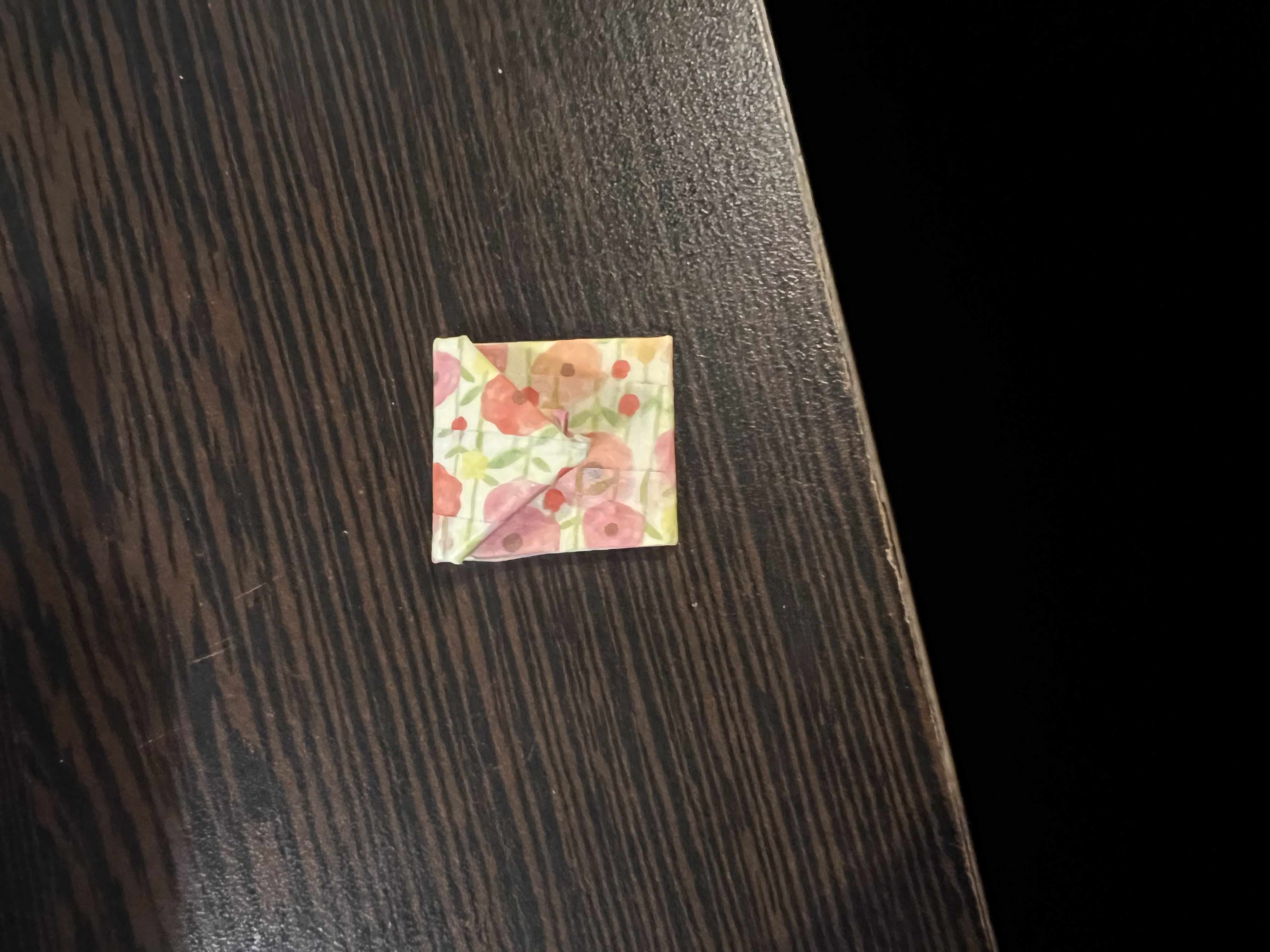
Handmade Envelop Bookmark

Age: 20s

Text:

Context:

Informant-The significance of my envelop bookmark was to encourage me to read since I would decorate them to match the book cover and would leave my personal reviews in them!

Analysis:

The informant spoke to me about the evolution of their bookmarks, how they shared them with friends, and customized them over time. Their process of creating them and showing others how to make them reminded me of origami projects teachers would teach young children, or kids showing each other how to make cootie catchers or paper airplanes in their downtime, during recess, or at camp. Crafts such as these are a way of entertaining oneself with few resources. This craft, in particular, enhanced the activity of reading. These examples of material culture give us insight into what crafts children around the world filled their free time with!

财气酒 or cái qì jiǔ

Age: 24

TEXT:

“财气酒” or “cái qì jiǔ”

CONTEXT:

Informant- “There’s also fun little like Chinese New Year story about the last sip of wine. So at the New Year’s Eve dinner or any kind of like family family gatherings after everyone has eaten, talked, loved, and toasted, there may be one last sip of one life in the glass or in the bottle. So in many families, people call it cái qì jiǔ, which means fortune wine, or wealth and luck wine. The idea is not really about the alcohol itself. It is about the blessing behind it. So that last step is seen as a little bit of good fortune or money left at the end of the bottle. And if you drink it, it is like taking the remaining luck, wealth, and prosperity and carrying it with you. So if someone said, don’t waste the last step that that’s the fortune wine and pour you a cup of the last one. That means you will gain the last bit of prosperity and wealth. And they will always like say, “oh, may you receive all the good luck and good wealth, get rich.”

ANALYSIS:

This holiday ritual or tradition focuses on wealth and prosperity, as well as community, and act as a way to cement good fortune going forward into the new year. Though it involves wine, I would not specifically classify it as foodways as the tradition itself is not solely based on the dish and more of the remnants of the shared alcohol and the experience of being with one another. I would instead classify it as a ritual surrounding life and maybe even a rite of passage as you enter into a new year of life.