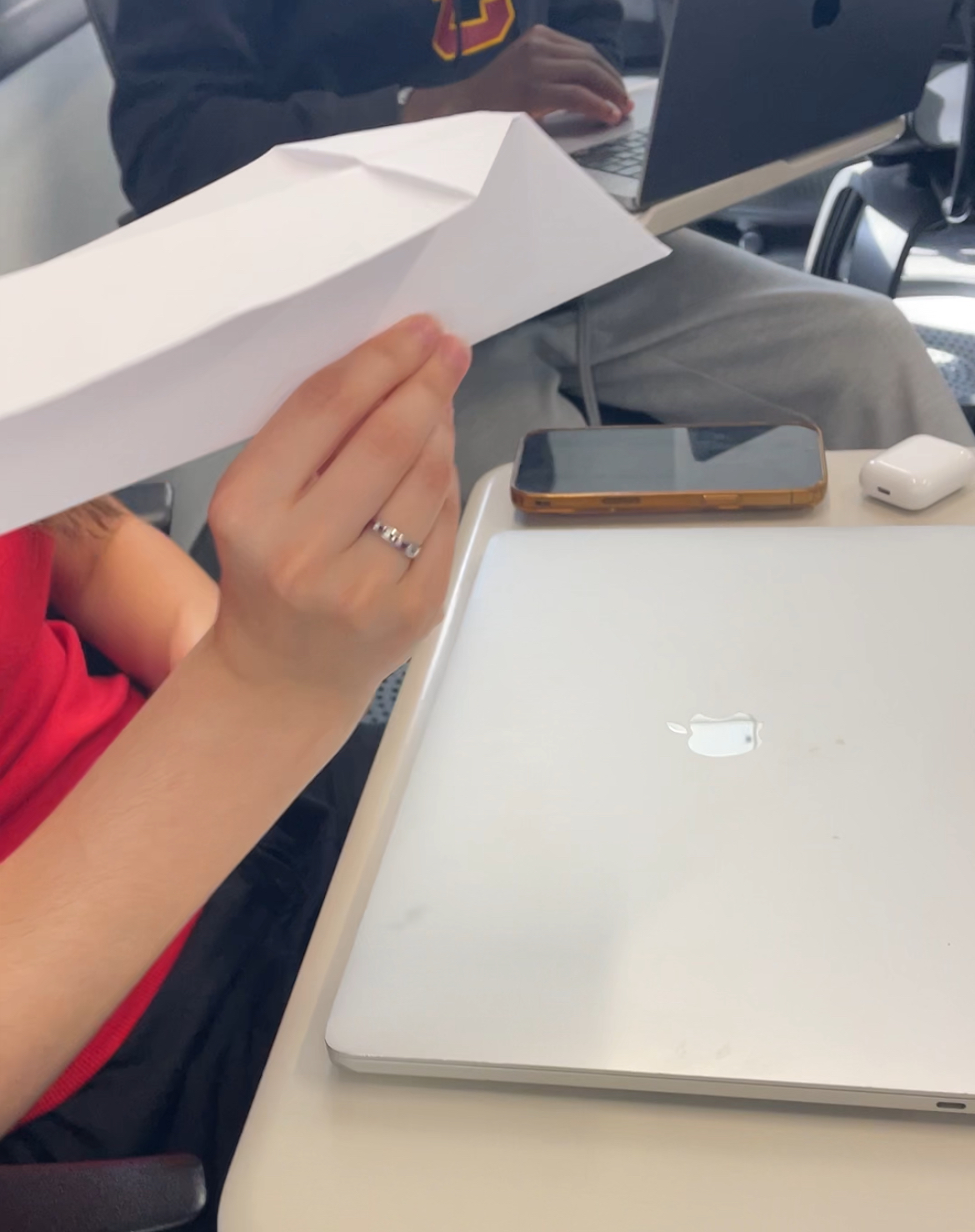
How to Make a Paper Plane

Context:

My informant is a college student from Arizona and learned how to make this paper plane in elementary school from one of her classmates.

Text:

Take a loose-leaf piece of white paper and fold two corners of the top of the paper to the middle. Then fold the paper in half. Take one half and fold that in half again. Repeat to the other side. Now you have a simple paper airplane.

Analysis:

This is a common childhood craft that many children learn how to make when they are bored. People often learn different variations of the paper airplane. In this case, C learned how to make a simple version of the plane. Since this is such as simple craft, this piece of material folklore is easy to pass from person to person.

Filipino Musical Folktale – Dip Dippo

Context:

My informant is a 18-year-old girl from Seattle, Washington. She is half Filipino and grew up learning about Filipino culture.

Text:

“One of my old, like, great grandpas from the Philippines told me a story about this guy who I’m pretty sure is like reincarnated into a drum, like a traditional drum. And he goes around and he’s like being used by the people and it’s bringing back all the memories of like, how important music is for like, the community and cultural celebrations. And it’s talking about just like how traditions are passed down through generations through music. He later wrote a short story, called Dip Dippo about it. But it was really cool.”

“Do you know where he learned it?,” I asked.

“I think that he was drawing on old Filipino folklore, but he told it to me as a children’s story in his own way.”

Analysis:

I noticed that as my informant was telling the story of this folktale, although she did remember the specifics of this tale, what she took away seems to be the core values of Filipino culture. This tale revolves around music, community, and culture. The tale builds off of the belief of reincarnation but adds in Filipino values. I think the story describes that, even after their loved ones have passed on, they can still connect with their spirit through music, building off of their community and culture.

Moon Song

Song:

I see the moon and the moon sees me,

The moon sees somebody I wanna see

God bless the moon, and God bless me:

And God bless that somebody I wanna see.”

Context: The informant’s mother sang this song to them as children. The informant is from the East Coast and their mother is from the Southern United States. Informant’s mother was taught this song by their mother growing up as a lullaby to put her to sleep.  


Analysis: This is a children’s lullaby passed through oral tradition across generations. From mother to child, it passes down, connecting generations through song. While the child does not necessarily understand the words being sung to it, the song itself is a family tradition. The purpose of the song (putting a child to bed) holds greater meaning than the actual lyrics of the song. Because it is passed down through song, it is an important oral tradition for this family.

El que come y canta loco se levanta

Text: El que come y canta loco se levanta

Translation: He who eats and sings rises a madman.

Informant’s Interpretation: The informant shared that for her family, it meant that you should not do two things at the same time, and they should focus on the food on their plate rather than the words in their mouth. 

Context: The informant’s father would say this to her and her siblings growing up to get them to stop talking more than they were eating at the table. The informant, who is Mexican American, grew up in Texas near the border in the 60s/70s. 
Analysis: The phrase itself, “El que come y canta loco se levanta”, uses exaggeration (“rises a madman”) to create a memorable and slightly humorous warning to the children hearing it. Like many proverbs, its literal meaning is less important than its applied meaning, which in this case is about maintaining focus and proper behavior at the table. The informant’s father adapts the proverb as a form of disciplinary speech, using it to reinforce expectations around mealtime etiquette. I believe it is reflective of larger trends of parents wanting their children to eat at the table rather than goof off and let their food get cold.

College rite of passage Tradition

Informant: “One of the traditions I remember most from Yale happens on Class Day, when we all sing the alma mater, Bright College Years.” Toward the very end of the ceremony, everyone pulls out these white handkerchiefs and starts waving them during the final line: “For God, for country, and for Yale!”

It’s kinda the moment where you realize everyone around you is about to go their separate ways. You’re all doing the same thing, singing, waving these white handkerchiefs, and kind of holding onto that shared experience for just a little longer. It’s simple, but it really sticks with you.”

Context: The informant attended Yale University in the 80s and attended the Class Day celebration the day before graduation at the university. She recalled this tradition after being prompted if there were any traditions at her university. 

Analysis: This tradition is a clear example of institutional folklore, where a formal organization (Yale) sustains and transmits a ritual that becomes meaningful through repeated student participation. The act of waving white handkerchiefs during a specific line of “Bright College Years” acts as a ritual, tied to the incoming graduation.

This is also a rite of passage, marking the shift from individuals being students to alumni. The waving creates a visible sense of unity and collective identity, while the lyrics reinforce shared values. Even though the handkerchiefs have been officially distributed since 1984, the meaning of the tradition comes from its performance and emotional resonance, not just its institutional origin.