
Monthly Archives: May 2026

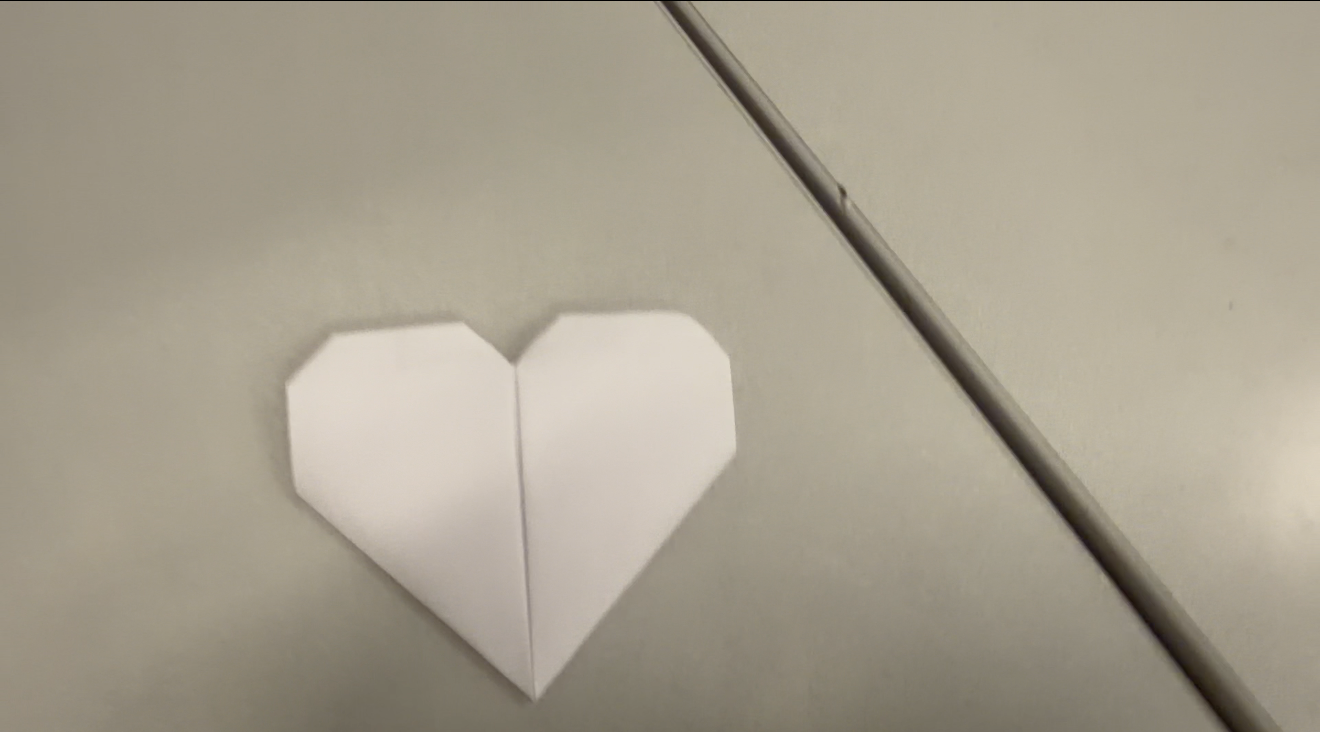
Paper Hearts

Context: The informant learned this art form of paper folding from an elementary school teacher around Valentine’s Day. They were encouraged to fold them and give them to people in their class. However, the informant and her friends continued to make these throughout school and would give them to each other with messages as she got older. 

Analysis: What’s interesting is how the practice of making the paper changes within one person. Initially, it’s a structured activity, everyone learns the same folding technique, and is encouraged to give hearts to classmates. This reflects a kind of guided folk practice, where authority (the teacher) transmits a tradition tied to a holiday (Valentine’s Day). 

After the initial introduction and purpose, it becomes more personal. The informant continues making paper hearts outside of that original setting, which shifts the practice into a more organic tradition. This expands it from being just about Valentine’s Day to being a tradition among friends. 

I also would view this as a form of gift exchange ritual. Even though the object is small and made from inexpensive materials, its value comes from the time, effort, and intention behind it.

School Legends

Age 20

Informant: “So, at my high school, I went to high school in Manhattan, in New York, and it was in this big mansion that got… converted into a high school. So, there’s this really fancy library with a little stone staircase in it. And there’s this little stain on the staircase that’s…this reddish, coppery tone. And the story goes that when…it was a mansion, and when the man who lived there was living there, someone tried breaking in. And that stone staircase in the library leads to a secret door in his bedroom, which is now a classroom…So then, when someone tried breaking in, they tried going up that staircase to sneak into his bedroom and kill him, and the maid was on the staircase, and she got shot. And so that, like, coppery tone is actually a bloodstain…But that is how the story goes, and that’s what the teachers told us.”

Context: The informant was told this story when she was on a field trip by a head teacher at her school. She went to school in Manhattan and would’ve been told this story in the spring of 2023.  The informant told this story when prompted if she had been told any ghost stories growing up. She does not necessarily believe it is true, but finds it humorous that the teacher would tell students this type of story. 


Analysis: I think an interesting view of this specific ghost story is looking at it as school lore or a legend within the school. Legends themselves are stories set in the real world, told as if they are true, in which truth value is debatable but plausible. A story like this, a murder in a city, isn’t entirely unbelievable. The story was specifically told by a person in authority (teacher) to students. This is interesting because it is common that the institution attempts to police folklore that undermines its power or public image. A murder in a school is surely not something the administration would want public, and makes the teacher telling this legend interesting. I think this shows that the teacher is comfortable sharing this story with the students and knows it will not affect their overall view of the institution, but rather think it is an interesting piece of historical knowledge of the building. 

Colombian New Year’s Grapes

Age: 22

Text
“A tradition that my family has, it’s a Colombian tradition, is that on New Year’s Eve when it hits midnight I eat 12 grapes in the first 12 seconds of the new year under the table. So like my siblings and I will crawl under the table and literally just like, basically just stuff grapes into our mouths as fast as we can and it basically means good luck for the whole year.”

Context
CM describes a Colombian tradition that has always ran in her family for as long as she can remember. It’s a tradition that she does along with her siblings every New Year’s Eve to New Years transition, and it’s held in high regard in her extended family as good luck. CM also says that she isn’t sure when she started participating or who started it in her family, she just remembers participating every year.

Analysis
The 12 grapes tradition is a Colombian/family tradition that CM has participated in since she was young. She doesn’t remember when it started or who taught it to her and felt that it was always just a part of her life, which shows how folklore is disseminated informally through participation. This tradition includes aspects of sympathetic (specifically homeopathic) magic, with the relation between 12 grapes, 12 seconds, and 12 months of the new year working to create good luck. This tradition is also part of the holiday/festival that is the New Year’s celebration to transition into a new year filled with positivity and luck.

Pregame Faith Wrist Tape

Age: 21

Text
“A superstition or tradition that has been a part of my life for a while now is before football games, I tape up my wrists and I write GGM on my left wrist. GGM as my mantra saying God got me and I know that whatever happens on the field, God got me and it’s a part of his plan so that helps me kind of destress before the game and it’s been a powerful thing in my life.”

Context
LS has developed his own pre game tradition that connects his faith and his sport of football. He has always worn wristbands and wrist tape for games, but since the later years of high school he started writing GGM as he became more involved with Christianity. LS says that many athletes, both on his team and professionals, will write notes of their faith on their equipment, and it’s a very strong way to stay connected before and during the game and keep calm.

Analysis
LS’s ritual is a great intersection between material culture, rituals, and religious folklore. Writing his mantra of “God got me” is a way for LS to honor his faith and belief in God before every game, as well as managing his uncertainty and feeling a sense of ownership over the unknown events that will happen in the game. This ritual ties into his place in the Christian and athlete folk groups, as many athletes have superstitions around material culture like clothing, and writing notes of faith is a way to channel good luck into special objects/clothing (Sims, Stephens). It’s also somewhat of a magic superstition for LS, as he believes that the combination of honoring God and writing the mantra and his wrist tape will lead to more positive outcomes in the game.

Pregame Visualization, Music, Prayer

Age: 18

Text
“So before lacrosse games I’ll always close my eyes and visualize what I want the game to look like for me. And I always, um, listen to like classical music. Kinda like, movies, like I listen to Interstellar sound tracks and like classical music like orchestra stuff or anything by Hans Zimmer to calm down. I don’t really like listening to loud music, I feel like calming down is helpful. And I always drink a lot of water and pray before games, just to help with calming down and like getting in the zone too.”

Context
HL says that unlike many of his friends, or many athletes of this generation, he dislikes loud (often rap) music and prefers calm classical instruments and soundtracks. He used to just go with the flow before games and mess around with friends, but for the past year or 2 he sets aside 5 minutes on the bus or in the locker room to close his eyes, tune everything out, and visualize and calm himself down. He will also pray to honor his faith of Christianity and keep him connected to God and have a strong mind during games.

Analysis
HL’s pregame routine is an example of a personal spin on a very common ritual for athletes to calm down and get in the zone before games. In his routine, he includes specific music choice, his Christian faith through prayer, and embodiment/performance through sitting with his eyes closed before every game. HL’s routine embodies Kaptchuk’s description of rituals, as his structured ritual is meant to transform him into a game ready mental state through sensory actions and attention to emotions. The embodiment/performance aspect of the ritual also shows that belief is more than just an idea of the mind, and can be present throughout one’s body. The act of getting mentally ready pregame was something that HL learned from his family as well as other athletes, but the specifics of his routine were created on his own, showing how even as folk lore is transferred, people put their own spins and interpretations of it. I think it’s really cool that everybody has their own ways and methods (multiplicity and variations) to achieving the same goal, which is being mentally ready and calm before a big moment like a performance, game, or interview.