
Category Archives: Material

How to Make a Paper Plane

Context:

My informant is a college student from Arizona and learned how to make this paper plane in elementary school from one of her classmates.

Text:

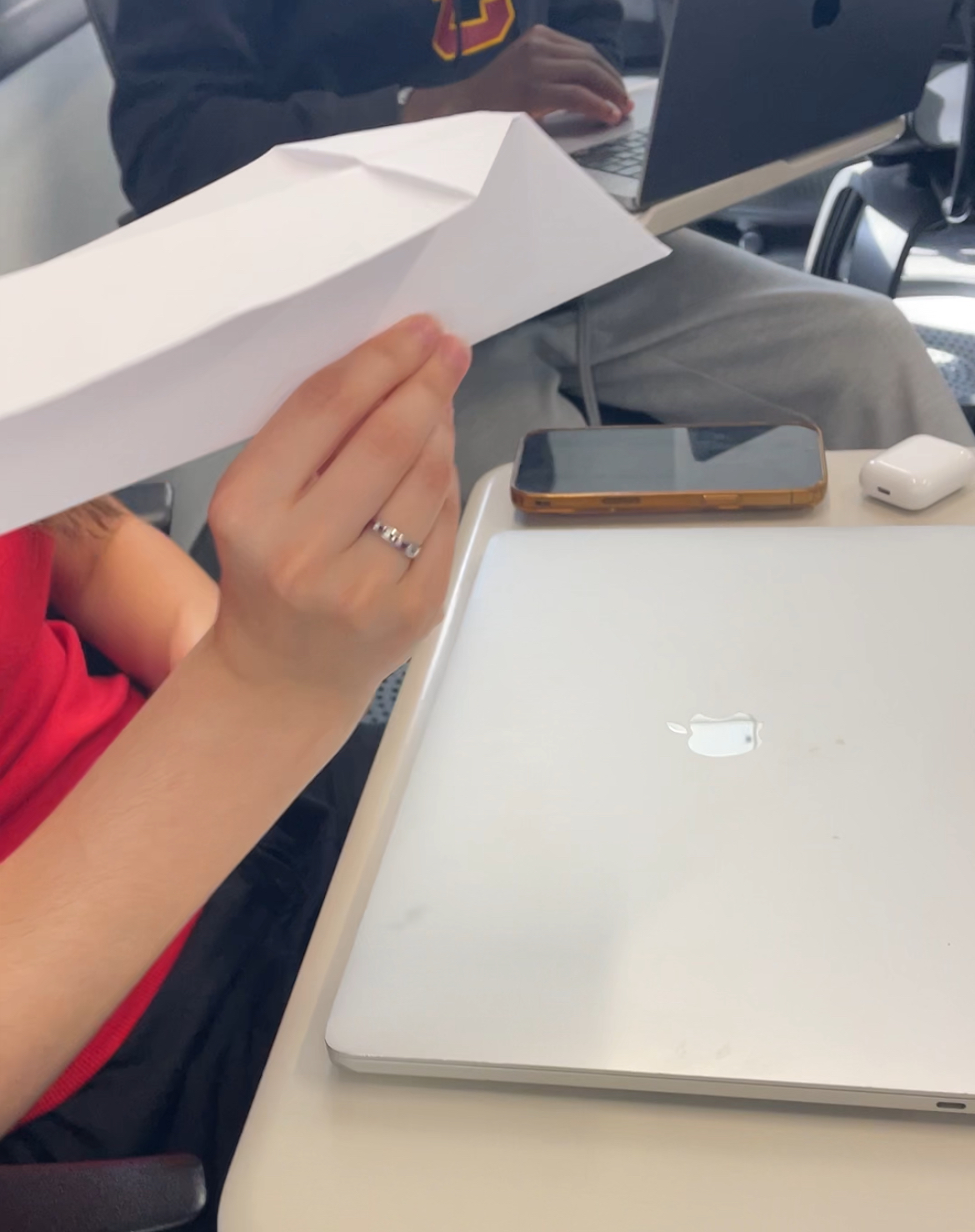
Take a loose-leaf piece of white paper and fold two corners of the top of the paper to the middle. Then fold the paper in half. Take one half and fold that in half again. Repeat to the other side. Now you have a simple paper airplane.
Analysis:

This is a common childhood craft that many children learn how to make when they are bored. People often learn different variations of the paper airplane. In this case, C learned how to make a simple version of the plane. Since this is such as simple craft, this piece of material folklore is easy to pass from person to person.
Tamales at Christmas

Text: Making tamales every Christmas in an assembly-line style with family.

Context: The informant, who is Mexican American and grew up in Texas near the border, participates in a yearly Christmas tradition where family members gather to prepare tamales together. Each person takes on a specific role in the process (spreading masa, adding filling, wrapping), creating a collaborative, assembly-line system.

Analysis: This is a strong example of foodways folklore, specifically a holiday-based family tradition rooted in Mexican and Mexican American cultural practices. Tamale-making at Christmas is a tradition, but the assembly-line method highlights its communal nature, turning food preparation into a ritualized family activity. The repetition of this practice each year reinforces cultural identity and the intergenerational nature of the practice. Knowledge and roles of the activity are passed down within the family.

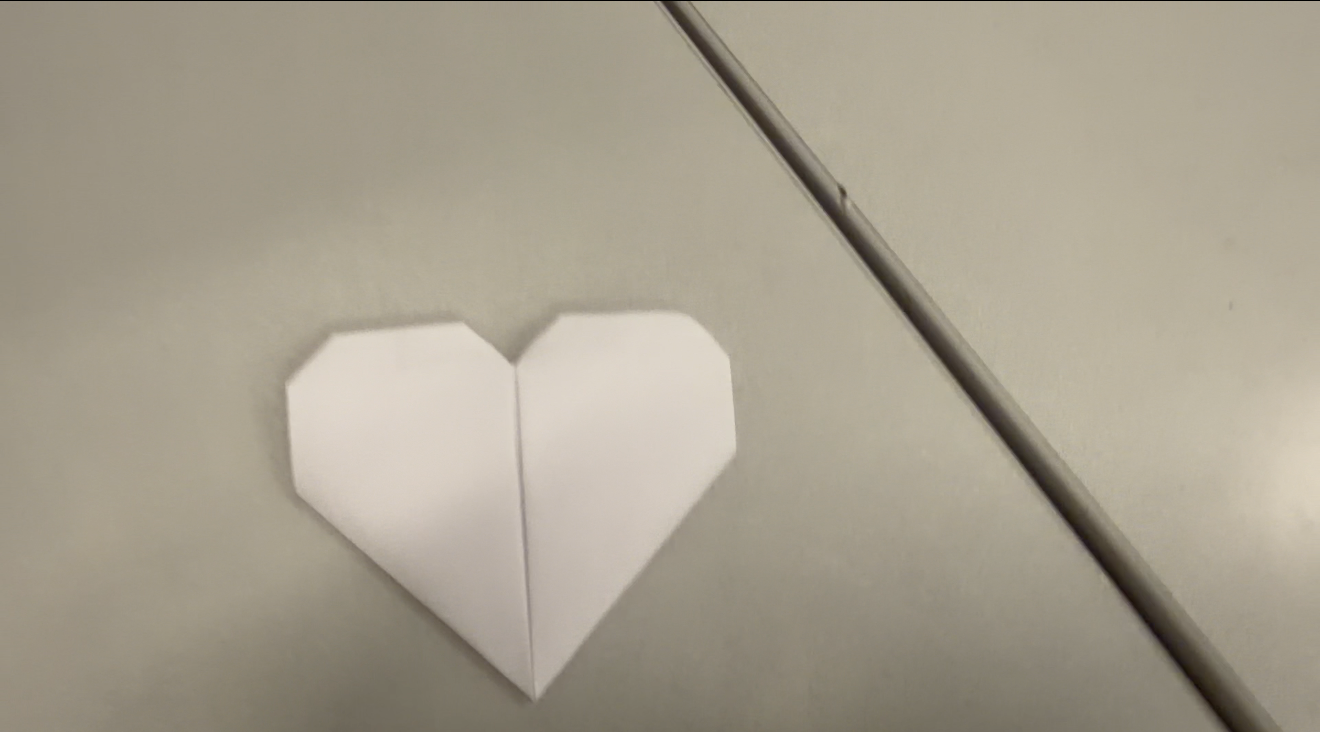
Paper Hearts

Context: The informant learned this art form of paper folding from an elementary school teacher around Valentine’s Day. They were encouraged to fold them and give them to people in their class. However, the informant and her friends continued to make these throughout school and would give them to each other with messages as she got older. 

Analysis: What’s interesting is how the practice of making the paper changes within one person. Initially, it’s a structured activity, everyone learns the same folding technique, and is encouraged to give hearts to classmates. This reflects a kind of guided folk practice, where authority (the teacher) transmits a tradition tied to a holiday (Valentine’s Day). 

After the initial introduction and purpose, it becomes more personal. The informant continues making paper hearts outside of that original setting, which shifts the practice into a more organic tradition. This expands it from being just about Valentine’s Day to being a tradition among friends. 

I also would view this as a form of gift exchange ritual. Even though the object is small and made from inexpensive materials, its value comes from the time, effort, and intention behind it.

Colombian New Year’s Grapes

Age: 22

Text
“A tradition that my family has, it’s a Colombian tradition, is that on New Year’s Eve when it hits midnight I eat 12 grapes in the first 12 seconds of the new year under the table. So like my siblings and I will crawl under the table and literally just like, basically just stuff grapes into our mouths as fast as we can and it basically means good luck for the whole year.”

Context
CM describes a Colombian tradition that has always ran in her family for as long as she can remember. It’s a tradition that she does along with her siblings every New Year’s Eve to New Years transition, and it’s held in high regard in her extended family as good luck. CM also says that she isn’t sure when she started participating or who started it in her family, she just remembers participating every year.

Analysis
The 12 grapes tradition is a Colombian/family tradition that CM has participated in since she was young. She doesn’t remember when it started or who taught it to her and felt that it was always just a part of her life, which shows how folklore is disseminated informally through participation. This tradition includes aspects of sympathetic (specifically homeopathic) magic, with the relation between 12 grapes, 12 seconds, and 12 months of the new year working to create good luck. This tradition is also part of the holiday/festival that is the New Year’s celebration to transition into a new year filled with positivity and luck.

Pregame Faith Wrist Tape

Age: 21

Text
“A superstition or tradition that has been a part of my life for a while now is before football games, I tape up my wrists and I write GGM on my left wrist. GGM as my mantra saying God got me and I know that whatever happens on the field, God got me and it’s a part of his plan so that helps me kind of destress before the game and it’s been a powerful thing in my life.”

Context
LS has developed his own pre game tradition that connects his faith and his sport of football. He has always worn wristbands and wrist tape for games, but since the later years of high school he started writing GGM as he became more involved with Christianity. LS says that many athletes, both on his team and professionals, will write notes of their faith on their equipment, and it’s a very strong way to stay connected before and during the game and keep calm.

Analysis
LS’s ritual is a great intersection between material culture, rituals, and religious folklore. Writing his mantra of “God got me” is a way for LS to honor his faith and belief in God before every game, as well as managing his uncertainty and feeling a sense of ownership over the unknown events that will happen in the game. This ritual ties into his place in the Christian and athlete folk groups, as many athletes have superstitions around material culture like clothing, and writing notes of faith is a way to channel good luck into special objects/clothing (Sims, Stephens). It’s also somewhat of a magic superstition for LS, as he believes that the combination of honoring God and writing the mantra and his wrist tape will lead to more positive outcomes in the game.