
Lithuanian Proverb: “A small fly fell into a cup with drink inside”

Nationality: Lithuanian American
Age: 20
Occupation: Student
Residence: Los Angeles, CA
Performance Date: February 21, 2023
Primary Language: English
Language: Lithuanian

Text

Original script: “Įkrito maža musytė į puodelį su gėrimu — netikėta laimė, arba gausit pinigų.”

Transliteration: “A small fly fell into a cup with drink inside — unbelievable luck, or you will get money.”

Free translation: “A blessing in disguise,” or “Every cloud has a silver lining.”

Context

IZ is a 20 year-old college student from Lisle, Illinois, living in Los Angeles, California. Both her parents’ families immigrated to the United States during World War II and remain connected to their Lithuanian roots through strong immigrant communities in the US.

IZ learned this proverb from her teachers at Maironis Lithuanian School in LeMont, Illinois, which she attended on Saturdays as a kid. It was intended to communicate that something perceived as bad or unlucky could end up being good. She gave the example of being paired up with someone you don’t like for a project. The teacher would use this proverb to remind you that, for example, you could end up becoming friends with that person.

Analysis

It immediately stood out to me that this proverb contains a narrative sequence of events — the action of a fly falling into a cup and spoiling one’s drink. This stands out from the American equivalents of the proverb, which refer to an object having a double identity or redeeming quality, rather than an action.

It is also, arguably, a more relatable experience. Everyone has lamented having to throw out their drink when a bug falls into it. The American proverbial equivalents, however, refer to abstract or distant experiences — blessings and clouds.

I noted that IZ learning this proverb in an educational setting could suggest a more institutional dissemination of this cultural knowledge rather than in a folk context. However, it wasn’t part of a lesson but shared organically from teacher to student. It would be interesting to further study how the folklore of minority cultures in the United States may be institutionalized in cultural schools in attempts to preserve it among immigrant communities.

Lithuanian Folk Simile: “Healthy as a Radish”

Nationality: Lithuanian American
Age: 20
Occupation: Student
Residence: Los Angeles, CA
Performance Date: February 21, 2023
Primary Language: English
Language: Lithuanian

Text

Original script: “Sveikas kaip ridikas.”

Transliteration: “Healthy like radish” / “Healthy as a radish.”

Free translation: “Snug as a bug in a rug.”

Context

IZ is a 20 year-old college student from Lisle, Illinois, living in Los Angeles, California. Both her parents’ families immigrated to the United States during World War II and remain connected to their Lithuanian roots through strong immigrant communities in the US.

“My dad loves this one,” IZ said about this folk simile. She described it as one that is only used around close family members and said by adults to children in an affectionate manner. “It’s a little silly,” she said, “because it rhymes.” For this reason, we chose “snug as a bug in a rug” as a potential free translation of this phrase, since it preserves both the rhyming and silly tone of the saying, as well as its social dynamic of being a saying communicated from parents to children.

IZ recalls both her father and grandfather using this expression to communicate comfort at times of sickness — a time when one has a red face, alluding to the color of the radish. She emphasized that it would only be said informally among family, from adult to child.

Analysis

As IZ explained this folk simile to me, she was quick to mention her association of these words with her father. This represents the power of folklore to be associated with a specific person even as it is a broader cultural production. I would infer that many other Lithuanian kids are reminded of family upon hearing these words. 

The strict confinement of this phrase to the nuclear family serves to define the boundaries of the family to young children as they learn social dynamics. Additionally, the knowledge that this phrase is only said to children implies also a knowledge of what is appropriate language to adults.

This proverbial phrase also contains variation in that it can be applied to diverse instances of redness, including from the cold. Lithuania is a country with very cold winters and moderate summers. I can imagine potential variation in this phrase being applied to redness from the cold. An ironic application could refer to redness from drinking — this would subvert the norms of only using this proverbial phrase toward children. More research is needed to see if this is an existing variation of the phrase.

The appearance of radishes in this phrase speaks to the cuisine of the country. Lithuania’s climate is suited to growing root vegetables, including radishes but also potatoes and beets.

Thumb War Masturbation Joke

Nationality: Puerto Rican
Age: 21
Occupation: Student
Residence: Los Angeles, CA
Performance Date: February 16, 2023
Primary Language: English

Text

“One, two, three, four,

I declare a thumb war.

Five, six, seven, eight,

I use this hand to masturbate.”

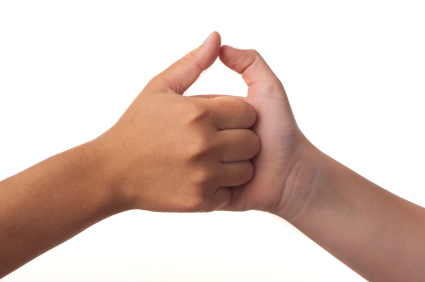
The joke is performed in the context of a traditional “thumb war,” in which two opponents hold hands and attempt to press down the other person’s thumb.

Context

AD is a college student from New Jersey. He first heard this joke in middle school, around sixth or seventh grade. “It was right in the beginning of puberty,” he explained. “So nobody really knew what was going on.”

Thumb war tournaments at recess and lunchtime were already a big thing at AD’s school, and there was one boy who would perform the joke. “He was always the kid that would say that kind of stuff… Everybody was scared to say that word, but he would say it,” AD explained. “Everybody would get around him and wait for him to get somebody new. We would go up to the younger kids and do it, too.”

“If you didn’t know, you would freak out the first time you heard it.” The trick is that you are holding hands when the ‘punchline’ drops. “That’s the fun part,” AD said.

AD noted that the joke was exclusively performed among boys.

“It’s stupid now, but back then it was the funniest thing.”

Analysis

AD’s joke stood out to me largely because I had never heard of it before. Another male-identifying friend of mine from California had an experience almost identical to that of AD, even from across the country. As someone who has been socially conditioned as a woman, it made me curious about the differences between boys’ and girls’ experience of the social construction of their sexuality.

It is not surprising that such a joke was popular as AD and his peers entered puberty. Jokes have a normalizing function, providing a safe space for pubescent boys to explore their sexuality.

However, the boys’ self-policing contained the joke within their gender, and I am unaware of an equivalent masturbation joke for girls at this age. I see this discrepancy as deeply reflective of the differences in the social construction of boys’ and girls’ sexuality during puberty. Masturbation is an action — an act of agency over one’s body and sexuality. That the normalization of this action is denied to girls of the same age thus denies them a form of agency over their sexuality.

In a larger context, the deficit of sexual jokes of any nature among pubescent girls may contribute to a lack of knowledge about their sexuality, and feelings of shame due to missing out on the normalizing function of such jokes. This can lead to misinformation or shame about sex and sexual development, rendering teenage girls vulnerable to sexual abuse. 

I would argue that folklore in the form of sexual jokes can function as a form of sex education and that pubescent girls may benefit from sharing this folklore amongst each other — especially with relatively harmful jokes, such as this one. (Note how AD now finds the joke “stupid.”)

Lastly I would comment on the adult policing of pubescent sexuality. It really stood out to me that only one boy was bold enough to say the word ‘masturbation’ in a public context, under the potential surveillance of teachers. Such jokes are seen as taboo and ‘dirty’ even as they can have a positive function. I am curious how the awareness of adult policing of sexuality at this age may contribute to shame surrounding sexuality for both boys and girls equally.

A photo of hourglass-shaped high-trasmission towers carrying electrical wires across a landscape.

“The Betties” — Transmission Towers

Nationality: American
Age: 53
Occupation: Nurse
Residence: Friendswood, TX
Performance Date: February 19, 2023
Primary Language: English

Text

“Betty” or “The Betties” (plural) as a slang term to refer to high-power transmission towers (450 to 735 kV).

Context 

JH is a 53 year-old woman from Erie, Pennsylvania. She grew up on the rural edges of an industrial city. The high-tension wires from the towers went over the property of her childhood home, and there was a power station nearby.

“The Betties were along the highway, not far from where we lived,” JH said. “They were the shape of a woman. They were wider at the top, like an hourglass. My dad called them Betties.”

JH said she always understood, even as a child, that they were called Betties because of their shape. “We would drive down the road, and I would think that [the towers] looked like my dolls, like a dolls’ dress,” she said. “I learned later that Betty is slang for a hot woman.”

“That’s Californian surfer talk,” her husband, KH, interjects. “My understanding is that the origin was from the Flintstones. Betty Rubble was the attractive wife.”

Analysis

This single slang word for an inanimate object communicates a lot about the construction of gendered aesthetics and the social ideal of a woman’s body type. The expectation that women have an hourglass-shaped body — along with the assumption that such a shape is natural — has contributed to body dysmorphia and the proliferation of voluntary or involuntary body modifications for women, from corsets to BBLs. These constrictions support patriarchal oppression of women by constricting their movement. Additionally, body dysmorphia is linked to increased instances of mental illness. 

I also find it interesting that this term was taught to JH by her father. The role that girls’ own fathers play in their gender construction is significant and markedly different from their mothers’. JH’s experience implies that fathers may be complicit in the objectification of their own daughters through the seemingly unrelated objectification of an inanimate object.

Again, the fact that so much can be contained in a single word referring to an inanimate object speaks to the pervasiveness of gender constructs. The objectification that this enacts uniquely upon women is proved by the lack of a male nickname for transmission towers of lower voltage, which take on a capital t shape. A connection could be made to men’s broad shoulders (again, a cultural construct and not an innate physical quality) but no such slang term appears. If such a term does exist, further study could examine the ‘equal’ objectification of male and female body types.

What’s Green and Has Wheels?

Informant LO is an 18 year-old USC freshman from New York City, New York.

Text:

LO: “What’s green and has wheels?”

Me: “What?”

LO: “Grass. I lied about the wheels.”

Context:

The informant heard this joke while watching a Twitch streamer by the name of SaltyPhish, and often spams the joke to friends. 

LO: “I guess it’s funny because it’s just stupid. Whenever you ask a question you’re supposed to give the truth and this plays off that and it’s something completely unexpected which is a lot of my humor. It doesn’t make the joke at the expense of anyone. It’s an easy answer, technically — anything could fit — but the answer is grass because that’s one of the first things you think of when you say green.”

Analysis:

This joke operates on multiple levels that reveal how folklore evolved with the dawn of the internet. First, LO learned of the joke from watching Twitch, a live streaming website where content creators produce live video content, which is now a popular avenue for people — particularly in Generation Z and younger — to receive content. The fact that LO learned of this joke reflects how he, and others, have the ability to obtain and spread folklore easily on the internet. Since the premodern era, where folklore was spread person-to-person, culture slowly became concentrated into fewer hands after the introduction of the Gutenberg printing press in c. 1440 CE and large-scale businesses produced content which was unidirectionally transferred to consumers. In the postmodern era following c. 2000, this producer-consumer relationship shifted back into a person-to-person spread of culture as the internet democratized avenues for producing and sharing content. Twitch, though a means for one producer to reach a mass of consumers, is a more democratized platform than the publishing houses of the modern era for creators to share culture. LO learned the joke from Twitch, and subsequently uses the resources of the postmodern internet era to “spam” his friends with the joke, a technique of rapidly resending the same message which is popular in the postmodern era as an annoying joke in its own right. LO’s preference of this inoffensive joke reflects a growing sentiment amongst Americans, particularly in Generation Z and younger, to avoid blazon populaire and other jokes which may offend certain groups. This is reflected in trends like cancel culture where such jokes and behavior are punished through mass boycott of popular creators and media.