
Tag Archives: Childhood

The Frog in the Well

CK: “So there’s a lot of folklore and children’s stories that I read when my mom was teaching me mandarin at home. There’s one that I like a lot and it’s pretty well known, like I feel like all Chinese people know it, it’s called: The Frog in the Well / The Frog at the Bottom of the Well. From what I remember, basically, there’s this frog and he lives a content life at the bottom of a well. He has company (fish and whatnot) and food and whatever you need to be comfortable. One day a turtle comes by the well and tells the frog that he should come out of the well and the frog is like ‘why would I do that lol my life is awesome and I have everything here I need, I have a beautiful view of the whole sky!’ 

Eventually, he’s convinced to hop out of the well and once he does he sees how vast the sky actually is. He realizes how much of the world he doesn’t know about and how much he hasn’t experienced. Yeah, moral of the story is about being open-minded, venturing out of your comfort zone, in general broadening your worldview, making the effort to learn, and discovering opportunities. 

There’s some idioms that come from it.  

井底之蛙 – jǐng dǐ zhī wā – “frog at bottom of well,” you might call someone this if they are close-minded

坐井观天 -zuò jǐng guān tiān – “gazing/looking at the sky while sitting in a well,” same use case as first one but the act of being close-minded

Oh, and a lot of Chinese idioms are 4 characters it’s like a whole thing.””

context: The informant is a Game designer who studied at USC and recently graduated as of 2025. She is a first generation Chinese American and grew up with a lot of Chinese traditions. Her family is from Southern China, and her parents put a lot of effort into teaching her about her culture’s food, language, rituals, etc.

Analysis: Looking at this children’s folktale through a functionalist lens, its meant to enforce a moral function within children. Its advice on how to go about life, and a warning to avoid being close minded. It also pushes children to get out of their comfort zone in order to gain new life experiences. This is further pushed through the multiple proverbs and idioms that come from this specific tale. the phrase “Frog at the Bottom of the Well” is also esoteric language between Chinese people, since they know the meaning behind the phrase due to most Chinese children growing up hearing this story.
Origami Cranes

Informant: “I learned origami as a child in my home. My siblings were the ones to teach me. My parents had bought instructional books for my older brother and sister and before I could read, they were teaching me to fold paper cranes and frogs. At school, I would habitually fold scrap paper into birds and other creatures and sometimes gift them to friends or teachers. If asked, I would happily show my friends how to make origami creations of their own, as my siblings had for me.”

Context: Informant is a 23 year old Japanese American USC student who grew up in Lancaster, CA. He also recalls how often other classmates would make things out of paper in his elementary school. Fortune tellers, paper airplanes, and other origami animals were among the many things he learned to make when he was younger, usually taught by family.

analysis: Origami is a classic example of material folklore. This material folklore tradition may have a deeper meaning to the informant’s family due to his Japanese cultural heritage, because origami originated in Japan and has been taught across multiple generations. It’s interesting how the origin of this folklore has adapted and changed over time. Although the original teachings of Origami may have required someone to physically be there to teach you, it has been more commercialized due to its instructions being published and spread in kids books across the world. Also, being able to make Origami swans in school is a way for children to socially collaborate and interact with one another. Its a living tradition amongst children, and is still shared even today.

How to Make a Paper Plane

Context:

My informant is a college student from Arizona and learned how to make this paper plane in elementary school from one of her classmates.

Text:

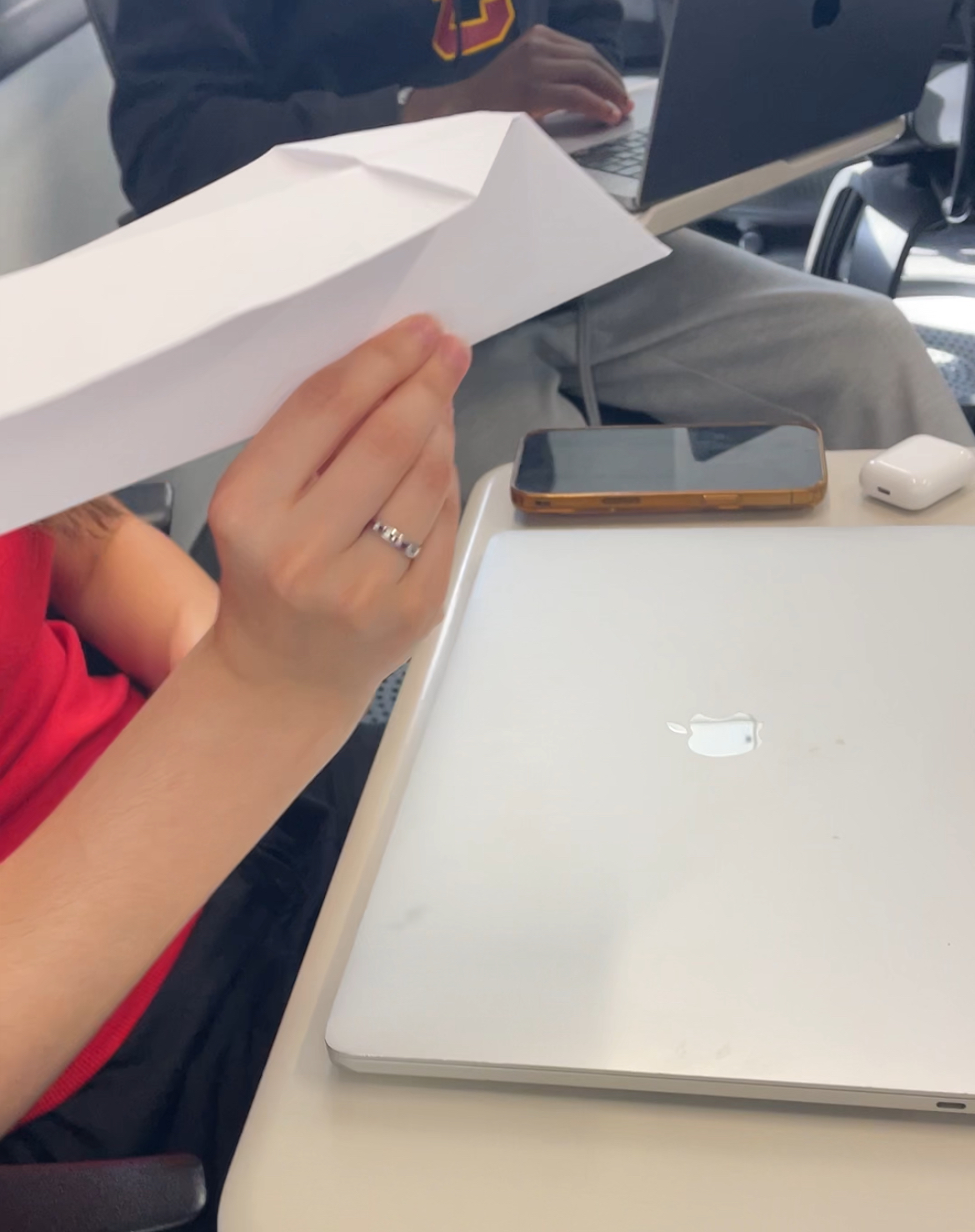
Take a loose-leaf piece of white paper and fold two corners of the top of the paper to the middle. Then fold the paper in half. Take one half and fold that in half again. Repeat to the other side. Now you have a simple paper airplane.

Analysis:

This is a common childhood craft that many children learn how to make when they are bored. People often learn different variations of the paper airplane. In this case, C learned how to make a simple version of the plane. Since this is such as simple craft, this piece of material folklore is easy to pass from person to person.

Angel Kisses

Text:

“Angel Kiss”

Context:

As a child, my mother would call my sister’s freckles “angel kisses.” As I got older, I was curious about “angel kisses,” so I researched them online. Apparently, “angel kisses” often refer to both freckles and birthmarks – especially on children.

Analysis:

I believe parents call their children’s freckles and birthmarks “angel kisses” to instill them with confidence and self-love. It is a form of esoteric communication between a mother and her child. Society can sometimes look down upon features such as birthmarks and freckles, so the labeling of them as “angel kisses” evokes a sense of sacredness and beauty in spite of the world’s cruelness. It teaches children to wholly love themselves and see their beauty in uniqueness.

Thunder Explained to a Child

Text:

“The angels are bowling”

Context:

“The angels are bowling,” my mom use to tell me when I was a child. I was so afraid of thunderstorms, so my mom told me that thunder was just the angels in Heaven bowling. I stopped being afraid of thunder then and would just complain that the angels always had to go bowling when I was trying to fall asleep.

Analysis:

In order to help me overcome my fear of thunderstorms, my mother constructed a legend – a story set in the real world and told as if it was true. Now, I asked her if she came up with the legend on her own, and she tells me she’s not sure. She may have heard it from somewhere else or come up with it on the spot. My family and I are Christians, so my mother used emic, or insider’s, language when discussing that thunderstorms are just angels bowling to esoterically communicate to me that I had nothing to fear.