
Author Archives: Ray Russell

Big Larry the Uber Driver

Age: 22

Date Collected: 4/16/2026

Context:

My friend is a senior at Cal Poly San Luis Obispo. She is in a sorority up there, and we have known each other for about seven years now. Once, when I was up there visiting, she had told me about a legendary Uber driver that everyone in SLO tries to get when traveling to the bars. I asked her about it later over the phone.

Text:

In SLO, there’s one Uber driver, “Big Larry”, who became very popular with the students. My friend explained that he rose in popularity mainly because he was really funny, and his car had colorful lights, great speakers, and a karaoke for passengers to use. He is instantly recognizable with his huge cowboy hat, sunglasses at night in his “funny-looking minivan.” My friend said that “if you get an Uber with Big Larry, you have to take a pic.” Big Larry also makes and posts compilations of the riders with their consent on Instagram and TikTok. He’s “promoting his side hustle,” personal driving service. He does a great job branding his rides, and it has become a ritual for passengers to take a selfie with him. He also posts crazy AI videos of himself doing wild things to get people excited for big events like the Fourth of July, Spring break, and St. Patrick’s Day.

Big Larry typically works weekends, from what my friend explained, and typically around that time and location, drives around kids going or coming from parties. But he does drive during the day and on weekdays too. She believe that “riding in Big Larry’s Uber will guarantee a legendary night out.” They’ll take pics with him and post them on their Instagrams. My friend explained that some of her friends said they had very memorable nights out after riding in his Uber. Also, in her sorority, when someone is out having too good a time, they’re on “Big Larry’s wild ride.” The story gets passed around by students to the point where almost everyone who went to SLO knows Big Larry, and knows how lucky they are when his name pops up on the app.

But not everyone loves the legendary character Big Larry. My friend got to ride with him once, she said that the ride was kind of awkward. They hopped in and asked, “Are you big Larry? He was like yes, want a picture.” They didn’t really want one, because the vibes were off, but took one regardless because it’s what everyone else has done. That said, my friend said that she wouldn’t give him legend status; in fact, he’s kind of a creep-o in her mind based on the encounter and his demeanor. But I guess they do say, never meet your heroes.

Analysis:

From my understanding, Big Larry is something of a local legendary figure in SLO. He is something like a patron Saint of the nightlife and social scene in SLO. He is an omen of luck, and students are happy to see him as their rider. Students learn about his character from friends in casual conversation or on their Instagram. This reflects the traditional word of mouth and more recent digital spread of folklore. But Big Larry represents a new wave of folklore. What was interesting to me was how Big Larry uses Instagram and AI to further bolster his reputation and public image. For example, a recent St. Patrick’s Day post shows an AI video of Larry carrying a pot of gold, calling himself “The Big Shamrock”, and giving gifts to everybody. Big Larry is very much an active participant in forming his own legendary reputation in the neighborhood.

The legend functions as a way to unite the social scene in SLO. Friends can bond over their experiences with Big Larry, or just laugh about how silly his persona is. Either way, it helps people bond and creates a unique community of students who have a distinctly SLO identity. We have strange and unique Uber drivers in LA, and we had some when I went to Santa Barbara, but nothing like Big Larry. It also gives students a way to control the unexpected. They can’t pick their Uber driver, nor can they decide how fun their night out will be. But getting Big Larry is an omen that helps alleviate those anxieties and doubts. When they see him, they know they’ll have a great time, so just relax and enjoy.

Some might believe that the man really is magical, and you should buckle up for a great night when you take his wild ride. But my friend is more of a realist; she doesn’t think anyone else can make or break your night out. That doesn’t make the character any less of a legend, though. People generally remember the hits and forget the misses. Everyone who had the awkward encounter still says their out-of-control drunk friends are on “Big Larry’s Wild Ride.” So the legend still does mean something to them. But, in that context, the legend is kind of flipped and used ironically. We learned that legends aren’t always what the grand stories make them out to be. My friend’s awkward encounter essentially counters the legend; she didn’t have an especially amazing night out. The encounter was awkward, mundane, and altogether just didn’t feel right. But, I would say that her encounter humanized him. In reality, Larry was just a tired guy on a weekend driving students. Larry can curate his online persona, but he can’t mediate every real- world interaction he has. At some point, his persona outgrew his ability to maintain it. In reality, he’s just another guy. Legendary stories don’t focus on these more mundane aspects because people sensationalize them. We often want to believe in larger-than-life figures because it makes the world feel that much more special. When we encounter one of those legendary figures, we might take something from it. In this instance, we might leave our anxieties about the night behind.
“St. Fratties Day” Celebration – Cal Poly San Louis Obispo

Age: 22

Date Collected 4/16/2026

Context:

My informant is a close friend of mine attending Cal Poly San Louis Obispo. She is a graduating senior and an active member in a sorority. She told me about Cal Poly SLO’s most recognizable holiday, “St. Fratties Day.” When I went to college in Santa Barbara, I knew all about St. Fratties day, but I never got the opportunity to go.

Text:

“Every year on March 17th, we wake up at 3:17, get dressed in our “greenest” outfits, take a green Jello shot, and hit the block parties.” That’s been the tradition long before my friend first enrolled at Cal Poly SLO, but it seems the traditions are changing.

To my informant, this is a uniquely SLO festival that’s shared with students all over California; students come from neighboring schools to attend, similar to UCSB’s Deltopia to celebrate. Typically, students indulge in “Irish like drinks – Guinness, Irish Whiskey, Baileys, Green colored mixed drinks and of course green Jello shots,” “anything that seems remotely Irish is there.” More recently, my informant explained that students come dressed in custom green t-shirts painted with white paint and patched. Like four leaf clovers or messages like “kiss me, I’m Irish” or “I love Irish goodbyes.” About two years ago, students made their own green “borgs” decorated with on- theme messages funny quotes or Irish themed puns.

The holiday has been largely student- run, consisting of massive block parties where certain streets of the town are packed full of students celebrating. House parties, local band performances and pre-games litter the surrounding neighborhoods as students prepare to gather on Hathaway street at 5am. Most students hear about the event through word of mouth, as it is quite popular; if not through friends, they see posts on social media discussing house parties or cover charges for bands. But it seems the tradition is about to change significantly.

Last year, the school started its own concert music festival on campus to divert attention from the neighborhood street parties. My informant told me that this is largely due to the resulting property damage, noise and underage drinking that occurs. In the 2025 celebration, roofs caved in and fences were toppled over by the mass of people.

My informant explained that while in the middle of the crowd she “literally thought I might die.” But, thats part of the fun. Regardless, she explained, the surrounding neighborhood, police, and other officials have placed pressure on the school to make St. Fratties less damaging for the community. So, as a result the school offered a music festival free of entry that has big names performing. My informant explained that the school and community’s goal is to make the block parties illegal and push students towards more “responsible and respectful” celebrations. Additionally, next year, the school is going to switch to semesters, so St. Fratties weekend will fall under their Spring break. My informant believes that “this is their [school and officials] path to totally killing it.”

This last March (2026) the streets were barricaded, with cops on horses preventing students from moving around. So, this exciting student tradition might not exist for much longer, which is sad for my informant and future generations of SLO students. This is a huge event for the students at SLO. They look forward to it, and it is a way for them to communicate their identity as SLO students and show off their campus and student life to friends from out of town. To them, this isn’t just a big party, its part of their life. The event takes a lot of energy from the students as well. Setting up, planning, coordinating their individual contributions and plans. It also takes place on “dead week,” or the week before their finals for the quarter. So, there is a significant cost for dedicated students to fully commit or even attend the event.


My informant explained that after the initial rush, around seven or eight in the morning, she and her friends go back to their house and sleep in the sun by the pool. They rest, get some work done then go out again later that night to the bars in town, which have green decorations, themed drinks and the bands performing. This is where the student population joins the rest of the community, because both students and adults are all out celebrating at the bars.

Analysis:

This event shows a lot about student identity and how events and festivals become a core part of students’ on-campus life. The community comes together to celebrate, meet one another, and enjoy being around one another. It’s an event where groups that otherwise might not interact can mingle and find common ground. It is a way to let go and be free of the difficulties of school for a moment. To release your tension before the push from finals. But also, in a way, a means to challenge the system. Students defy their obligations to study for finals to take part in this event. This is by definition the carnivalesque. An act that defies the “dominant” or regular system of the academic calendar by providing a day to suspend those roles as students. It is especially poignant because it takes place at the highest stakes moment of the quarter, right before finals week.

It also has ritualistic elements, like waking up at 3:17 am (3:17 = March 17th) and drinking Jello shots. This crates a shared “starting point” that all students can enter this event. Brutal as it may be in the moment, it is a fond memory of my informant and shows that students are committed to this event because there’s a “barrier to enter.” These are things that students wouldn’t normally do, waking up that early or drink the Jello shots. But under the context of the event, these things have meaning created by the culture and traditions passed on by older students.

It has been sad to hear about how the school and institutions are in effect “killing” the event. Switching to the semester system means everyone will likely be free from school and away on break. The holiday needs a place, that place and community are removed for the period of St. Fratties. There are risks for the event- students getting hurt, property damage, and noise, to name a few. But, I don’t think killing the event totally is a fair or beneficial solution. The event has become part of SLO’s identity, and students look forward to it every year. Even though they are offering a festival, my informant explained it was poorly run and wasn’t as fun or unique as the block parties. We learned this is called fakelore. An institutional ripoff trying to build on the authenticity of the people’s culture. My friend explained that it felt forced rather than natural. As an outsider, I’m upset by this. It’s like getting a YouTube video interrupted by a corny corporate ad that’s trying too hard to fit in. It also eliminated the house parties, random interactions, and smaller local student bands. When the day becomes just a performance, the students aren’t active participants; they become more like an audience. This institutional replica of the event highlights how the culture and specifics of the event are sanitized by larger corporations to create a mass-produced event. There are thousands of music festivals every year, but only one St. Fratties day.

Sweeping Ritual – Chinese New Year

Age: 21

Collection Date: 03/26/2026

Context:

During an in-class fieldwork activity, my informant, “R,” told me about a ritual tradition his family practices. The ritual is one of many that his family practices during the Chinese New Year season.

Text:

R: During the Chinese New Year, it’s a very cultural and ritual-heavy period of the year. One of the things that we’ll do, and that a lot of the families will do, is you’ll sweep your house, and then you’ll sweep the things out the front door. So you’re basically sweeping out like, you know, the bad spirits or, you know, all the bad luck. You’re getting that out of your house.. So you’re kind of like cleansing the place. So, like, all the bad luck, all the evil kind of goes out the door, you know. 
It’s kind of like putting a physical touch on a spiritual belief.

Interviewer: Yeah

Interviewer: Yeah. Is that like more of like a, is it a, like a metaphorical thing or are you like actually sweeping out like dust and like cleaning as well? Like, is it kind of like dual purpose?

R: Yeah, it’s definitely dual purpose. Yeah, like Chinese New Year, you’re definitely cleaning the house, you know, putting up like decorations and stuff like this. 
You put out like little clementines and stuff, but. Yeah, you’re definitely sweeping like actual dust out. But with that, you know, you’re sweeping out the evil spirits and all that. There’s more behind it than just like simply cleaning.

Interviewer: So there’s more meaning behind it then just simply cleaning.

R: Double entendre. Exactly.

Interviewer: Is that something that you’d be doing, like your parents would be doing or like the the whole family’s getting involved? What’s that look like?

R: I wouldn’t say that. I mean, I’ve never swept, but like, obviously.

Interviewer: Could you vacuum? 


R: No, like, I’d be cleaning around the house, but it’s my mom that’s sweeping mainly.. But, like, you know, we all help out. It’s definitely, like, a big, big family time. Like you want to help out. You want to spend time with your family. So definitely, yeah. 


Analysis:

The ritual seems to be a form of imitative magic in which the performer performs a physical action that has an “intangible” effect on the spiritual world. The idea, then, is that the change made in the spiritual world would positively impact the real world. The act is also representative. So it would seem to be homeopathic; the performer is literally sweeping the dirt out while also having a profound spiritual effect. This suggests that their culture may view dirt and dust in the house as impurities that do not belong and, like evil spirits, should be dealt with to prevent disorder.

The use of a broom is also interesting. I didn’t get to ask whether it was a special broom, but brooms are seen as having magical elements in English and American culture as well. I’m thinking about the witches’ broomstick, a magical and important element we associate with Halloween. Even in our culture, brooms are symbolic of magic and the spiritual world. But perhaps in Western culture, witches’ association with brooms has more to do with gender norms. Brooms symbolize cleansing and purity, and in most cultures, cleanliness is next to godliness. It seems then that the same idea is kept in Chinese folklore. A clean house has no crevices for demons to hide.

The ritual also functions as a way for families to bond. The ritual and cleaning ceremony bring them close together to achieve a common goal. These are also traditions that are passed down from generation to generation, so all ages are involved and can relate. Older generations might find this a great opportunity to connect with their kids and share some identity. It also seems to help offer some agency over the uncontrollable. My informant explained that it might help prevent bad luck and evil spirits, or smooth out the uncontrollable elements we face in our daily lives.

Based on what I collected, men, women, and children can participate in the ritual. So it is all inclusive and reflects the culture’s view on women and gender roles. Perhaps, this wasn’t always so, but we learn that customs change and adapt to time. The tradition itself has been passed down; my informant views the memory positively. But, it likely isn’t the same ritual his grandparents performed. That highlights the idea that folklore is multifaceted and varied. No two rituals are completely alike, even within the same family.

The Legend of Chang’e and Houyi

Performance Date: 2/26/2026

CONTEXT:

The performance is a telling of the Chinese legend of Chang’e and Houyi told to me by a Chinese international student at USC, who I will refer to as “EY.” We are sitting together outside of Taper Hall discussing legends. EY goes on to explain the legend and its connection to the Mid-Autumn Festival, along with the cultural beliefs associated with the story.

TEXT:

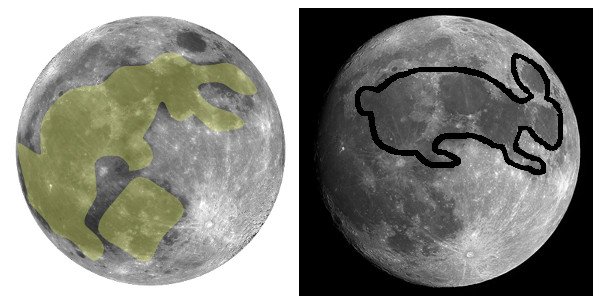
EY: The legend story I’ll be telling you about is called Chang’e’s legend. It is a Chinese legend um that explains where we have or how we have the Mid- Autumn Festival in mid September in China. Umm so the story basically is about like there’s a goddess whose name is Chang’e who kinda like takes a pill and turns into a rabbit that runs to the moon on the day of mid-autumn festival. Nowadays people in China usually have moon cakes on that festival to celebrate Chang’e.

Interviewer: Oh that’s interesting

EY: So if you look closely at a picture of the moon, there’s a shade that’s in the shape of a rabbit and so people often see that shade as the picture of Cheng’e. The rabbit shape is Cheng’e.

The longer version of the story is mostly about how previously there’s a god called Houyi who kinda shoots the sun in the sky. Chang’e and Houyi get married to each other. Bu then, Houyi was originally supposed to take a pill but he refused to and like the person who asks him to take the pill hides in their home. When Houyi is out and Cheng’e is home, Cheng’e has no other options but to take the pill. When Houyi returns home, he finds out his wife is gone and he’s sad… He might be sad… He must must be sad.

Interviewer: Probably, he’s probably sad.

EY: Yeah, and so the two are separated and Cheng’e is in the sky.

Interviewer: Okay, that’s cool. Do you think there’s like a metaphor, like a meaning behind the story. A meaning that you or your family and friends associate with it?

EY: Yeah, so it’s mostly about nostalgia and separation, I guess. There’s a metaphor in China where we compare the moon to reunion and a happily ever after.

Interviewer: That’s pretty cool, I never thought of the moon as associated with that before.

EY: And so we can associate the moon with romance or reunion in some sense. In Western [Chinese culture] ideas.

Interviewer: I don’t think that’s very common over here. We don’t typically associate the moon with romance. I think I got the story and the meaning behind it. Is there a personal meaning for you that you take on specifically to that story?

EY: I just felt like the look of the rabbit is very interesting. Yeah if you google a picture of the moon.

*looking up a picture of the moon*

* not the image referenced, but gets the idea*

EY: For example, this part is the rabbit’s head. These two are the ears of the rabbit.

Interviewer: So, I gotta look at it upside down.

EY: Yeah, so this is something that most people don’t usually observe.

Interviewer: Interesting, is that something you can only see at a certain time? Cause there’s different phases of the moon and seasons. Is this something you can only see in September? [The month of the festival].

EY: I guess yeah, but like that time that day is when the moon is like a full moon.

*end of interview

Analysis:

EY explains the story has a significant meaning not just to her, but her family and culture. The story explains the shapes in the moon, gives meaning to culturally significant foods like moon cakes and serves as a fun story to tell. The story is distinctly Chinese and like any cultural story serves as a great reminder for who you are. Without the legend, the mid-autumn festival is really just another holiday. The legend gives the celebration new meaning and amplifies the significance beyond just a fun tradition.

It also gives a standard story to relate to across generations. The culture as a whole can appreciate and enjoy this story. Parents telling their children aren’t just entertaining them. They’re connecting them to their family and culture giving them an identity. It also creates a symbolic meaning that Chinese people can relate to.

EY explained how the story recontextualizes the moon as a symbol of reunion, romance or “happily ever after.” This is interesting because in my culture, the moon doesn’t really mean anything in particular, it’s just the moon. So, to hear how this legend breathes new meaning into the natural world is quite cool. It gives an “everyday” object new culturally significant meaning. In this case, love and reunion. I’m familiar with the idea of roses symbolizing love and affection. But I actually think the moon is better. Unlike a rose, the moon won’t fall apart over time. It might wane, but it always comes back. That makes the reunion and meaning so much more impactful. The same moon can be seen across cities or continents, so it really does connect family and friends. Also, I think there is some more meaning with the moon in that it represents reunion. Every morning, the moon disappears, but we know it’ll come back. That physical movement and repetition adds to meaning that EY explained.

I think that the ritual of eating moon cakes and celebrating during the festival is a way for people to connect with their family, culture, and partners. It’s something that I’ve heard my other friends do, whether they were in China or here in LA. That makes it a cultural signal and reminder of shared belief and identity. It’s given meaning by the story, and eating mooncakes is a way for people to actively participate in that story and culture. The food, story, and importance of the moon itself are great because they can be transmitted anywhere. People can relate to and appreciate that meaning, whether in China or here in America. That story, food, and connection to the moon a ways for people to share their culture without needing to be “at home” for the festival and celebrations. These traditions can be transported and adapted to new regions or environments while maintaining that unique cultural identity.

It’s very interesting to me because, like Houyi, my informant is away from home, separated from loved ones. This must be a very personal story for her, and maybe a very significant one at this moment as well. The legend she chose to share specifically covered longing, separation, and the desire to be together. Whether she meant to or not, the choice to tell that story seems to have been influenced by her feeling away from home; it is probably a way to process her emotions, which is quite cool.

Seaweed Soup

Collection Date: 02/12/2026

Context:

During an in- class fieldwork session, my informant, “NJ” told me a saying and idea popular in Korean culture. He explains two scenarios in which seaweed soup should and should not be eaten, according to Korean folklore. He is Korean American and as far as I know, has lived his whole life here in America.

TEXT:

“Don’t eat seaweed soup before an exam”

Nathan explains that parents warn their kids not to eat food with seaweed such as seaweed soup before an exam. He explained that the slippery soup will cause the information to slip from their head. NJ explained how the idea of eating seaweed soup doesn’t just apply to parents and schoolchildren, but to other areas of life as well. For example, NJ explained that in Korean culture, pregnant women will eat seaweed soup as well. This is done because performers believe that it will help the women have a smoother, easier birth.

He said this is a popular Korean saying. His parents told him as a kid, passing on the saying.

Analysis:

It is an interesting belief that seaweed soup, a slippery dish, should be avoided before big moments. The idea is that it might cause students to slip up or forget what they studied during the exam. The same idea applies to pregnant women, but in this second case, the slippery quality is actually a good thing.

Logically, this belief makes no sense. But, something about it just sounds right. There’s some kind of pseudo logic or vernacular reasoning. If you eat something slippery, you’ll be slippery. The qualities of a food being slippery or sticky don’t actually have much, if any, effect on students’ exam scores or mothers giving birth. But somehow the saying still makes sense. I could imagine that it is especially helpful in moments that are really stressful (exams, pregnancy, etc). These are moments where we can feel anxiety and maybe powerless.

But, the simple saying acts as a illogical solution to get back that control. How do fix something which logic won’t help? Simple, make your own logic. I can imagine that the belief functions similarly to when athletes wear their favorite socks or shoes on game day. It offers a way for people to manage their anxiety and gain a sense of control in high-pressure situations. These superstitions allow performers to channel their anxiety into an easy action (or inaction) so they can feel better prepared for the task. It also lets them relax. In the test example, students who worry about forgetting what they studied can rest assured they won’t. They didn’t eat seaweed soup, so they probably won’t forget.

It’s also interesting that the same quality and food, slippery soup, can have a positive or negative connotation depending on the context. For exams, seaweed soup should be avoided, but for a pregnant woman, seaweed soup is a blessing. What would happen if a pregnant woman were taking an exam? I don’t think the answer matters much because the logic depends more on the context than any actual rules. The family that told their child, or the person who decided to eat soup that day, chooses the meaning. It doesn’t matter whether the rules are accurate or realistic, so long as they are believed in. Belief is what gives them power. For example, my informant NJ doesn’t encounter seaweed soup often here in LA, but he doesn’t avoid slippery foods. But perhaps if he wanted the qualities, then he would choose to believe in them. Or, if he were stressed about an exam, he might consider changing his diet.

Additionally, this is a fun superstition passed from parent to child. This sharing of beliefs and wisdom can bring families closer together. It sounds silly, but a nervous child might easily be calmed by the saying. That relief they feel will bring them closer to their family and make them appreciate the support. Instead of just saying “don’t worry about it, you’ll do great,” they offer a simple solution to make exams more manageable. This could help the children feel supported and cared for while parents support their achievements.